Understanding the Criminal Appeal Office Form NG Disposal: A Guide for Legal Practitioners and Citizens
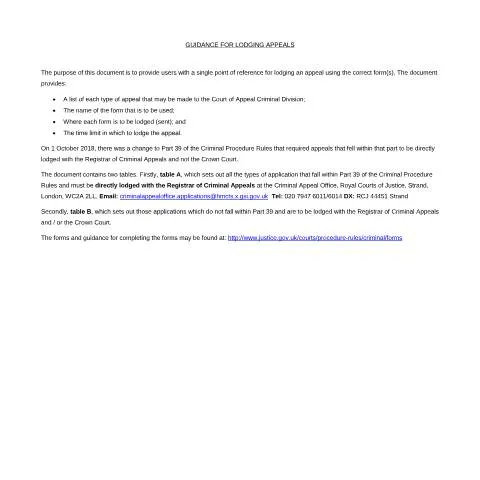
The Criminal Procedure Rule Committee, operating under the Ministry of Justice, has established specific procedures and forms to streamline the lodging of appeals within the criminal justice system of the United Kingdom. One such document, known as the Criminal Appeal Office Form NG Disposal where accused did the act, plays a pivotal role in the appeal process, particularly concerning convictions, sentences, and other related orders. This guide aims to clarify the purpose, scope, and procedural requirements associated with this form, providing clarity for legal professionals, defendants, and interested parties.
Scope and Purpose of the Form
The primary function of the NG Disposal form is to facilitate the lodging of appeals directly with the Registrar of Criminal Appeals at the Court of Appeal Criminal Division. It is specifically used for cases falling within Part 39 of the Criminal Procedure Rules, which encompasses a broad range of appeals including convictions, sentences, confiscation orders, and review decisions. The form ensures that all relevant information is systematically captured, enabling the efficient processing of appeals and adherence to statutory time limits.
Who Should Use the NG Disposal Form?
This form is intended for use by individuals or legal representatives seeking to challenge:
- Convictions, including findings of unfitness to plead or insanity verdicts
- Sentences, such as mandatory minimum sentences, orders following contempt of court, or restrictions imposed under the Criminal Justice Act 2003
- Confiscation orders, review decisions, or orders related to serious crime prevention
It is crucial to note that the NG Disposal form is used exclusively for appeals falling within Part 39 of the Criminal Procedure Rules. Appeals outside this scope, such as preparatory rulings or prosecution appeals, follow different procedures and forms.
Procedural Requirements and Lodgement Details
Time Limits for Lodging
Appeals using the NG Disposal form must be lodged within specific timeframes:
- 28 days from the date of the order or decision being appealed for convictions, sentences, confiscation orders, and review decisions.
- 21 days after the making of a third-party costs order or wasted costs order.
- 28 days from the date of the order for serious crime prevention orders and minimum term appeals.
Where to Send the Form
The form should be submitted directly to the Registrar of Criminal Appeals at the Royal Courts of Justice, Strand, London, WC2A 2LL. Contact details include:
- Email: [email protected]
- Telephone: 020 7947 6011 / 6014
- DX: RCJ 44451 Strand
Key Considerations and Guidance
Legal practitioners and individuals lodging appeals should ensure that the form is completed accurately, including details of the case, the specific decision or order being challenged, and the grounds for appeal. The form and accompanying guidance can be accessed through the official government website dedicated to criminal procedure rules and forms.
It is also essential to adhere to the statutory time limits to avoid the rejection of the appeal on procedural grounds. In cases where the appeal involves complex issues, legal advice is recommended to ensure that all procedural and substantive requirements are met.
References and Further Information
For the most comprehensive guidance, users should consult the official criminal procedure rules and the detailed instructions provided with the NG Disposal form. These resources are available on the official government portal, which provides up-to-date information on appeal procedures, relevant legal provisions, and contact details for the Court of Appeal Criminal Division.
In summary, the Criminal Appeal Office Form NG Disposal is a vital document in the UK’s criminal justice system, ensuring that appeals are lodged correctly, efficiently, and within the legal timeframe. Proper understanding and adherence to the procedural requirements help uphold the integrity of the judicial process and safeguard the rights of defendants and appellants alike.