When Courts Step In: The Automatic Judgment Process for Unpaid Debts
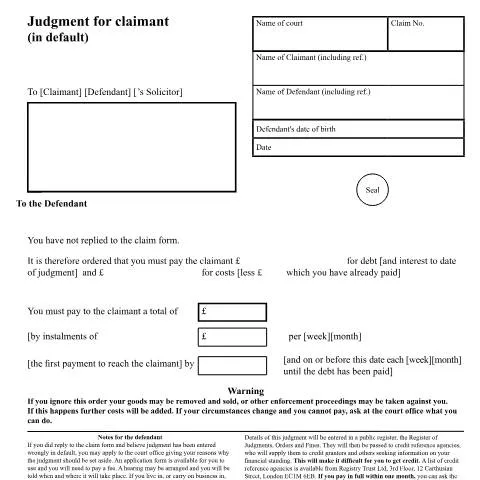
When a defendant fails to respond to a county court claim within the prescribed timeframe, the legal machinery moves into motion with clinical precision. Form N30 represents the court's formal declaration that the claimant has won by default—not through a contested hearing, but through the defendant's silence. This document transforms what began as a disputed debt into an enforceable court order, carrying the full weight of judicial authority.
The judgment for claimant in default serves as both verdict and execution order rolled into one. Unlike judgments reached after full hearings, default judgments arise from administrative procedure rather than adversarial process. The court doesn't assess the merits of the claim or hear evidence—it simply applies the rule that failure to defend means acceptance of liability. This streamlined approach keeps the county court system functioning efficiently, preventing it from becoming clogged with undefended cases whilst ensuring creditors can recover legitimate debts.
For defendants receiving Form N30, the document often comes as a shock, particularly if they believed they had more time to respond or were unaware of the original claim. The stark language leaves no room for ambiguity: payment is now mandatory, not negotiable, and enforcement mechanisms stand ready to ensure compliance.
Decoding the Judgment Structure: What Each Element Means
Form N30 follows a standardised format that breaks down the defendant's liability into component parts. The opening section identifies all parties using their full names and any reference numbers, establishing the legal relationship between claimant and defendant. The defendant's date of birth appears prominently—a crucial identifier that prevents confusion with others sharing the same name and ensures accurate credit reporting.
The financial breakdown forms the heart of the judgment. The court specifies the debt amount, distinguishing between the original sum claimed and any interest accrued to the judgment date. Costs awarded to the claimant typically cover court fees and reasonable expenses incurred in pursuing the claim. The judgment accounts for any partial payments already made, showing the net amount still owed.
Payment terms vary significantly depending on the claimant's original request and the defendant's circumstances. Some judgments demand immediate payment in full, whilst others establish instalment arrangements. Weekly or monthly payment schedules include specific dates when payments must reach the claimant, creating a clear timeline for debt resolution.
| Judgment Component | Purpose | Impact on Defendant |
|---|---|---|
| Original debt amount | Core liability established | Principal sum to be repaid |
| Interest to judgment date | Compensation for delayed payment | Additional cost reflecting time elapsed |
| Claimant's costs | Recovery of litigation expenses | Penalty for requiring court action |
| Payment schedule | Structured repayment plan | Manageable instalments or lump sum demand |
Interest Calculations and Ongoing Liability
For judgments exceeding £5,000 or involving contractual interest clauses, the financial implications extend beyond the judgment date. Claimants may continue accruing interest on unpaid amounts, meaning delays in payment compound the defendant's liability. This ongoing interest typically runs at the judgment debt rate set by the Lord Chancellor, currently 8% per annum, though contractual rates may apply where higher.
The distinction between contractual and statutory interest significantly affects defendants' exposure. Commercial agreements often specify interest rates well above the judgment rate, and courts will enforce these terms where validly agreed. Consumer credit agreements may include different interest provisions, potentially capped by regulatory requirements, creating variations in how post-judgment interest accumulates.
Payment Mechanics: Navigating the Practical Requirements
Form N30's payment instructions reflect hard-learned lessons about debt collection practicalities. The emphatic warning against sending payments to the court itself prevents common mistakes that can delay resolution and create administrative complications. Courts lack the infrastructure to process and forward payments, so misdirected funds often disappear into bureaucratic limbo whilst interest continues accruing.
The requirement to include the claimant's reference and claim number with all payments serves multiple purposes. These identifiers ensure accurate allocation of funds, particularly where claimants pursue multiple debtors simultaneously. Without proper references, payments may be credited incorrectly or held unallocated, leaving defendants technically in default despite having paid.
The four-day payment processing allowance acknowledges modern banking realities whilst protecting defendants from technical breaches. Electronic transfers, whilst faster than traditional cheques, still require processing time, particularly for cross-border or inter-bank transactions. This buffer period prevents defendants from falling into default through banking delays beyond their control.
Record-keeping and Proof Requirements
The form's emphasis on maintaining payment records reflects frequent disputes about what was paid and when. Bank statements alone may not sufficiently identify payments, particularly where multiple transactions occur around similar dates. Defendants benefit from retaining copies of transfer receipts, postal receipts for registered mail, and any acknowledgments received from claimants or their representatives.
The warning about cash payments highlights ongoing security concerns whilst acknowledging that some defendants lack access to banking services. Registered post provides a middle ground, offering tracking and insurance whilst remaining accessible to unbanked individuals. However, the administrative burden and cost of registered post often exceeds electronic alternatives, making it a last resort option.
Credit Reporting Consequences: The Long-term Financial Impact
Perhaps the most significant consequence of Form N30 extends far beyond the immediate debt obligation. Registration with the Register of Judgments, Orders and Fines creates a public record that credit reference agencies monitor systematically. This entry affects the defendant's credit score for six years from the judgment date, regardless of subsequent payment.
The automatic sharing of judgment information with credit reference agencies occurs without further court intervention. Experian, Equifax, TransUnion, and other agencies receive regular updates from Registry Trust Ltd, incorporating judgment data into credit files within days of registration. This rapid dissemination means defendants often discover their credit rating has deteriorated before they fully understand the judgment's implications.
Different credit grantors weight judgment information differently when assessing applications. Mortgage lenders typically view any judgment as highly negative, often declining applications outright or requiring substantial deposits to offset perceived risk. Credit card companies may still lend but at higher interest rates, whilst utility companies might demand security deposits or guarantors.
The One-Month Cancellation Window
Form N30's reference to cancellation within one month creates a crucial opportunity for defendants who can settle quickly. This provision allows complete removal of the judgment from public records, as if it never existed. However, the window is strictly enforced—payment on day 31 qualifies only for satisfaction marking, not cancellation.
Proving payment within the one-month period requires clear documentation that funds reached the claimant within the timeframe. Bank transfer confirmations showing successful delivery satisfy this requirement, whilst cheques create uncertainty due to clearing delays. The court requires original or certified copies of proof, not photocopies or screenshots, maintaining evidentiary standards even for administrative applications.
The optional Certificate of Cancellation provides formal confirmation that the judgment has been removed from public records. Whilst not legally required, this certificate helps defendants demonstrate to future creditors that the judgment was resolved promptly, potentially mitigating any residual credit concerns.
Enforcement Mechanisms: What Happens When Payment Fails
The warning section of Form N30 outlines the enforcement arsenal available to successful claimants, designed to encourage voluntary compliance whilst preparing defendants for escalation consequences. These mechanisms transform the judgment from a paper declaration into practical debt recovery tools, each carrying additional costs that compound the defendant's liability.
Bailiff action represents the most visible enforcement method, involving court-appointed officers who can remove and sell goods to satisfy judgment debts. High Court Enforcement Officers possess broader powers than county court bailiffs, including the ability to force entry to commercial premises and seize vehicles from public roads. The threat of bailiff action often motivates payment more effectively than the judgment itself.
Attachment of earnings orders redirect portions of employment income directly to claimants, bypassing the defendant's control over payment timing. These orders require employer cooperation and work only for employed defendants, leaving self-employed individuals beyond this enforcement mechanism's reach. The administrative burden on employers sometimes leads to employment difficulties for defendants subject to such orders.
Third-party Debt Orders and Charging Orders
More sophisticated enforcement targets defendants' bank accounts and property interests. Third-party debt orders freeze bank accounts pending court hearings, effectively preventing defendants from accessing their own funds until the judgment debt is resolved. These orders can apply to savings accounts, current accounts, and even some investment products, creating immediate financial pressure.
Charging orders against property create security interests similar to mortgages, ensuring claimants receive payment when defendants eventually sell their homes. Whilst charging orders don't force immediate sale, they prevent defendants from disposing of property without settling judgment debts, effectively securing the claimant's position for years or decades.
Setting Aside Default Judgments: The Defendant's Recourse
Form N30's notes section acknowledges that default judgments sometimes result from administrative errors or communication failures rather than genuine acceptance of liability. The set-aside procedure provides defendants with a pathway to challenge judgments entered without their knowledge or despite having responded to the original claim.
Applications to set aside must demonstrate both that the defendant has an arguable defence and that they acted promptly upon discovering the judgment. Courts examine whether defendants responded to the original claim form within the prescribed time limits, considering factors like postal delays, address changes, or service defects that might explain non-response.
The application process requires completing additional court forms and paying prescribed fees, creating further expense for defendants seeking to challenge judgments. Courts may arrange hearings where both parties can present evidence about the original claim and the circumstances leading to default judgment. These hearings focus on procedural compliance rather than the underlying debt merits, though strong defences to the original claim strengthen set-aside applications.
Jurisdiction and Transfer Considerations
The reference to transferring cases to defendants' local courts reflects the county court system's flexibility in accommodating geographical constraints. Defendants living or working far from the issuing court can request transfer to their local court, reducing travel requirements for hearings and making legal representation more accessible.
Transfer applications must demonstrate genuine inconvenience rather than mere preference, with courts balancing administrative efficiency against defendants' access to justice. Successful transfers typically involve defendants located in different regions entirely, rather than simply preferring a more convenient court within the same area.
Administrative Practicalities: Interacting with the Court System
Form N30's footer information provides essential contact details for defendants navigating the post-judgment landscape. Court offices maintain specific opening hours—typically 10 am to 4 pm on weekdays—reflecting staffing constraints and administrative requirements. These limited hours create scheduling challenges for working defendants, who must often take time off to address court matters in person.
The instruction to quote claim numbers in all correspondence reflects the court system's reliance on case management databases that track thousands of concurrent matters. Without proper case references, inquiries may be delayed or misdirected, creating unnecessary complications for defendants seeking information or assistance.
Addressing communications to the Court Manager rather than individual staff members ensures continuity despite personnel changes and reflects the hierarchical structure of court administration. Court Managers oversee case processing and can authorise decisions that junior staff cannot make independently, making them the appropriate contact point for complex inquiries.
The availability of explanatory leaflets acknowledges that many defendants lack familiarity with court procedures and enforcement mechanisms. These publications provide standardised information about payment options, enforcement processes, and available assistance schemes, helping defendants understand their options without requiring individual legal advice.