Navigating the Withdrawal of Visa Documents in Moscow
Finding oneself in a situation where the withdrawal of your visa documents is necessary can be overwhelming. The process can seem convoluted, especially in a foreign country. In Moscow, where UK Visas and Immigration operates, the procedure for retrieving your passport is critical for those looking to resume their travels or address pending applications. Understanding the nuances of this process helps applicants move forward without unnecessary delays.
The Impetus Behind a Document Withdrawal
Individuals often find themselves needing to withdraw their visa application for various reasons. These can range from changes in travel plans to personal circumstances that prevent the completion of the application process. Below are specific scenarios that might lead to this decision:
- Travel Plans Altered: If unexpected events alter your plans, such as a family emergency or change in employment, you may wish to withdraw your application.
- Inaccurate Information: Discovering discrepancies in your application can prompt you to retract your submission to fix errors before reapplying.
- Application Delays: Prolonged waiting times may compel you to withdraw if timely travel is essential.
Important Considerations Before Withdrawing
Before making the decision to withdraw, it’s essential to assess the implications:
- Once you withdraw, your application is terminated, and you may need to begin the application process anew.
- Consider whether you will lose any visa fees already paid.
- Assess if any relevant deadlines are approaching, as this could influence your decision.
Understanding the Process of Withdrawal
The actual withdrawal of your visa documents requires submitting a written request to the appropriate authorities. The following steps will guide you through this crucial process:
- Prepare Your Request: Draft a formal letter addressed to the visa officer at UK Border Agency, Moscow, clearly stating your intent to withdraw your application.
- Include Necessary Information: Your letter should include personal details such as your full name, passport number, application reference number, date of birth, and contact information.
- Submission via Visa Application Centre: Present your letter to the visa application centre, which acts as the intermediary between you and the UK Border Agency.
Drafting Your Withdrawal Letter
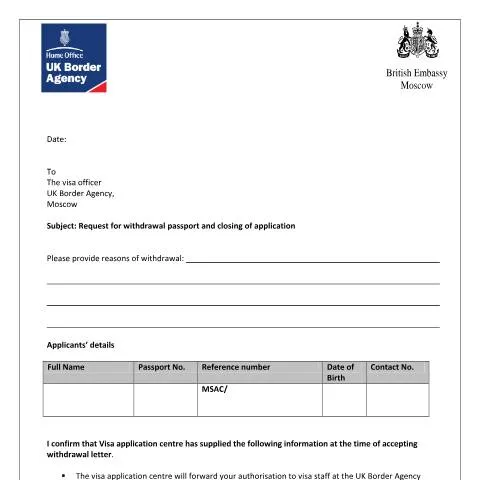
Your withdrawal letter should be clear and concise. Below is a suggested structure:
Date: [Insert Date]
To: The Visa Officer, UK Border Agency, Moscow
Subject: Request for Withdrawal of Passport and Closing of Application
Applicant’s Details:
- Full Name
- Passport No.
- Reference Number
- Date of Birth
- Contact No.
Reason for Withdrawal: [Provide clear reasoning]
Applicant’s Signature:
The Role of the Visa Application Centre in Moscow
The visa application centre plays an integral role in the withdrawal process. Upon receiving your withdrawal request, the centre will:
- Forward your withdrawal letter to the UK Border Agency.
- Notify you that your passport will generally be returned within two working days.
- Communicate any potential delays beyond the expected timeframe.
Understanding Processing Times
While the standard processing time for the return of your passport is two working days, various factors may affect this timeline. Here are some notable points:
| Condition | Expected Outcome |
|---|---|
| No Issues with Request | Passport returned within 2 working days |
| Additional Checks Required | Potential delays; communication through email advised |
| Missing Information | Extended processing time; may require resubmission of documents |
After Submission: What to Expect
Once your request is submitted, patience is key. The next steps involve waiting for confirmation from the UK Border Agency regarding the status of your withdrawal. Here are the scenarios you may encounter:
- Successful Withdrawal: You will receive confirmation of your passport’s return to the visa application centre.
- Request for Additional Information: If needed, the agency will reach out for further clarification or documentation.
- Unforeseen Delays: If processing times extend beyond the expected timeframe, you are encouraged to contact the Agency directly via the provided email address.
Emailing UK Border Agency
Should you face delays, it's crucial to follow the right communication channels:
- Use the email: [email protected]
- Avoid direct visits to the British embassy; all inquiries must go through email.
- Be clear and concise in your emails, providing all necessary identifying information.
Further Actions After Withdrawal
Following the withdrawal of your visa application, you may need to consider your next steps carefully. Here’s a breakdown of potential actions:
- Reapplication: If you plan to submit a new application, take time to ensure all information is accurate and complete to avoid previous pitfalls.
- Alternative Visa Options: Depending on your situation, explore other visa types or pathways that may better suit your current circumstances.
- Seek Legal Advice: If your withdrawal was due to complications, consulting with a legal expert on immigration matters can provide clarity and guidance.
Regaining Control Over Your Travel Plans
While withdrawing a visa application may feel like a setback, it can also serve as an opportunity to clarify your intentions and plans. By ensuring that you have all your documents in order and your application correctly filled out, you can regain control over your travel narrative.
Common Challenges and How to Address Them
The withdrawal process may present a set of challenges, from emotional stresses to logistical hurdles. Here are strategies to tackle common issues:
- Emotional Stress: Recognize that this is a common experience among applicants; seeking support from friends or family can be beneficial.
- Understanding the Legal Framework: Familiarize yourself with the Data Protection Act 2018 and UK GDPR, as these govern how your personal information is processed during the withdrawal.
- Keeping Records: Maintain a file of all correspondence and documentation related to your visa application for reference and to support future applications.
Documentation and Personal Data Security
During this process, safeguarding your personal data is essential. Ensure that all communication is conducted via official channels and that any documents sent are securely managed. Remember the following:
- Only share personal information through authorized communication methods.
- Understand your rights under the Data Protection Act, particularly regarding the handling of your personal data by the UK Border Agency.
Utilizing Support Services
Numerous organizations provide support services for individuals navigating visa applications and withdrawals. Consider reaching out for assistance:
- Legal aid organizations often offer free consultations for immigration matters.
- Community groups may provide practical advice and emotional support.
- Online forums and support networks can connect you with others who have experienced similar situations.
Maximizing Resources
As you navigate the complexities of the withdrawal process, leverage available resources:
- Official government websites often have detailed guides that can assist you.
- Professional consultants can offer tailored advice based on your individual circumstances.
- Stay informed about changes in immigration policies that could affect your situation.
Understanding the Return Process for Visa Documents
When you apply for a visa through a UK embassy or consulate in Moscow, you might find yourself in need of having your original documents returned after the visa application process is complete, whether your application was successful or not. Understanding the intricacies of this process is essential to ensure that you can retrieve your documents without unnecessary delays.
The first step in this process is to ensure that you have provided the correct information during your initial application. Always include your email address and phone number on your application, as this is how the UK Visas and Immigration (UKVI) will communicate any updates regarding your visa application, including the return of your documents.
Once a decision has been made on your visa application, the UKVI will inform you via email. If your application has been successful, your documents, including your passport, will be returned to you along with your visa. However, if your application has been refused, you will still need to follow the appropriate steps to get your documents back.
In both cases, the documents are usually returned via the courier service you selected during your application. It’s important to know that you must keep track of the reference number given to you at the time of application, as this will be necessary for tracking the return of your documents. If you opted for a specific courier service, they might provide you with a tracking number that can help you monitor the delivery status.
In cases where you have used a third-party service for your application, you will need to coordinate with them to have your documents returned. Ensure that you provide them with your reference number and any other details necessary to facilitate the return process.
Challenges You May Encounter and How to Overcome Them
While the process of retrieving your visa documents should be straightforward, various challenges can arise that may complicate matters. Understanding these potential obstacles and knowing how to navigate them can save you time and frustration.
One common issue applicants face is delays in the return of documents. This can occur due to a number of factors, including postal delays or administrative backlogs at the UKVI. If you have not received your documents within the expected timeframe, it is advisable to contact the UKVI directly. Ensure you have all relevant details on hand, including your reference number, to expedite the inquiry process.
Another challenge could be related to the condition of your documents upon their return. In some unfortunate cases, applicants report that their documents arrived damaged or in an unexpected condition. Should you encounter this issue, it is crucial to document the condition of the documents immediately upon receipt. Take photographs and make notes before contacting UKVI to report the issue. They will provide guidance on the next steps, which may involve submitting a formal complaint or reapplying for lost documents.
Finally, information lost in translation can pose a significant barrier for non-native English speakers navigating the visa process. If you find yourself struggling with the terminology or requirements, consider seeking assistance from a trusted immigration adviser or legal representative. They can help interpret communications from the UKVI and provide clarity on any documentation required from you during the return process.
Preparing for Future Applications: Best Practices for Document Management
Once you have successfully navigated the return process for your visa documents, it’s essential to reflect on how you can improve the management of your documents for any future applications. Establishing a clear and organized system for handling your important documents will save you time and reduce anxiety in subsequent applications.
Begin by creating a dedicated folder, either physical or digital, for all your immigration-related documents. Include copies of application forms, correspondence from UKVI, and any other relevant documents. Using a cloud storage service with encrypted options can be ideal for securing sensitive information, ensuring that you have access to your documents from anywhere.
Additionally, maintain a checklist of all documents required for your visa applications. This should include your passport, photographs, proof of funds, and any supporting letters or documents. Cross-referencing your checklist when preparing your application can help you avoid delays caused by missing documentation.
Furthermore, it’s beneficial to establish a timeline for your applications. Understanding the typical processing times for different visa types can help you plan ahead, especially if you need to arrange travel or other commitments. Being aware of key dates, such as the end of the tax year on 5 April, can also be important if you are applying for work-related visas, as your employment status may affect your application.
Finally, stay informed about any changes in UK immigration policies. The rules and requirements can evolve, and being proactive in keeping yourself updated will enhance your preparedness for future applications. Join forums or support groups online that focus on UK immigration; they can be excellent resources for shared experiences and insights.