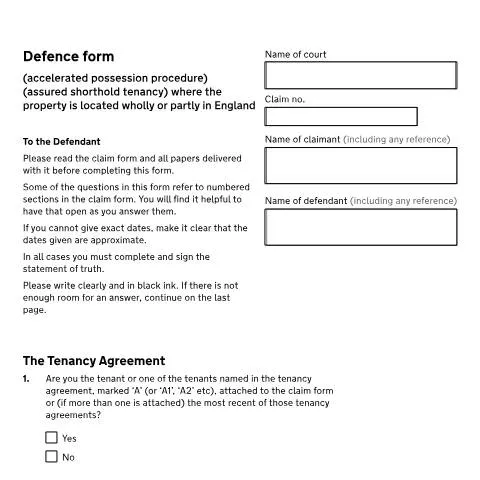
Understanding the Defence Form N11B for Accelerated Possession Claims in England
The Form N11B is an official document used within the legal framework of England to facilitate the defence process in accelerated possession proceedings concerning assured shorthold tenancies (ASTs). Managed by the HM Courts & Tribunals Service, this form plays a crucial role for tenants who wish to contest a landlord’s claim for possession under the accelerated procedure. It is specifically relevant when the property in question is located wholly or partly in England.
Scope and Purpose of the Form N11B
The primary purpose of the Form N11B is to enable tenants to formally present their defence against a landlord’s claim for possession that is initiated through the accelerated procedure. This process is designed to be quicker and less formal than traditional possession hearings, often used in cases involving assured shorthold tenancy agreements. The form ensures that tenants can provide relevant details, challenge the landlord’s assertions, and set out any grounds for dispute, such as procedural errors, misunderstandings, or other legal objections.
Who Should Use the Form?
This form is intended for tenants who are named defendants in an accelerated possession claim and wish to defend the claim. It is particularly relevant if the tenant believes that the landlord’s case is flawed or that the legal requirements for possession have not been properly met. It is essential that tenants complete this form if they want to contest the landlord’s application and avoid losing possession without a full hearing.
Key Sections and Their Significance
Details About the Tenancy
- Tenancy Agreement: The tenant must confirm whether they are the tenant named in the tenancy agreement and whether the agreement reflects the current terms. Any discrepancies or changes should be clearly indicated.
- Start Date: The tenant is asked to agree or specify the date when the tenancy began, which is crucial for establishing the tenancy’s validity and duration.
Legal Notices and Compliance
- Section 21 Notice: The form requires confirmation of whether the tenant received the formal notice to vacate (Section 21 notice) and the date it was received. Disputes may arise if the notice was not properly served or if the details are contested.
- Property Licensing: For properties that require licensing (such as Houses in Multiple Occupation), tenants can verify whether the landlord has complied with licensing laws.
Deposit and Financial Arrangements
- Deposit Details: The tenant can confirm whether a deposit was paid, whether it has been returned, and whether the landlord provided the prescribed information at the outset of the tenancy.
Property Condition and Compliance
- Energy Performance and Gas Safety: The form prompts tenants to confirm receipt of energy performance certificates and gas safety records, which are legal requirements for rental properties.
- Repairs and Notices: Tenants can also indicate if they have made any complaints to the Local Authority about the property’s condition or if notices have been displayed in the premises.
Legal and Procedural Considerations
The Form N11B must be completed accurately and signed with a statement of truth, affirming that the information provided is correct to the best of the tenant’s knowledge. This form is a critical part of the defence process, and failure to submit it correctly or on time can result in the tenant losing the right to contest the claim.
It is advisable for tenants to seek legal advice or assistance from housing charities when completing this form, especially if they have concerns about procedural compliance or legal grounds for defence. The deadline for submitting a defence in an accelerated possession claim is generally set by the court, often within 14 days of receiving the claim form.
References and Further Guidance
For detailed guidance on completing the Form N11B, tenants can refer to the official HM Courts & Tribunals Service instructions and the accompanying claim documentation. It is important to review all papers delivered with the claim form carefully and ensure that all responses are clear, accurate, and signed appropriately.
In summary, the Form N11B serves as a vital procedural tool for tenants in England seeking to defend an accelerated possession claim. Proper understanding and completion of this form can significantly influence the outcome of the case and protect tenants’ rights under the law.