When School-Based HPV Protection Becomes a Family Decision
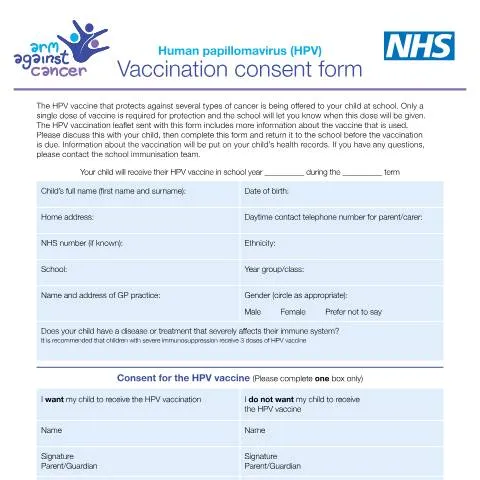
Every school term, thousands of parents across England receive a distinctive form that represents one of the most significant preventive health decisions they'll make for their child. The Human papillomavirus (HPV) vaccination consent form arrives home with pupils typically in school years 8 or 9, carrying with it the weight of cancer prevention and the complexity of informed medical consent. Unlike routine administrative paperwork, this UK Health Security Agency document demands active parental engagement with both medical evidence and personal values.
The form's apparent simplicity—essentially a yes-or-no choice—belies the sophisticated public health machinery behind it. This single sheet connects individual families to the National HPV Immunisation Programme, a cornerstone of the UK's cancer prevention strategy that has already demonstrated remarkable success in reducing cervical cancer rates among young women who received the vaccine in their teens.
The Critical Window: Understanding Timing and School Year Delivery
The HPV vaccination programme operates within precisely defined temporal parameters that parents must understand to make informed decisions. Most children receive their invitation during school years 8 or 9, typically when they're aged 12 to 14. This timing isn't arbitrary—it reflects extensive research showing optimal immune response when vaccination occurs before potential exposure to HPV through sexual activity.
The form itself specifies the exact term when vaccination will occur, creating a clear deadline for parental decision-making. Schools typically distribute forms at least two to three weeks before the planned immunisation session, though this can vary by local authority and school scheduling constraints. The document emphasises that only a single dose is now required for protection, representing a significant shift from earlier multi-dose schedules that simplified the programme considerably.
| School Year | Typical Age Range | Programme Status | Catch-up Eligibility |
|---|---|---|---|
| Year 8 | 12-13 years | Primary target group | N/A - routine offer |
| Year 9 | 13-14 years | Primary target group | N/A - routine offer |
| Year 10-11 | 14-16 years | Catch-up programme | Available if previously missed |
| Year 12-13 | 16-18 years | Catch-up programme | Available until 18th birthday |
For families who miss the initial offer, catch-up opportunities exist through GP practices or sexual health clinics, though the school-based programme remains the most accessible route for most children.
Navigating Consent: Legal Framework and Parental Authority
The consent mechanism embedded in this form operates under specific legal principles governing medical treatment of minors in England. Parents or legal guardians must provide explicit written consent before any vaccination can proceed. The form recognises various family structures by accepting signatures from "Parent/Guardian," acknowledging that legal responsibility may rest with adoptive parents, foster carers, or court-appointed guardians.
Crucially, the form requires discussion between parent and child before completion. This reflects the UK's approach to adolescent healthcare, which increasingly recognises young people's capacity for involvement in medical decisions affecting them. While parents retain ultimate decision-making authority for children under 16, the programme encourages collaborative family decision-making that respects the child's developing autonomy.
The signature requirement serves multiple functions beyond legal compliance. It creates an audit trail for the child's medical records, ensures deliberate rather than passive consent, and provides evidence of informed decision-making should any questions arise later. The dated signature also establishes the timeline of consent, which becomes relevant if circumstances change between form submission and actual vaccination.
Special Considerations for Complex Family Situations
Families experiencing separation, divorce, or shared custody arrangements may face particular challenges with the consent process. The form requires only one parental signature, but schools often request confirmation that the signing parent has authority to make medical decisions. In cases where parents disagree about vaccination, schools typically require either joint consent or legal documentation establishing which parent holds medical decision-making authority.
Medical Information Requirements: Building the Clinical Picture
The form's medical sections serve dual purposes: ensuring appropriate vaccine administration and creating comprehensive health records. The request for the child's NHS number enables seamless integration with existing health records, though vaccination can proceed even if this number is unknown—the school immunisation team can trace records using other identifiers.
The GP practice details prove particularly important for follow-up care and record-keeping. All vaccination information flows back to the child's registered GP, ensuring continuity of care and enabling proper medical history maintenance. This integration supports future healthcare decisions and ensures vaccination status remains accessible throughout the child's life.
The ethnicity field, while optional, supports public health monitoring and helps identify any disparities in vaccination uptake across different communities. This data contributes to targeted health promotion efforts and ensures the programme reaches all eligible children effectively.
Immunocompromised Children: Enhanced Protection Protocols
The form specifically addresses children with severe immunosuppression, reflecting medical evidence that these vulnerable individuals may require modified vaccination schedules. Children receiving chemotherapy, those with primary immunodeficiency disorders, or those taking high-dose immunosuppressive medications typically need three doses rather than the standard single dose.
This provision requires careful medical assessment, often involving consultation between the school immunisation team, the child's GP, and relevant specialists. Parents of immunocompromised children should discuss vaccination timing with their child's medical team to optimise both safety and effectiveness.
The Declination Process: Respecting Parental Choice
The form provides equal prominence to both consent and refusal options, reflecting the UK's commitment to voluntary vaccination programmes. Parents choosing to decline vaccination face no penalties or discrimination, though the form encourages them to explain their reasoning on the reverse side.
This feedback mechanism serves multiple purposes within public health planning. Anonymous analysis of declination reasons helps identify common concerns, enabling targeted health promotion and addressing specific misconceptions. It also helps distinguish between informed refusal based on personal values and refusal based on potentially correctable misunderstandings about vaccine safety or necessity.
Importantly, declining vaccination doesn't preclude future opportunities. Children can receive HPV vaccination through their GP practice up to their 18th birthday, and some parents choose to delay rather than permanently refuse vaccination, allowing more time for consideration or waiting until the child can participate more fully in the decision.
Cultural and Religious Considerations
Some families decline HPV vaccination based on cultural or religious beliefs about adolescent sexuality or medical intervention. The programme respects these perspectives while ensuring families have access to culturally sensitive information about cancer prevention benefits. School immunisation teams often work with community leaders and faith organisations to address specific concerns and provide appropriate support for decision-making.
Behind the Scenes: Administrative Processing and Record Management
The form's "Office use only" section reveals the sophisticated tracking system supporting the vaccination programme. Each vaccination event generates multiple data points: administration date, injection site, vaccine batch number, and administrator identity. This information serves critical safety and quality assurance functions, enabling rapid response to any safety concerns and ensuring proper cold chain maintenance.
Batch number recording proves particularly important for post-market surveillance. Should any safety signal emerge related to specific vaccine lots, public health authorities can quickly identify all recipients and take appropriate action. The expiry date recording ensures no expired vaccines are inadvertently administered, maintaining programme integrity.
The administrator identification creates professional accountability and enables follow-up contact if questions arise about specific vaccination events. This typically includes the immunising nurse's name and professional registration details, ensuring proper clinical governance.
Integration with National Health Records
All vaccination data flows into the Child Health Information System and the National Immunisation Management Service, creating permanent records accessible to healthcare providers throughout England. This integration supports seamless healthcare delivery and enables population-level monitoring of vaccination coverage and outcomes.
Practical Completion: Avoiding Common Pitfalls
Successful form completion requires attention to several practical details that frequently cause processing delays. The child's full legal name must match school records exactly, including any hyphens, apostrophes, or unusual spellings. Discrepancies can prevent proper record linkage and may delay vaccination.
Contact telephone numbers should reflect the most reliable way to reach parents during school hours, as the immunisation team may need to clarify information or discuss medical concerns before vaccination proceeds. Mobile numbers often prove most effective, though parents should ensure these remain current throughout the vaccination period.
The date of birth field requires particular accuracy, as age verification ensures appropriate vaccine formulation and dosing. Any uncertainty about exact birth dates should be resolved through official documentation before form submission.
- Complete all mandatory fields clearly and legibly
- Sign and date the consent section appropriately
- Return promptly to school to meet processing deadlines
- Notify school of any changes in contact details or medical circumstances
- Keep a copy for personal records, particularly if medical questions arise later
Post-Vaccination Responsibilities and Follow-Up Care
The form's emphasis on side effect reporting reflects the ongoing safety monitoring that extends well beyond the vaccination event itself. Parents receive clear guidance to contact either the school immunisation team or their GP if concerning symptoms develop, ensuring rapid assessment and appropriate medical response.
Most HPV vaccination side effects prove mild and transient—typically involving arm soreness, mild fever, or temporary fatigue. However, the reporting system enables detection of rare but serious adverse events and supports continuous safety assessment. This post-vaccination surveillance contributes to the robust safety profile that underpins continued programme delivery.
The vaccination record becomes a permanent part of the child's medical history, accessible through GP practices and important for future healthcare decisions. Parents should ensure their child understands their vaccination status, as this information may prove relevant for cervical screening programmes, travel health consultations, or other medical care throughout their life.
For families initially declining vaccination, the form serves as documentation of informed refusal while keeping options open for future reconsideration. The UK Health Security Agency maintains resources for ongoing education and support, recognising that parental attitudes toward vaccination may evolve as children mature and circumstances change.
Consent Withdrawal and Amendment Procedures
The right to withdraw consent for HPV vaccination represents a fundamental principle within UK healthcare administration, governed by the Mental Capacity Act 2005 and reinforced through NHS England's consent frameworks. Parents, guardians, or eligible young people themselves retain the absolute right to revoke previously given consent at any stage before vaccine administration, with specific procedural requirements that vary depending on the vaccination setting and timing of withdrawal.
For school-based HPV vaccination programmes, consent withdrawal must typically be communicated directly to the school immunisation team rather than through the child's class teacher or general school office. Most programmes require written notification, though urgent verbal withdrawal on the day of vaccination is universally accepted. The School Age Immunisation Service (SAIS) teams are trained to document withdrawal reasons where provided, though parents are under no obligation to explain their decision. Common withdrawal scenarios include recent illness, newly discovered allergies, or changes in family circumstances that affect medical decision-making capacity.
When consent is withdrawn after the first dose in the two-dose HPV vaccination schedule, specific documentation protocols apply. The young person's NHS record must reflect the incomplete vaccination status, and parents typically receive written confirmation of the withdrawal alongside information about completing the course at a later date. GP practices can facilitate completion of the vaccination schedule outside the school programme, though this may require separate consent documentation and could involve different vaccine batch tracking procedures.
Amendment of consent forms presents particular administrative challenges within the school vaccination context. Minor corrections, such as updated contact details or changes to medical history, can typically be handled through supplementary documentation provided to the immunisation team before the vaccination date. However, substantial amendments—such as changes to the consenting adult when parental responsibility has transferred—may require completely new consent documentation to ensure legal validity.
Digital consent systems, increasingly adopted across UK school immunisation programmes, incorporate built-in withdrawal mechanisms that generate automatic notifications to relevant healthcare teams. These systems typically provide parents with unique reference numbers that facilitate quick identification of their child's consent status and enable secure online withdrawal up until a specified cut-off time before the vaccination session.
Managing Consent in Complex Family Situations
HPV vaccination consent becomes significantly more complex when family structures involve separated parents, shared custody arrangements, or situations where parental responsibility is disputed. UK family law establishes that any person with parental responsibility can provide valid consent for medical treatment, but complications arise when parents disagree about vaccination decisions or when consent forms are submitted by multiple parties with conflicting instructions.
In cases of parental separation or divorce, the parent with whom the child primarily resides does not automatically hold exclusive medical decision-making authority unless specifically determined by court order. Both parents retain parental responsibility unless legally removed, meaning either parent can theoretically provide valid consent for HPV vaccination. However, school immunisation teams are instructed to seek clarity when they receive conflicting signals, such as a consent form from one parent followed by a withdrawal request from another.
When such conflicts arise, NHS guidance typically recommends that immunisation teams defer vaccination until parental agreement is reached or clear legal direction is obtained. This approach prioritises legal protection for both the healthcare providers and the child, though it may result in missed vaccination opportunities within the optimal school-based programme timeframe. Documentation of these situations requires careful recording of all communications and decisions, with clear timestamps and identification of all parties involved.
Special guardianship orders, adoption arrangements, and looked-after children scenarios each introduce distinct consent requirements for HPV vaccination. Local Authority designated officers often hold medical consent responsibilities for children in care, but the specific individual authorised to provide consent varies by council and care arrangement. Foster carers typically cannot provide consent for non-urgent medical procedures unless specifically empowered through their placement agreement or delegated authority documentation.
Court-appointed guardians and special guardians generally possess full parental responsibility, including medical decision-making authority, but immunisation teams may request proof of their legal status when processing consent forms. Child and Adolescent Mental Health Services (CAMHS) involvement or other social services engagement may also influence consent procedures, particularly where there are concerns about a young person's capacity to understand vaccination decisions or where family dynamics affect the validity of parental consent.
Young people aged 16-18 who are estranged from parents or living independently face particular challenges in accessing school-based HPV vaccination programmes. While they can legally consent to their own medical treatment, school immunisation systems are often structured around parental consent processes. These individuals may need to specifically request alternative consent pathways or access vaccination through their GP practice where self-consent procedures are more established.
Record Keeping and Data Protection Implications
HPV vaccination consent forms generate substantial personal data that must be processed in accordance with UK GDPR and the Data Protection Act 2018, with specific retention periods and sharing protocols that extend well beyond the immediate vaccination event. The sensitive nature of sexual health-related vaccination creates additional data protection considerations that distinguish HPV consent documentation from routine childhood immunisation records.
NHS Digital's requirements for immunisation data collection mandate that HPV vaccination records integrate with the Child Health Information Service (CHIS) and contribute to national vaccination coverage statistics. This integration means that consent form data flows through multiple NHS systems, from local school immunisation services through Clinical Commissioning Group (CCG) or Integrated Care Board (ICB) databases to national surveillance systems operated by the UK Health Security Agency.
Personal data collected through HPV consent forms typically includes not only basic demographic information but also detailed medical history relevant to contraindications, emergency contact details, and in some cases, sensitive information about family circumstances or social care involvement. Data controllers—usually the local NHS trust or private provider contracted to deliver school immunisation services—must ensure that all staff handling consent forms understand their data protection obligations and the specific sensitivities associated with adolescent sexual health information.
Retention periods for HPV vaccination consent forms generally align with NHS records retention schedules, typically requiring preservation until the individual's 25th birthday or for eight years after vaccination, whichever is longer. However, where consent forms contain information about safeguarding concerns or other sensitive circumstances, extended retention periods may apply under NHS Records Management Code of Practice guidelines.
Parents and young people possess rights under UK GDPR to access copies of consent forms and associated vaccination records, request corrections to inaccurate information, and in limited circumstances, request deletion of their data. However, these rights must be balanced against public health requirements for vaccination monitoring and the legitimate interests of maintaining accurate NHS records for ongoing healthcare provision.
Data sharing arrangements between school immunisation services and GP practices require explicit consideration within consent processes. While vaccination records must be communicated to the young person's registered GP to ensure complete medical record maintenance, some consent forms include specific opt-out provisions for routine data sharing beyond essential clinical communication. Cross-border data considerations apply when young people are registered with GP practices in different UK nations, as data protection implementations may vary slightly between NHS England, NHS Wales, NHS Scotland, and Health and Social Care Northern Ireland systems.
Breach notification procedures specific to consent form data require immediate reporting to relevant Data Protection Officers when unauthorised access, loss, or inappropriate sharing occurs. Given the age of the data subjects and the sensitive nature of vaccination information, even minor data protection incidents involving HPV consent forms may trigger formal breach reporting requirements to the Information Commissioner's Office (ICO).