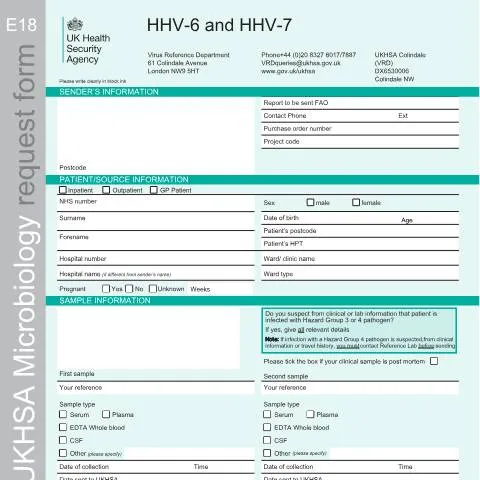
Navigating the HHV-6 and HHV-7 Referral Form: A Practical Guide
The HHV-6 and HHV-7 referral form, issued by the UK Health Security Agency (UKHSA), is an essential document for healthcare professionals who suspect infections related to these viruses. Understanding how to complete and submit this form accurately can streamline the diagnostic process and improve patient outcomes.
Understanding the Clinical Context of HHV-6 and HHV-7
Human Herpesvirus 6 (HHV-6) and Human Herpesvirus 7 (HHV-7) are both part of the herpesvirus family, known to cause various clinical manifestations, including febrile illness and childhood rashes. These infections can affect immunocompromised individuals significantly, necessitating prompt laboratory confirmation. Therefore, the referral form plays a crucial role in identifying and confirming cases effectively.
Who Should Submit the Form?
This form is typically filled out by healthcare professionals, including:
- Consultants in infectious diseases
- Pediatricians focusing on childhood infections
- General practitioners who suspect a case of HHV-6 or HHV-7
Moreover, in specific situations, such as during outbreaks or for immunocompromised patients, urgent referrals may be necessary, emphasizing the importance of this documentation.
Step-by-Step Breakdown of the Form’s Sections
The HHV-6 and HHV-7 referral form comprises several critical sections, each serving a unique purpose. Understanding these sections ensures accurate completion:
Sender’s Information
The sender's details are essential for laboratory communications. Include:
- Name and contact number
- Hospital or clinic affiliation
- Any project code or purchase order number relevant to the testing
Patient Information
Accurate patient details are vital. Here’s what to include:
- Full name
- Date of birth
- NHS number
- Address, including postcode
This section must be filled out meticulously to avoid delays in testing due to misidentifications.
Sample Information
Clearly specify the type of sample being sent. The options usually include:
- Serum
- Plasma
- EDTA blood
- Cerebrospinal fluid (CSF)
Understanding the correct sample type is critical as it affects the accuracy of the results.
Clinical/Epidemiological Information
This section provides the context for the referral. Healthcare professionals should detail:
- Clinical symptoms observed
- History of travel or exposure to risk factors
- Previous lab results if applicable
Highlighting any suspicion of infection from Hazard Group 3 or 4 pathogens is crucial, as this may affect handling protocols.
The Urgency of Timely Submission
Timing is crucial when dealing with potential viral infections. The UKHSA recommends submitting the HHV-6 and HHV-7 referral form as soon as clinical suspicion arises. The referral process typically involves the following timeline:
Submission Timeline
| Action | Suggested Timeline |
|---|---|
| Initial suspicion and collection of samples | Immediately upon clinical assessment |
| Form completion and submission | Within 24 hours of sample collection |
| Laboratory processing and reporting | Typically within 3-7 days of submission |
Addressing Common Pitfalls in Form Completion
Healthcare professionals frequently encounter challenges when completing the HHV-6 and HHV-7 referral form. Here are significant considerations to avoid common pitfalls:
Filling Out Patient Information
Ensure all patient identifiers are accurate. Incomplete or incorrect NHS numbers can lead to confusion and delays. Always double-check:
- Spelling of names
- Date of birth format (DD/MM/YYYY)
Sample Type Specification
Misclassification of the sample type can lead to significant repercussions. Always ensure:
- The sample is collected in the right container
- The form clearly identifies the type of sample being sent
Where to Send the Completed Form
Once completed, the form must be forwarded to the UKHSA’s relevant laboratory. The primary address for submissions is:
UK Health Security Agency Virus Reference Department 61 Colindale Avenue London NW9 5HT UK
Additionally, it’s advisable to retain copies of the form for your records before dispatching.
Contacting the Laboratory for Queries
If there are questions regarding the submission or the form itself, healthcare professionals can reach out to the laboratory directly at:
- Phone: +44 (0)20 8327 6017/7887
- Email: [email protected]
Ensuring a Comprehensive Referral Process
The HHV-6 and HHV-7 referral form fits into a broader referral and testing framework within the UK healthcare system. Here’s how:
Integration with Diagnostic Pathways
This form is part of the clinical diagnostic pathway for suspected viral infections. It is essential to understand how it interacts with:
- Initial clinical assessments
- Follow-up laboratory testing
- Subsequent treatment decisions
Follow-Up Procedures After Submission
After sending the form and samples, healthcare providers should initiate follow-up procedures to monitor the progress of the referral:
Tracking Results
Healthcare professionals can expect results within a specified timeframe. Should there be delays beyond the indicated processing time, it’s advisable to:
- Contact the laboratory directly using the provided contact information
- Ensure all required information was submitted correctly to avoid administrative delays
Implications of Test Results
Upon receiving the results, healthcare professionals should interpret the findings in a clinical context. Positive results may necessitate:
- Further testing for co-infections
- Consultation with infectious disease specialists
- Patient management adjustments based on current clinical guidelines
Regulatory Framework Surrounding the Referral Form
The HHV-6 and HHV-7 referral form is governed by various legal and ethical considerations, primarily the Data Protection Act 2018 and UK GDPR. These regulations mandate that all personal data collected through the form:
- Be processed lawfully, fairly, and transparently
- Be collected for legitimate purposes and not further processed in a manner incompatible with those purposes
- Be kept in a form which permits identification of data subjects for no longer than necessary
Importance of Confidentiality
Healthcare professionals must ensure that all patient information is handled with the utmost confidentiality, particularly when dealing with sensitive data related to viral infections. Failure to comply with these regulations could result in serious legal repercussions.
Key Takeaways for Successful Form Submission
Successfully completing and submitting the HHV-6 and HHV-7 referral form hinges on a thorough understanding of both the technical requirements and the broader clinical context. Here are essential takeaways to ensure proper submission:
- Complete all sections of the form accurately and thoroughly
- Submit the form promptly upon clinical suspicion
- Maintain communication with the laboratory for updates and clarification
- Adhere strictly to data protection regulations to safeguard patient information
Final Notes on the Future of Viral Infection Surveillance
As the landscape of infectious disease evolves, the role of referral forms like the HHV-6 and HHV-7 form becomes increasingly critical in public health surveillance. With ongoing developments in viral research and diagnostic technology, healthcare professionals must remain informed about best practices surrounding these forms. Continuous education on the latest guidelines will only enhance the efficiency of the referral process, ultimately benefiting patient care.
Understanding HHV-6 and HHV-7: Virus Overview and Impact
Human Herpesviruses 6 and 7 (HHV-6 and HHV-7) belong to the Herpesviridae family and are known for their ability to establish latency in host cells. While both viruses are commonly associated with mild infections in childhood, they can have varying implications for different patient demographics, particularly in immunocompromised populations. HHV-6 is further divided into two species: HHV-6A and HHV-6B, with the latter being more prevalent in clinical settings and often linked to roseola infantum, a common febrile illness in infants. HHV-7 is less well characterized but is believed to contribute to similar disease presentations.
Clinically, infections with these viruses can manifest as fever, rash, and lymphadenopathy. In rare cases, HHV-6 has been implicated in more severe conditions, such as encephalitis, particularly in immunosuppressed individuals. Understanding the implications of HHV-6 and HHV-7 is crucial for healthcare providers, particularly in terms of diagnosis and management strategies for affected patients, especially when considering the referral process to specialized services or neurologists when encephalitis is suspected.
Referral Process and Its Importance for Early Intervention
The referral process for HHV-6 and HHV-7 diagnoses plays a critical role in ensuring timely and effective patient management. Given the potential complications associated with infections from these viruses, particularly in vulnerable populations, early intervention is key. Healthcare professionals must be knowledgeable about the specific criteria for referral and the appropriate pathways within the National Health Service (NHS).
When considering a referral, clinicians should assess the severity of symptoms, the patient's medical history, and any underlying conditions that may predispose them to complications. For instance, a child presenting with high fever and rash should be monitored closely, and if there is a persistent high fever or neurological symptoms, a referral to a paediatric infectious diseases specialist may be warranted.
Furthermore, the referral form itself must be filled out accurately to prevent delays in care. Clinicians are advised to include comprehensive clinical details, including laboratory test results (such as PCR testing for HHV-6 and HHV-7), to substantiate the need for specialist input. The NHS has streamlined the referral process, making it essential for primary care providers to utilize the correct forms and follow the established protocols to facilitate rapid access to specialist services.
Key Resources and Guidance for Healthcare Professionals
Healthcare professionals navigating the complexities of HHV-6 and HHV-7 referrals can benefit from a variety of resources to enhance their understanding and efficiency in managing these cases. The UK Health Security Agency provides guidelines that outline the clinical features of HHV-6 and HHV-7 infections, risk factors, and management protocols. These resources are invaluable for ensuring that healthcare providers remain updated on best practices in diagnosis and referral processes.
In addition, the NHS has published referral pathways that detail the steps necessary for appropriate case management, including which tests to conduct prior to referral, how to manage symptoms while waiting for specialist care, and patient education materials to aid in the understanding of the viruses. Collaborative care involving general practitioners, paediatricians, and infectious disease specialists is often necessary, highlighting the importance of multidisciplinary approaches in treating viral infections.
Finally, continuing professional development (CPD) opportunities focused on viral infections and their management should be pursued by healthcare providers. Regular training and updates on emerging research related to HHV-6 and HHV-7 are essential for improving patient outcomes and maintaining high standards of care within the health system.