Understanding the Care Home COVID-19 Vaccination Consent Process
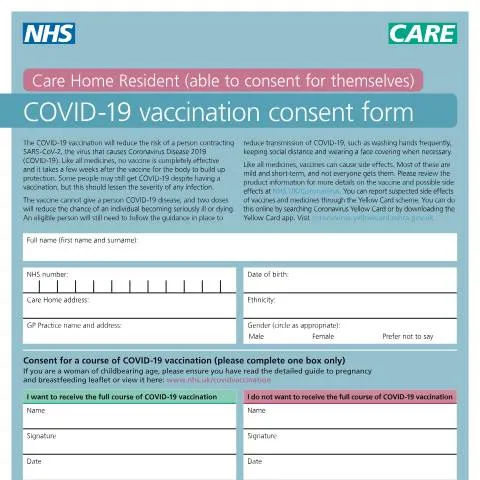
Care home residents across England faced unique challenges during the COVID-19 pandemic, with vaccination programmes requiring careful coordination between healthcare providers, care home staff, and residents themselves. The COVID-19 vaccination consent form for care home residents developed by Public Health England represents a crucial document in ensuring that vulnerable adults could access life-saving vaccines whilst maintaining their autonomy and legal rights to informed consent.
This consent form specifically addresses residents who retain mental capacity to make their own healthcare decisions, distinguishing it from other consent pathways used for residents with dementia or cognitive impairment. The document serves as both a legal safeguard and a practical tool, capturing essential information needed for safe vaccine administration whilst respecting individual choice in a residential care setting.
When Mental Capacity Meets Healthcare Decisions in Residential Settings
The consent form applies exclusively to care home residents who can understand, retain, and communicate decisions about their healthcare. This capacity assessment becomes particularly significant in care environments where residents may have varying degrees of cognitive function. Mental capacity must be assessed specifically for the vaccination decision, not assumed based on a resident's general condition or previous assessments.
Healthcare professionals administering vaccines must ensure that residents have been provided with adequate information about:
- The nature and purpose of COVID-19 vaccination
- Expected benefits in reducing severe illness and death
- Potential side effects and risks
- The fact that vaccination requires two doses for full protection
- Continued need to follow infection control measures post-vaccination
The form acknowledges that some residents may initially consent but later change their minds, or vice versa. This flexibility reflects the ongoing nature of capacity and consent, particularly important for elderly residents whose health status may fluctuate.
Distinguishing Capacity from Vulnerability
Being a care home resident does not automatically indicate lack of capacity. Many residents maintain full decision-making abilities whilst requiring assistance with daily living activities. The consent form respects this distinction, ensuring that capable residents are not subjected to best interests decisions made by others.
Essential Information Capture for Safe Administration
The form systematically collects critical data points that enable healthcare providers to deliver vaccines safely and maintain accurate records. Each field serves specific clinical and administrative purposes within the broader vaccination programme.
| Information Required | Clinical Purpose | Administrative Function |
|---|---|---|
| NHS Number | Links to medical history and allergies | Updates national immunisation database |
| Date of Birth | Confirms age-based vaccination priority | Validates identity and eligibility |
| GP Practice Details | Enables post-vaccination communication | Maintains primary care records |
| Ethnicity | Identifies higher-risk populations | Supports equality monitoring |
| Gender | Relevant for pregnancy considerations | Demographic surveillance data |
The NHS number proves particularly crucial as it links vaccination records to the resident's complete medical history, including previous adverse reactions to vaccines or medications. Care home staff should verify this number from the resident's medical records rather than relying on memory, as incorrect NHS numbers can disrupt the entire vaccination record system.
Pregnancy and Vaccination Considerations
The form specifically addresses women of childbearing age, directing them to detailed guidance about COVID-19 vaccination during pregnancy and breastfeeding. While this may seem less relevant in care home settings, some younger adults with disabilities or chronic conditions do reside in care facilities and may be pregnant or planning pregnancy.
Recording Vaccine Administration and Building Immunity Records
The lower section of the form serves as an immunisation record, documenting each dose administered with precise clinical detail. This information becomes part of the resident's permanent medical record and feeds into national surveillance systems monitoring vaccine effectiveness and safety.
Healthcare providers must record:
- Date of vaccination - Essential for scheduling second doses and determining when immunity develops
- Injection site - Left or right arm, important for managing local reactions and rotating sites
- Batch number and expiry date - Critical for tracking any batch-related adverse events
- Vaccine brand - Different vaccines have varying efficacy profiles and side effect patterns
- Immuniser details - Accountability and traceability for professional standards
- Administration location - Whether given in the care home, GP surgery, or other venue
The batch number proves particularly significant if adverse events emerge linked to specific vaccine lots. The Medicines and Healthcare products Regulatory Agency (MHRA) can then issue targeted safety alerts and track affected individuals through these records.
Managing Two-Dose Vaccination Schedules
Most COVID-19 vaccines require two doses for optimal protection, typically administered 8-12 weeks apart depending on the specific vaccine used. The form accommodates both doses, ensuring continuity of records even if different healthcare teams administer each dose.
Care homes must maintain these completed forms as part of residents' health records, whilst copies may be forwarded to GP practices to update primary care systems. This dual record-keeping helps prevent missed second doses and supports long-term immunity tracking.
Navigating Consent Refusal and Documentation Requirements
The form acknowledges that some residents may decline vaccination after receiving information about benefits and risks. This decision must be respected and properly documented to avoid repeated approaches that could constitute harassment or pressure.
When residents decline vaccination, healthcare providers should:
- Ensure the decision is fully informed and voluntary
- Document specific reasons for refusal on the form
- Explain that the decision can be reconsidered at any time
- Continue offering other COVID-19 protective measures
- Avoid repeatedly asking the same resident about vaccination
The reasons for refusal section serves multiple purposes beyond individual care. Aggregated data about vaccination hesitancy helps public health authorities understand community concerns and develop targeted education campaigns. Common concerns in care home settings might include fear of side effects, religious objections, or mistrust of new medical interventions.
Changing Minds and Ongoing Consent
Residents who initially refuse vaccination may later reconsider, particularly as they observe others receiving vaccines safely or as community transmission patterns change. The form design accommodates these changing decisions without creating administrative barriers to eventual vaccination.
Care Home Staff Responsibilities and Coordination Challenges
Care home managers and nursing staff play crucial roles in facilitating the consent process whilst respecting residents' autonomy. This involves practical coordination between healthcare providers, family members (where appropriate), and the residents themselves.
Key responsibilities include:
- Ensuring residents receive adequate information before vaccination teams arrive
- Identifying which residents have capacity to consent independently
- Gathering necessary documentation (NHS numbers, GP details, medical histories)
- Coordinating with families for emotional support without undermining resident autonomy
- Managing logistics around vaccination day scheduling and resident availability
The timing of information provision proves critical. Residents need sufficient time to consider their decision without feeling rushed, but information provided too far in advance may be forgotten or create prolonged anxiety.
Balancing Family Involvement with Resident Rights
Adult children or other family members often express strong views about their relative's vaccination, sometimes conflicting with the resident's own preferences. Care home staff must navigate these dynamics carefully, ensuring that capable residents make their own decisions whilst maintaining family relationships.
The consent form legally belongs to the resident, not their family. Staff should facilitate family discussions where the resident wishes this, but ultimately respect the resident's decision even if family members disagree.
Integration with Broader Public Health Surveillance Systems
Completed consent forms feed into national immunisation surveillance systems that track vaccine uptake, effectiveness, and safety across different populations. Care home residents represent a particularly important cohort for monitoring due to their high vulnerability to severe COVID-19 outcomes.
Data from these forms contributes to:
- Vaccine effectiveness studies comparing infection rates between vaccinated and unvaccinated residents
- Safety monitoring through integration with adverse event reporting systems
- Equity assessments examining vaccination uptake across different ethnic and demographic groups
- Programme evaluation identifying successful strategies for future pandemic responses
The Yellow Card scheme mentioned in the guidance provides the mechanism for reporting suspected vaccine side effects. Care home staff should be familiar with this system as they may be first to observe delayed reactions in residents.
Long-term Immunity Monitoring and Booster Planning
As understanding of COVID-19 immunity duration evolves, these initial vaccination records become crucial for planning booster programmes. The detailed batch and timing information enables researchers to correlate immunity waning with specific vaccine types and administration intervals.
Quality Assurance and Professional Standards in Vaccine Administration
The requirement for immuniser signatures and professional details ensures accountability in vaccine administration whilst supporting professional development and standards monitoring. Healthcare providers administering vaccines in care home settings must meet specific competency requirements and maintain detailed records of their activities.
Professional standards require immunisers to:
- Verify resident identity before administration
- Confirm consent immediately before vaccination
- Use appropriate injection techniques and sites
- Monitor residents for immediate adverse reactions
- Complete all documentation accurately and contemporaneously
- Provide clear post-vaccination advice to residents and staff
The immuniser signature creates legal accountability for proper vaccine administration. If adverse events occur, investigators can trace back to the specific healthcare provider involved, supporting both individual accountability and system-wide learning from incidents.
Care homes should verify that visiting vaccination teams have appropriate professional registration and indemnity insurance. The consent form itself becomes evidence that proper processes were followed if questions arise about the vaccination programme's implementation.
This systematic approach to consent and documentation reflects lessons learned from previous vaccination campaigns and pandemic responses, creating robust systems that protect both individual rights and public health outcomes in vulnerable residential populations.
Managing Vaccination Records and Documentation Requirements
Care homes must maintain comprehensive vaccination records that meet both clinical governance standards and regulatory requirements. The Care Quality Commission (CQC) expects detailed documentation demonstrating that proper consent procedures were followed and that vaccination decisions were made in residents' best interests.
Each resident's care file should contain the original signed consent form or best interests decision documentation, alongside copies of any correspondence with families or representatives. Where capacity assessments were conducted, these must be documented with clear reasoning and evidence of the decision-making process. The Mental Capacity Act 2005 requires that capacity assessments are decision-specific and time-specific, meaning separate assessments may be needed for different vaccine doses or types.
Digital record-keeping systems must comply with UK GDPR and the Data Protection Act 2018, particularly regarding the processing of sensitive health data. Care homes should ensure that vaccination records are stored securely and that access is limited to authorised personnel with legitimate reasons for viewing the information. When sharing vaccination status with external healthcare providers, residents' consent or a lawful basis for processing must be clearly established.
The NHS vaccination record system requires care homes to report vaccination data through established pathways, typically via the resident's registered GP practice or local vaccination teams. This dual recording ensures that national vaccination statistics are accurate whilst maintaining individual patient records. Care homes should verify that vaccination entries appear correctly on residents' NHS records, as discrepancies can affect future healthcare provision.
Staff vaccination records present additional complexities, as employment law intersects with health protection measures. Whilst staff vaccination became a legal requirement during certain periods, the documentation requirements differed from resident vaccination procedures. Care homes must maintain clear records of staff vaccination status whilst respecting employment rights and data protection obligations.
Quality assurance processes should include regular audits of vaccination documentation to ensure completeness and compliance. Missing signatures, unclear capacity assessments, or inadequate best interests documentation can create significant regulatory and legal risks. The CQC's inspection framework specifically examines how care homes manage consent processes and whether vulnerable residents' rights are properly protected.
Addressing Vaccination Hesitancy and Communication Challenges
Vaccination hesitancy among care home residents and their families requires careful, individualised responses that respect personal autonomy whilst providing accurate health information. Care home staff often find themselves in challenging positions when residents or families express concerns about vaccination safety, efficacy, or necessity.
The Medicines and Healthcare products Regulatory Agency (MHRA) provides authoritative information about vaccine safety and effectiveness that care homes can use to address specific concerns. However, staff must avoid providing clinical advice beyond their competence and should arrange for appropriately qualified healthcare professionals to discuss medical concerns with residents or families.
Cultural and religious considerations may influence vaccination decisions, and care homes must demonstrate sensitivity to diverse beliefs whilst ensuring that decisions are genuinely informed. Some residents may have concerns based on cultural practices or religious teachings, whilst others may have experienced historical medical discrimination that affects their trust in healthcare interventions. Staff training should include awareness of these factors and appropriate response strategies.
Communication barriers pose particular challenges when obtaining informed consent. Residents with hearing impairments, visual difficulties, or cognitive changes may struggle to understand vaccination information presented in standard formats. Care homes must make reasonable adjustments under the Equality Act 2010, which might include providing information in large print, using visual aids, or arranging for interpreters.
Family dynamics can complicate vaccination decisions, particularly where multiple family members hold different views or where there are disputes about a resident's capacity to make decisions. Care homes must navigate these situations carefully, ensuring that the resident's voice remains central whilst acknowledging legitimate family concerns. Professional mediation or involvement of advocacy services may be necessary in complex cases.
The timing of vaccination discussions is crucial for meaningful consent. Residents experiencing acute illness, recent bereavement, or significant life changes may not be in an optimal position to make vaccination decisions. Care homes should assess whether delaying vaccination conversations might be appropriate, balanced against the urgent public health need for protection against COVID-19.
Documentation of vaccination hesitancy discussions should be thorough but respectful, avoiding judgmental language whilst recording the specific concerns raised and information provided. This documentation may be important if residents later change their minds about vaccination or if their capacity to make decisions is questioned.
Legal Implications and Risk Management Strategies
The legal landscape surrounding COVID-19 vaccination in care homes encompasses multiple areas of law, creating complex compliance requirements that care home operators must navigate carefully. Understanding these legal implications is essential for protecting both residents' rights and organisational interests.
Tort law principles apply to vaccination decisions, particularly regarding duty of care and potential claims for negligence. Care homes could face legal challenges if residents suffer harm that could reasonably have been prevented through vaccination, or conversely, if residents experience adverse effects from vaccinations administered without proper consent. The standard of care expected is that of a reasonable care provider in similar circumstances, taking account of professional guidance and regulatory requirements.
The Human Rights Act 1998 provides additional legal protection for residents, particularly Article 8 (right to respect for private and family life) and Article 3 (prohibition of inhuman or degrading treatment). Forced vaccination would clearly breach these rights, but care homes must also consider whether failure to protect residents from preventable disease might constitute a breach of their positive obligations under human rights law.
Insurance implications of vaccination policies require careful consideration. Professional indemnity and public liability insurance policies may have specific exclusions or requirements relating to vaccination programmes. Care homes should review their insurance arrangements with providers to ensure adequate coverage for vaccination-related claims and to understand any reporting requirements for incidents or adverse events.
Employment law considerations become relevant where staff vaccination policies intersect with resident care. Whilst care homes cannot mandate resident vaccination, staff vaccination requirements may indirectly affect resident protection. The legal frameworks governing staff and resident vaccination differ significantly, and care homes must avoid conflating these separate areas of law.
Contract law principles apply to relationships with healthcare providers delivering vaccination services. Care homes should ensure that contractual arrangements clearly specify responsibilities for obtaining consent, maintaining records, and managing adverse events. Indemnity provisions and professional insurance requirements should be explicitly addressed in service agreements.
Data sharing arrangements for vaccination programmes must comply with data protection law whilst enabling effective healthcare coordination. The NHS Act 2006 and related regulations provide lawful bases for sharing health information for public health purposes, but care homes must ensure they understand the scope and limitations of these provisions.
Regulatory enforcement powers provide additional legal context for vaccination policies. The CQC has extensive powers to investigate care quality concerns, issue enforcement notices, and ultimately close care homes that fail to meet required standards. Vaccination-related failures could trigger regulatory action, particularly if they demonstrate broader systemic problems with consent processes or safeguarding arrangements.
Risk management strategies should include regular legal compliance reviews, staff training on relevant legal requirements, and clear escalation procedures for complex legal issues. Care homes should maintain relationships with legal advisers who understand both healthcare law and care sector regulations, as the intersection of these areas creates particular complexities that generalist legal advice may not address adequately.