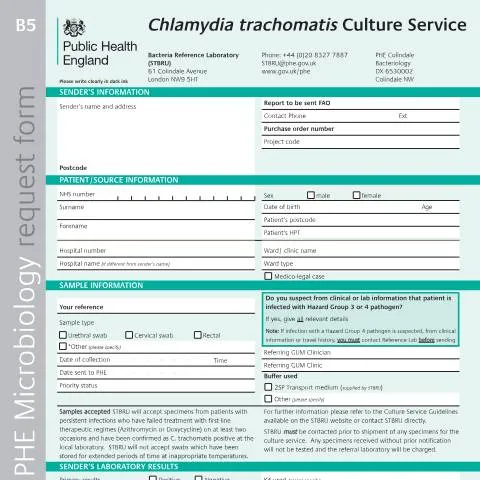
The Importance of the Chlamydia Trachomatis Culture Service Request Form
In the landscape of public health, particularly in the realm of sexually transmitted infections (STIs), the Chlamydia Trachomatis Culture Service Request Form serves a critical role. This document is a vital link between healthcare providers and Public Health England (PHE), facilitating accurate diagnosis and subsequent treatment pathways for patients suspected of having chlamydia infections. The intricacies of this form go beyond simple data entry; they encompass the responsibilities of healthcare providers, patient rights, and the regulatory framework that governs such procedures.
Navigating the Landscape: How This Form Differs from Similar Documents
Often, the Chlamydia Trachomatis Culture Service Request Form is confused with other documentation used in the diagnosis and treatment of STIs. However, its specific purpose sets it apart. While general STI request forms might encompass multiple infections or broad testing criteria, this form is explicitly tailored for the culture testing of Chlamydia trachomatis, a common STI.
Key Distinctions
- Specificity: This form is designed exclusively for testing Chlamydia, unlike general STI requests that might include various pathogens.
- Sample Acceptance Criteria: Only specimens from patients with persistent C. trachomatis infections that have failed initial treatment are accepted.
- Prior Notification: PHE mandates that healthcare providers contact the Specimen Transport and Bacteriology Unit (STBRU) before sending samples, ensuring compliance with strict operational protocols.
Completing the Form: Step-by-Step Guidance
Filling out the Chlamydia Trachomatis Culture Service Request Form accurately is essential for the effective processing of samples. Healthcare professionals should approach this task with attention to detail, ensuring that all required fields are completed without error.
Essential Sections to Complete
- Sender’s Information: Include the full name and address of the referring clinician and clinic.
- Sample Information: Specify the type of sample collected (urethral, cervical, or rectal) along with the buffer used.
- Clinical/Epidemiological Information: Provide a brief description of patient symptoms and initial treatment regimens (e.g., Azithromycin or Doxycycline doses).
- Hazard Group Pathogens: Indicate if there’s any suspicion of infection with Hazard Group 3 or 4 pathogens, detailing all relevant information.
Where and How to Submit the Form
Once completed, the form must be submitted according to the guidelines set out by PHE. There are distinct channels for submission, each with its own considerations.
Submission Channels Explained
| Channel | Details |
|---|---|
| Online Submission | Some clinics may have the capability to submit forms through a secure online portal. This method ensures speedy processing and reduces the risk of lost paperwork. |
| Paper Submission | This traditional method involves mailing the completed form to the STBRU. Ensure that all documentation is securely packaged to avoid damage or loss. |
| In-Person Delivery | Clinicians may opt to deliver samples directly to the STBRU. It’s essential to notify the laboratory beforehand to ensure the sample is logged correctly. |
Understanding the Regulatory Framework
The existence and usage of the Chlamydia Trachomatis Culture Service Request Form are grounded in a robust regulatory framework designed to protect public health. Under the Data Protection Act 2018 and the UK GDPR, healthcare providers must handle personal data with utmost care and confidentiality.
Regulatory Obligations
- Data Handling: Ensure that all patient information is stored securely and shared only with authorized personnel.
- Reporting Requirements: Clinicians must report all relevant data accurately to uphold public health standards and support epidemiological surveillance.
- Compliance with PHE Guidelines: Adhering to all stipulations outlined by PHE ensures the integrity of the testing and reporting processes.
Consequences of Non-Compliance and Errors
As with any official documentation, inaccuracies or omissions on the Chlamydia Trachomatis Culture Service Request Form can lead to significant repercussions. Understanding these consequences is crucial for healthcare providers.
What Happens in Case of Errors?
- Delays in Diagnosis: Missing or incorrect information can lead to delays in processing and diagnosing patients, potentially impacting their health outcomes.
- Rejection of Samples: Samples submitted without proper prior notification to STBRU will not be tested, resulting in wasted resources and time.
- Legal Ramifications: Non-compliance with the Data Protection Act may lead to legal challenges and penalties.
The User Experience: From Submission to Results
For the patient, the journey begins once their specimen is collected and the form is submitted. Understanding the trajectory of their sample is essential for healthcare providers in managing patient expectations.
The Pathway of a Sample
- Sample Collection: Clinicians collect a sample using the specified swabbing technique, ensuring it adheres to STBRU guidelines.
- Form Submission: The completed form accompanies the sample, detailing patient information and clinical background.
- Laboratory Processing: Upon receipt, the laboratory processes the sample according to the guidelines, providing results typically within a specified timeframe.
- Results Communication: Results are reported back to the referring clinician, who then discusses the findings with the patient and decides on subsequent treatment plans.
Final Considerations for Healthcare Providers
Filling out and submitting the Chlamydia Trachomatis Culture Service Request Form is not merely a bureaucratic task; it is an essential element of public health strategy. By understanding the nuances of this form, healthcare professionals can ensure they are contributing effectively to the diagnosis and management of chlamydia infections.
Professional Responsibilities
- Educate Patients: Ensure that patients understand the importance of accurate information in their health records.
- Maintain Communication: Stay in touch with STBRU regarding any changes in submission protocols or diagnostic procedures.
- Collaborate with Public Health Institutions: Work alongside PHE to aid in the broader fight against STIs through proper documentation and reporting.
Understanding the Chlamydia Trachomatis Culture Service Request Form
The Chlamydia Trachomatis culture service request form is an essential document utilized in the United Kingdom for the diagnosis and management of Chlamydia infections. This form is used primarily by healthcare professionals to request laboratory testing for the presence of Chlamydia Trachomatis. Understanding this form is crucial not only for medical practitioners but also for patients who may be navigating their sexual health options.
The form typically collects patient details, including personal identification, contact information, and relevant medical history. This data is vital for ensuring accurate test results and proper follow-up. Additionally, consent for testing and notification of results is often included within this form, adhering to the requirements set forth by the Data Protection Act 2018 and the UK GDPR. It is imperative for healthcare providers to ensure that they obtain informed consent from patients, outlining how their data will be used and stored.
Upon completion, the form may be submitted to an accredited laboratory that specializes in sexually transmitted infections (STIs). The laboratory then processes the request, conducts the culture test, and subsequently communicates the results back to the healthcare provider, who will inform the patient. Understanding how to correctly fill out this form can significantly improve the speed and accuracy of diagnosis.
Key Considerations for Healthcare Professionals When Using the Form
For healthcare professionals, several critical considerations come into play when utilizing the Chlamydia Trachomatis culture service request form. First and foremost is the need for familiarity with the specific guidelines and protocols established by Public Health England and local health authorities. These guidelines may detail specific criteria for testing, including eligibility and clinical indications. For instance, certain high-risk populations may be prioritized for testing, and healthcare providers must ensure they are compliant with these criteria.
Moreover, it is crucial for practitioners to understand the various methods of testing available. The culture test, while traditional, may be complemented or supplanted by other testing methods such as nucleic acid amplification tests (NAATs), which are often more sensitive and can be done using urine samples. Adequately documenting the rationale for selecting a particular test on the service request form is essential, particularly in cases where clinical judgement may come into question.
Additionally, practitioners should be vigilant about the importance of follow-up care. The results of a Chlamydia test can have significant implications for treatment and patient education. Therefore, a clear plan for communicating results and ensuring that appropriate treatments are administered is vital. This includes discussing the potential implications of the test results and the importance of notifying any sexual partners, in line with the guidelines provided by the National Health Service (NHS).
Patient Rights and Responsibilities in the Testing Process
When it comes to sexual health, patient rights and responsibilities play a crucial role in the testing process linked to the Chlamydia Trachomatis culture service request form. Patients have the right to confidentiality and informed consent, ensuring that their personal information and test results are handled with the utmost respect and privacy. Under the Data Protection Act 2018, patients can access their health records and request amendments if necessary, promoting transparency in the healthcare process.
Furthermore, patients are responsible for providing accurate and truthful information on the service request form. This includes details about their sexual history, symptoms, and any previous STI infections. This information is paramount for healthcare providers to make informed decisions regarding testing and treatment options. Failing to provide complete and accurate information can lead to misdiagnosis or inadequate treatment.
Additionally, patients should be proactive in seeking follow-up care after testing. If the results indicate an infection, patients have a responsibility to adhere to treatment protocols and to inform any recent sexual partners. This proactive approach is important not only for their own health but also for the health of others, as Chlamydia can be asymptomatic and easily spread without proper precautions. Understanding these rights and responsibilities can empower patients to take charge of their sexual health effectively.