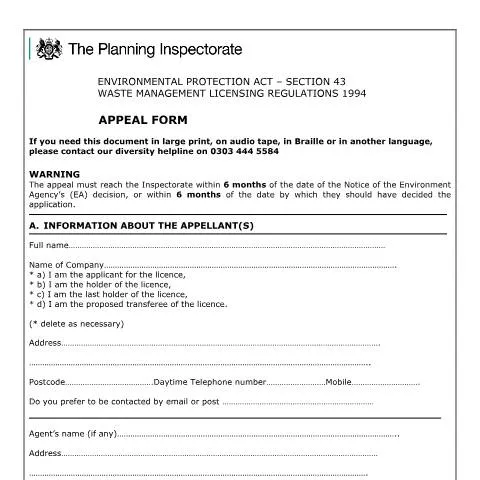
Navigating the Waste Carrier Appeal: Your Guide to Success
When a decision regarding your waste carrier license is made by the Environment Agency (EA), it can feel like a daunting task to navigate the complexities of the appeal process. The Waste Carrier Appeal Form is a critical document that allows you to contest decisions such as license rejections or modifications. Understanding how to effectively use this form can significantly impact the outcome of your appeal.
A Deep Dive into the Appeal Process Timeline
The timeline surrounding a Waste Carrier Appeal is crucial. To initiate an appeal, you must act swiftly. Specifically, the appeal must be filed within six months from the date of the EA's decision or from the point at which they were obligated to make a decision but failed to do so. Here’s a breakdown of the key phases in this timeline:
- Day 1: You receive the EA's decision.
- Day 6 Months: Deadline to submit your appeal form to the Planning Inspectorate.
- Following Submission: The Inspectorate will review the appeal, which may involve a site visit, hearings, or inquiries, depending on the complexity of your case.
- Decision Issued: Typically within a few months after the appeal has been lodged, you will receive a written decision.
Proactive Steps Following Submission
After submitting the appeal form and all necessary documentation, be prepared for the next steps. You may be asked for additional information or clarification on your grounds for appeal. Being responsive and thorough during this phase can expedite the process significantly.
What Happens When Your Appeal is Denied?
If your appeal is unsuccessful, understanding your options becomes vital. Here are the potential avenues for action:
- Judicial Review: If you believe that the decision made by the Planning Inspectorate was flawed in terms of law or procedure, you can apply for a judicial review.
- Reapplication: If circumstances change, consider reapplying for the license. Ensure that any new application addresses the issues raised during your appeal.
- Consultation: Engaging a legal professional specialized in environmental law can provide insights into your options moving forward.
Structuring Your Appeal: Critical Components
Completing the Waste Carrier Appeal Form requires diligence and attention to detail. The following components are essential:
Appellant Information
Your personal information, including name, address, and contact details, is mandatory. Make sure to specify your relationship to the license (applicant, holder, etc.) clearly, as this affects the process.
Details of the Appeal
Clearly articulate the nature of your appeal. This could be against:
- A rejection of your license application
- Conditions imposed on a granted license
- Modification, suspension, or revocation of an existing license
Choosing the Right Procedure
The appeal process offers three routes: Written Representations, Hearings, and Inquiries. Each has distinct characteristics:
| Procedure | Description |
|---|---|
| Written Representations | Quickest method, involving submission of written statements and documents. |
| Hearing | Allows for discussion and public involvement, suitable for complex cases. |
| Inquiry | Most formal process, often involving legal representation and expert witnesses. |
Understanding the Regulatory Framework
The Waste Carrier Appeal Form operates within the broader context of the Environmental Protection Act and associated regulations. This legal framework governs licensing and appeals, ensuring that decisions are made transparently and fairly.
The Role of the Planning Inspectorate
The Planning Inspectorate is responsible for overseeing the appeals process in England. Their role encompasses evaluating the validity of appeals against the EA's decisions and ensuring that all parties are heard. This impartiality is crucial for maintaining public confidence in the regulatory system.
Special Considerations for Unique Circumstances
There are instances where unique circumstances may affect your appeal process. Here’s a closer look at specific scenarios:
Foreign Applicants
If you are applying from outside the UK, ensure that you provide a valid UK address for correspondence and consider the potential complexities related to jurisdiction.
Minors and Capacity Issues
In cases where the applicant is a minor or lacks the capacity to represent themselves, a legal guardian or representative should be involved in the appeal process.
Urgent Situations
If your situation is urgent, articulate this in your appeal submission. The Planning Inspectorate may prioritize urgent cases to prevent significant harm or disruption in waste management operations.
Gathering Supporting Documentation
Providing comprehensive supporting documents is key to a robust appeal. Essential documents to include are:
- Your grounds of appeal
- The initial application submitted to the EA
- Relevant correspondence with the EA
- Maps or drawings pertinent to your appeal
Preparing for Submission
Before submitting your appeal, ensure that you have:
- Signed the appeal form
- Included all supporting documents
- Sent copies to both the Planning Inspectorate and the relevant EA office
In keeping with the Data Protection Act 2018 and UK GDPR, redacting sensitive personal information from documents is advisable to protect privacy.
Final Words of Caution and Encouragement
Engaging with the Waste Carrier Appeal process can be daunting, but understanding each step can empower you as an appellant. Remember to act quickly, prepare thoroughly, and seek professional assistance if needed. The outcomes of appeals can significantly affect your business, especially in the waste management sector, making each decision that much more critical.
Understanding the Waste Carrier Licensing Process
In the UK, waste carriers must hold a valid waste carrier license to transport controlled waste. This is governed by the Environmental Agency in England, the Natural Resources Body for Wales, and the Scottish Environment Protection Agency in Scotland. It’s essential for potential waste carriers to understand the licensing process thoroughly. The application can be made online or via paper forms, and the time taken for processing is generally around four weeks.
When applying, you will need to provide information about your business structure, such as whether you are a sole trader, partnership, or limited company. Additionally, details regarding your transport methods, the types of waste you plan to handle, and any relevant environmental management practices must be included. Failure to adhere to the licensing requirements can result in significant penalties, including fines or imprisonment.
Furthermore, it’s mandatory for waste carriers to comply with the duty of care regulations, which means they must ensure that the waste they transport is handled properly throughout the process, from collection to disposal. This duty extends to ensuring that waste is transferred only to authorized persons, and appropriate documentation is maintained during the whole process.
Grounds for Appeal Against Waste Carrier License Decisions
If your application for a waste carrier license has been refused or revoked, you have the right to appeal. Understanding the grounds for appeal is crucial. Common reasons for refusal include failure to provide adequate information, previous non-compliance with environmental regulations, or failure to pay relevant fees.
When preparing your appeal, you should focus on the specific reasons given in the decision letter. It’s wise to gather comprehensive evidence and documentation to support your case. This might include demonstrating compliance with environmental standards, showing proof of payment for any outstanding fees, or providing character references if your application was rejected due to past conduct.
The appeal must be submitted to the relevant authority, typically within 28 days of receiving the refusal notice. Depending on the decision-maker, appeals may be reviewed by a tribunal or within the agency itself, with outcomes potentially ranging from overturning the decision to setting specific conditions for future applications.
Maintaining Compliance After Licensing
Once you have successfully obtained your waste carrier license, understanding your ongoing responsibilities is vital. Compliance with all relevant waste management legislation is not just advised; it’s a legal obligation. Regular training for staff on waste handling procedures is essential, especially regarding hazardous waste, which requires specific handling and disposal techniques.
Additionally, it’s advisable to keep accurate records of all waste transported, including weight, type, and destination. Such records not only ensure compliance but can also be crucial in the event of an inspection by environmental authorities. Furthermore, staying up-to-date with any changes in legislation or best practices in waste management is crucial for maintaining your license and reputation within the industry.
Lastly, consider engaging in regular audits of your operations to identify any potential areas for improvement in compliance and environmental impact. Being proactive in these areas can prevent future complications and reinforce your commitment to responsible waste management.