When Opposition Proceedings Hit a Standstill: The Strategic Pause
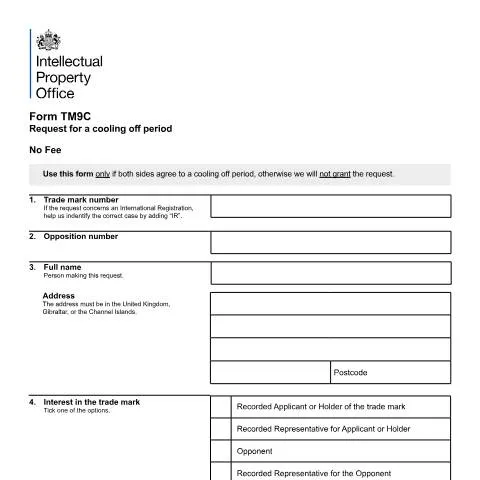
Trade mark opposition proceedings can escalate quickly, consuming time, resources and energy from both sides. Yet sometimes, the most productive step forward involves stepping back entirely. The Request for a cooling off period (Form TM9C) represents a formal mechanism within UK intellectual property law that allows opposing parties to suspend active proceedings whilst they explore settlement opportunities or reassess their positions.
This temporary halt differs fundamentally from abandoning the case or seeking extensions to deadlines. Instead, it creates a protected space where negotiations can unfold without the pressure of looming procedural requirements. During this period, the Intellectual Property Office effectively pauses the opposition clock, preventing either party from gaining procedural advantages whilst discussions continue behind the scenes.
The cooling off period has become increasingly valuable in modern IP disputes, where initial positions may seem irreconcilable but underlying commercial interests often align more closely than first appearances suggest. However, this mechanism comes with a crucial prerequisite: mutual agreement. The IPO will not grant a cooling off period unless both the trade mark applicant and the opponent explicitly consent to the pause.
Navigating the Dual-Consent Requirement
The most distinctive feature of Form TM9C lies in its bilateral nature. Unlike most IPO forms where a single party acts unilaterally, requesting a cooling off period requires explicit agreement from both the trade mark applicant and the opponent. This requirement reflects the fundamental principle that neither party should be forced into negotiations against their will.
In practice, this means preliminary discussions must occur before anyone completes Form TM9C. These conversations might happen directly between the parties, through their representatives, or during formal settlement meetings. The key point is that by the time someone submits the form, both sides have already reached a meeting of minds about pausing proceedings.
The IPO takes this requirement seriously. Section 5 of the form includes a declaration where the person making the request must confirm that "the other party to these proceedings has agreed to this request for a cooling off period". This isn't merely a formality – providing false information here could have serious consequences, including potential contempt of proceedings.
Interestingly, either party can submit the form once mutual agreement exists. Whether the applicant or opponent makes the actual request matters little, provided both have consented to the cooling off period. This flexibility allows the party with better administrative resources or more pressing timing concerns to handle the paperwork whilst maintaining the collaborative spirit of the process.
Decoding the Administrative Framework
Form TM9C requires surprisingly few pieces of information, but each element serves a specific purpose in the IPO's case management system. Understanding these requirements helps ensure smooth processing and avoids unnecessary delays.
The trade mark number (question 1) must be provided exactly as registered or applied for. For UK trade marks, this typically follows the format UK00000000000. However, if the dispute involves an International Registration designating the UK, applicants must add "IR" to help the IPO identify the correct case file. This distinction matters because International Registrations follow different procedural pathways and may have different opposition timelines.
The opposition number (question 2) appears on all official correspondence once opposition proceedings begin. This reference number links the cooling off request to the specific dispute, preventing confusion in cases where multiple oppositions might affect the same trade mark. Without this number, the IPO cannot process the request effectively.
| Information Required | Format/Details | Purpose |
|---|---|---|
| Trade mark number | UK00000000000 or IR000000 | Links to specific trade mark record |
| Opposition number | Alphanumeric reference from IPO correspondence | Identifies the particular dispute |
| UK address | Must be in UK, Gibraltar, or Channel Islands | Ensures proper service of documents |
| Interest declaration | Specific role in proceedings | Establishes standing to make request |
Address Requirements and Representation Rules
Question 3 demands a UK address, specifically within the United Kingdom, Gibraltar, or the Channel Islands. This requirement reflects post-Brexit changes to IPO procedures, where non-UK applicants must either maintain a UK address for service or appoint a UK representative. The address provided here becomes the official contact point for all correspondence relating to the cooling off period.
For represented parties, this creates an interesting choice. The representative's address automatically satisfies the UK requirement, but principals may prefer to provide their own UK address if they want direct communication during the cooling off period. Either approach works, but consistency with existing case records helps avoid confusion.
Establishing Standing: Who Can Make the Request
Question 4 requires the person making the request to identify their interest in the proceedings. This seemingly simple requirement actually serves important legal and practical purposes, establishing that the requester has proper standing to seek a cooling off period on behalf of their side.
The form offers five specific options, each reflecting different relationships to the underlying dispute:
- Recorded Applicant or Holder – The person or entity who filed the trade mark application or owns the registered mark
- Recorded Representative for Applicant or Holder – A solicitor, trade mark attorney, or other representative acting for the applicant/holder
- Opponent – The person or entity who filed the opposition
- Recorded Representative for the Opponent – A representative acting for the opposing party
- Other – Any other party with a legitimate interest, requiring specification
The "Other" category accommodates various scenarios that don't fit neatly into the standard boxes. This might include licensees with rights to defend the mark, parent companies acting on behalf of subsidiaries, or successors in title who haven't yet updated the register. When selecting "Other," providing clear explanation of the relationship helps the IPO understand why this person has standing to make the request.
Representative Authority and Internal Approvals
When representatives make cooling off requests, they must ensure they have proper authority from their clients. The IPO assumes that recorded representatives have such authority, but internal approval processes matter enormously. A representative who requests a cooling off period without client consent faces potential professional liability, even if the IPO processes the request normally.
Similarly, when corporate applicants or opponents are involved, the person signing Form TM9C should have appropriate authority within the organisation. This becomes particularly important for large companies where the individual managing trade mark matters might not have general authority to agree to procedural changes affecting litigation.
The Declaration and Its Legal Implications
Section 5 contains the form's most critical element: the declaration confirming that both parties have agreed to the cooling off period. This declaration carries legal weight beyond simple form-filling, creating potential liability for false statements and establishing a record of mutual consent.
The signature requirement offers flexibility – typed or handwritten signatures both satisfy the IPO's requirements. This accommodation reflects modern business practices where electronic signatures have become standard, particularly for routine procedural matters. However, the signature must be accompanied by the signatory's name in block capitals and the date of signing.
Dating the declaration accurately matters more than it might initially appear. The IPO uses this date to establish when the cooling off period begins, affecting subsequent deadlines and procedural calculations. If parties reach agreement on one date but don't submit the form until several days later, they might inadvertently shorten their cooling off period or create confusion about timing.
Managing Expectations Around Timing
While Form TM9C doesn't specify the length of cooling off periods, the IPO typically grants initial periods of two months, with possibilities for extension if both parties continue to agree. The clock starts ticking from when the IPO processes the request, not necessarily from when parties reach their initial agreement or submit the form.
This timing consideration influences strategic decisions about when to submit cooling off requests. Parties who want maximum time for negotiations should submit Form TM9C promptly after reaching agreement, rather than delaying submission whilst they organise other aspects of their discussions.
Submission Channels and Processing Realities
The IPO strongly encourages electronic submission through email to [email protected]. This preference reflects both efficiency considerations and the reality that electronic processing typically occurs faster than paper handling. The form specifically notes that paper submissions "take longer to process," which could impact timing-sensitive negotiations.
Electronic submission requires completing the PDF form digitally, including typed signatures where appropriate. Most modern PDF readers allow form completion, but parties should ensure their completed form remains readable and that all required fields contain information. Corrupted or incomplete electronic submissions may require resubmission, potentially delaying the cooling off period's start date.
For parties who cannot submit electronically, postal submission remains available to the IPO's Newport office. However, this option should be reserved for genuine cases where electronic submission proves impossible, given the processing delays involved.
Reference Numbers and Communication Preferences
Question 6 allows parties to provide their own reference number for IPO communications. This optional field serves practical purposes for organisations with internal case management systems or multiple pending matters. Providing a clear, consistent reference helps ensure that cooling off period correspondence reaches the right people promptly.
The contact details section requires a name and daytime telephone number for queries. This information becomes crucial if the IPO needs clarification about any aspect of the request. Providing accurate, current contact information helps avoid processing delays that could affect negotiation timelines.
Strategic Considerations and Settlement Dynamics
Requesting a cooling off period signals to the IPO and the opposing party that settlement discussions are underway or contemplated. This signal can be valuable in itself, demonstrating good faith and commercial reasonableness that may influence how the dispute develops if negotiations ultimately fail.
However, parties should consider whether a cooling off period truly serves their interests. For opponents with strong cases, pausing proceedings might allow applicants to develop counter-strategies or gather additional evidence. Conversely, applicants facing weak opposition might prefer to push forward rather than give opponents time to strengthen their positions.
The mutual agreement requirement means that either party can effectively veto a cooling off period by simply refusing to consent. This dynamic creates interesting strategic considerations about when and how to raise the possibility of cooling off periods during opposition proceedings.
Commercial Realities Behind the Paperwork
Most cooling off requests emerge from recognition that the underlying commercial dispute might be resolved more efficiently through negotiation than through formal proceedings. Trade mark oppositions often involve competitors in the same market sector, where ongoing commercial relationships matter more than the specific outcome of a single dispute.
The IPO's willingness to grant cooling off periods reflects understanding that many intellectual property disputes stem from misunderstandings, poor communication, or commercial pressures that can be addressed without formal adjudication. By providing a structured mechanism for pausing proceedings, Form TM9C enables parties to explore these alternatives whilst preserving their formal rights.
Ultimately, the cooling off period represents a sophisticated balancing act between the need for procedural certainty and the recognition that negotiated solutions often serve everyone's interests better than adversarial proceedings. Form TM9C provides the administrative framework that makes this balance possible within the UK's intellectual property system.
Cooling Off Rights in Different Consumer Sectors
The application of cooling off periods varies significantly across different sectors, each governed by specific regulations that reflect the unique characteristics of particular markets and consumer relationships.
Financial Services and Investment Products
The Financial Conduct Authority (FCA) oversees cooling off provisions for financial products, with some of the most generous periods in consumer law. Life insurance policies typically carry a 30-day cooling off period from the date you receive your policy documents, whilst personal pension schemes may offer up to 30 days from the earlier of receiving your cancellation notice or 14 days after your contract is concluded.
Investment products present particular complexity. ISA (Individual Savings Account) providers must offer cooling off rights, but the period varies between cash ISAs (typically 14 days) and stocks and shares ISAs (often 30 days). However, exercising cooling off rights on investment products during market volatility can have significant financial implications, as you may be liable for any fall in investment value during the cooling off period.
Payment protection insurance (PPI), despite its controversial history, maintains standard cooling off provisions. Credit agreements secured against your home carry extended cooling off periods under the Consumer Credit Act 1974, reflecting the serious nature of secured lending.
Energy Supply Contracts
Energy switching carries specific cooling off protections administered under Ofgem regulations. Domestic energy supply contracts concluded away from business premises (typically door-to-door sales) carry a 14-day cooling off period. However, the complexity arises in the interaction between your existing supplier's cancellation procedures and your new supplier's cooling off rights.
If you exercise cooling off rights with a new energy supplier, your previous contract may not automatically resume. This can leave you on expensive standard variable tariffs. The Citizens Advice service maintains detailed guidance on navigating these transitions, particularly relevant given the recent volatility in energy markets.
Business energy contracts operate under different frameworks, with cooling off periods generally not applicable to micro-business energy supply agreements concluded on business premises, unless specifically provided in contract terms.
Telecommunications and Digital Services
Ofcom regulates cooling off periods for telecommunications services, with standard 14-day periods applying to contracts concluded at a distance. However, mobile phone contracts present particular considerations when cooling off rights interact with device financing arrangements.
If you purchase a handset on a contract basis, exercising cooling off rights may require returning the device in its original condition. Any damage beyond normal wear and tear can result in charges that may exceed the value of avoiding the contract. Network operators must provide clear guidance on device return conditions within their cooling off notices.
Broadband installation presents unique timing considerations. If an engineer visit is required and you subsequently exercise cooling off rights, you may be liable for installation costs already incurred, depending on your contract terms and the stage of installation reached.
Digital content services, including streaming platforms and software subscriptions, carry standard distance selling cooling off rights. However, if you begin using the service during the cooling off period, you may lose your right to cancel unless the provider obtained your express consent to commence service immediately.
Employer-Employee Cooling Off Scenarios
Employment relationships involve several scenarios where cooling off periods apply, though these differ fundamentally from consumer cooling off rights in both legal basis and practical application.
Fill in your form directly online
No printing: type your details into the boxes of the official form, tick, then download the PDF ready to send.
- 1Type into the form boxes
- 2Tick in one click
- 3Save and download the PDF
Settlement Agreements and Compromise Agreements
Settlement agreements (previously known as compromise agreements) concluded between employers and employees carry mandatory cooling off periods under employment law. Employees have seven days from signing a settlement agreement to withdraw their acceptance, provided the agreement was concluded following a relevant independent adviser's guidance.
This cooling off period serves a protective function, recognising that employees may sign settlement agreements under pressure or without fully considering the implications for their employment rights. During this period, you can withdraw from the agreement without penalty, though you cannot subsequently enforce any terms already implemented.
ACAS (Advisory, Conciliation and Arbitration Service) provides detailed guidance on settlement agreement cooling off periods, including how the seven-day period is calculated and what constitutes valid withdrawal. The calculation excludes weekends and bank holidays, reflecting the importance of ensuring employees have adequate opportunity to reconsider.
Statutory Disciplinary and Grievance Procedures
While not technically cooling off periods, employment law incorporates several "cooling off" mechanisms designed to encourage resolution of workplace disputes. Early conciliation through ACAS operates as an informal cooling off period before employment tribunal proceedings can commence.
Employees must contact ACAS before submitting employment tribunal claims, initiating a period (typically one month, extendable to six weeks) during which both parties can explore resolution without formal proceedings. This serves dual purposes: protecting employment relationships where possible and reducing tribunal caseloads.
Disciplinary procedures often incorporate informal cooling off periods, though these depend on employer policies rather than statutory requirements. Progressive disciplinary procedures may include periods for reflection and improvement before escalating to formal action.
Pension Auto-Enrolment Opt-Out Rights
Workplace pension auto-enrolment creates specific cooling off scenarios administered through The Pensions Regulator. Eligible employees automatically enrolled in workplace pension schemes have one month from their auto-enrolment date to opt out and receive a full refund of contributions.
This opt-out period operates similarly to consumer cooling off rights but serves different policy objectives. The government designed auto-enrolment to increase pension participation whilst preserving individual choice. The one-month period balances encouraging pension saving with respecting employee autonomy.
Calculating the opt-out period can be complex for employees with irregular pay patterns or those who change employment during the period. The Pensions Regulator maintains detailed guidance on how opt-out periods interact with different pay arrangements and employment changes.
Cooling Off Periods in Property and Legal Transactions
Property transactions and legal services incorporate cooling off mechanisms that reflect the high-value, complex nature of these arrangements and their potential for long-term consequences.
Residential Property Transactions
While English property law generally operates on the principle of binding contracts upon exchange, specific circumstances trigger cooling off rights. Off-plan property purchases, particularly those marketed at distance or through high-pressure sales environments, may carry Consumer Contract Regulations cooling off periods.
Shared ownership schemes administered through housing associations often incorporate cooling off provisions, recognising the complexity of part-purchase, part-rent arrangements. The Homes and Communities Agency provides framework guidance, though specific cooling off terms vary between different housing association providers.
Timeshare and holiday accommodation purchases carry extensive cooling off protections under The Timeshare, Holiday Products, Resale and Exchange Contracts Regulations 2010. These provide 14-day cooling off periods, but with specific procedural requirements including mandatory information provision and formal cancellation procedures.
Equity release products, given their complexity and irreversible nature, carry extended cooling off periods. The Equity Release Council's standards require member firms to provide cooling off periods, typically 15 days, though individual providers may offer longer periods.
Legal Services and Professional Retainers
Solicitors' services carry cooling off rights in specific circumstances, particularly for services marketed at distance or through cold-calling. The Solicitors Regulation Authority (SRA) requires firms to inform clients of cooling off rights where Consumer Contract Regulations apply.
Personal injury claims often involve cooling off considerations, particularly where clients enter conditional fee arrangements (CFAs) or after-the-event insurance policies. These arrangements, while not carrying statutory cooling off periods, often include contractual cooling off provisions reflecting their complexity and potential cost implications.
Will-writing services marketed through direct marketing or at distance carry standard cooling off rights. However, the interaction between cooling off periods and urgent estate planning needs requires careful consideration, particularly for elderly or vulnerable clients.
Consumer Credit and Secured Lending
Secured lending arrangements carry some of the most extensive cooling off protections in consumer law. The Consumer Credit Act 1974 provides 14-day cooling off periods for credit agreements secured on your home, calculated from the later of contract signature or receipt of required documentation.
Second charge mortgages and homeowner loans carry additional protections through the Mortgage Credit Directive Order 2015, which requires a seven-day reflection period before contracts can be concluded, followed by standard cooling off rights post-signature.
Hire purchase and conditional sale agreements carry cooling off rights when concluded away from business premises, but the interaction with goods delivery and usage can complicate exercising these rights. If you use goods during the cooling off period, you may be liable for usage charges or depreciation.
Payday lending and high-cost short-term credit carry standard cooling off provisions, though the short-term nature of these products can make cooling off rights practically difficult to exercise. The Financial Conduct Authority maintains specific guidance on cooling off procedures for high-cost credit products.