Navigating the Continuation of Proceedings Before the Comptroller: A Practical Guide
When dealing with intellectual property matters in the UK, particularly concerning patents, the "Continuation of Proceedings Before the Comptroller" form plays a pivotal role in ensuring that ongoing cases proceed smoothly. This document is not just a formality; it is a vital component of the patent application process that allows applicants to continue proceedings that have already begun. Understanding its significance and the steps involved in its completion can save applicants time and potential pitfalls.
Understanding the Context: Why This Form Matters
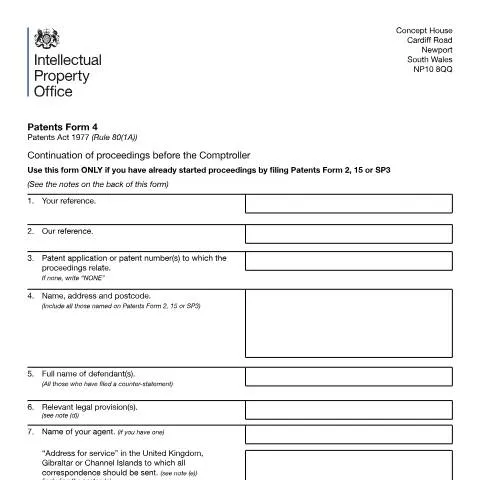
The Intellectual Property Office (IPO) oversees the administration of patents in the UK, and the "Continuation of Proceedings Before the Comptroller" (Patent Form 4) is used specifically when parties wish to continue legal proceedings that have already been initiated using forms such as Patents Form 2, 15, or SP3. This continuity is essential for maintaining the integrity of the legal process and ensuring that no unnecessary delays occur. The circumstances surrounding the need for this form can vary widely:
- Responding to objections raised by the IPO
- Addressing counter-statements filed by other parties
- Seeking further clarification on patent applications
By using this form, applicants can ensure that all relevant information is conveyed to the IPO, allowing for a targeted and efficient continuation of their case.
Step-by-Step: Completing the Form
Filling out the "Continuation of Proceedings Before the Comptroller" form requires attention to detail and a clear understanding of the surrounding circumstances of your case. Here’s a detailed guide to navigating the completion of this form:
1. Preparing Your Information
Before diving into the form itself, gather all necessary background information, including:
- Your reference number and the IPO reference number
- The patent application or patent numbers associated with your case
- Names and addresses of all parties involved, including any defendants listed in previous forms
- Legal provisions relevant to your proceedings
- Details of your agent, if you have one
2. Completing the Form
When filling out the form, adhere to the following guidelines:
- Use capital letters and black ink for handwritten submissions, or type directly if submitting electronically.
- If you need additional space, continue on a separate sheet and label it accordingly as "see continuation sheet."
- Ensure that all relevant parties sign the form if they were involved in the initial proceedings.
It's crucial to double-check that you have included all required signatures and that your payment details are accurate.
3. Legal Provisions and References
The form asks for relevant legal provisions under which you're continuing proceedings. This could involve various sections of the Patents Act 1977, such as:
- Section 8 (1)(a) and (b) regarding the rights of the applicant
- Section 12 related to amendments
- Section 29 regarding opposition to patent applications
Familiarize yourself with these provisions, as citing them accurately can strengthen your position.
Submission Channels: Navigating Your Options
Once your form is complete, the next step is to submit it. The IPO provides several channels for submission, each with its benefits and considerations:
1. Electronic Submission
Submitting your form online is typically the most efficient method. It allows for quicker processing times and immediate confirmation of receipt. You will need to:
- Access the IPO’s secure payment portal to pay any associated fees.
- Email your completed PDF form to [email protected].
2. Postal Submission
Should you choose to send your form via post, be aware that this method may lead to longer processing times. Ensure that you:
- Mail your form to: Intellectual Property Office, Concept House, Cardiff Road, Newport, South Wales, NP10 8QQ.
- Consider utilizing recorded delivery to track your submission.
What Happens After Submission?
Once your form is submitted, the IPO will review it as part of the ongoing proceedings. Here’s what to expect:
- The IPO may contact you for further clarification or additional information if required.
- You may receive notifications related to deadlines, additional documents needed, or outcomes of specific legal actions.
- Staying proactive is key—monitor your email and other communication channels closely.
Follow-up and Communication
If no updates are received within a reasonable timeframe, it can be beneficial to follow up with the IPO. Use the contact details provided on their website, ensuring you reference your case correctly to expedite the process.
Understanding Potential Outcomes: What to Do Next
The outcome of your submission can vary significantly depending on the specifics of your case. Here are possible scenarios:
- Proceeding as Planned: If the IPO accepts your continuation of proceedings, they will inform you of the next steps.
- Request for Additional Information: You may need to provide further documentation or clarify details to address the IPO's queries.
- Refusal of Continuation: Should your request be denied, you will receive a notice detailing the grounds for refusal. It is crucial to act quickly, as you may have the option to appeal or rectify the noted issues.
In Case of Refusal or Errors
In instances where your application is refused or you identify an error in your submission, the following steps are advisable:
- Review the refusal notice carefully to understand the rationale behind the decision.
- Consult legal advice if necessary to formulate an appropriate response or appeal.
- Address any noted deficiencies in your initial submission promptly, ensuring that you follow all procedural guidelines.
Comparison with Similar Forms: Distinguishing the Continuation of Proceedings
Many applicants may encounter confusion regarding the various forms available within the patent application process. Here’s a quick comparison of how the "Continuation of Proceedings Before the Comptroller" differs from other commonly used forms:
| Form | Purpose | Use Case |
|---|---|---|
| Patents Form 2 | Application for a Patent | Initial filing for patent protection |
| Patents Form 15 | Counter-statement | Response to an objection or opposition |
| Patents Form 4 | Continuation of Proceedings | To continue legal proceedings initiated by a prior form |
Recognizing the distinct purpose of each form can help streamline the application process and ensure that you use the correct documentation at every stage.
Preparing for Future Proceedings: Keeping Records
As you proceed through the patent application process, record-keeping becomes essential. Here are practical strategies to maintain the integrity and organization of your patent filings:
- Keep all correspondence from the IPO in a dedicated file.
- Document all interactions, including phone calls and meetings, with dates and notes.
- Utilize spreadsheets or management software to track deadlines, requirements, and submissions.
Effective record-keeping will not only facilitate current proceedings but also prove invaluable for future applications or renewals.
Final Thoughts: Leveraging Resources Available
Completing the "Continuation of Proceedings Before the Comptroller" form can be a complex task, but it is manageable with the right preparation and understanding of the process. The IPO provides resources to assist applicants, including guidelines for specific cases and contact points for inquiries. Engaging with these resources can facilitate a smoother application experience, ensuring that your intellectual property rights are effectively protected.
For those navigating the intricacies of intellectual property in the UK, staying informed and organized is crucial. By understanding the role of this form within the broader context of patent law, applicants can make informed decisions and effectively advocate for their rights.