When Your Student Loan Requires UK Passport Verification
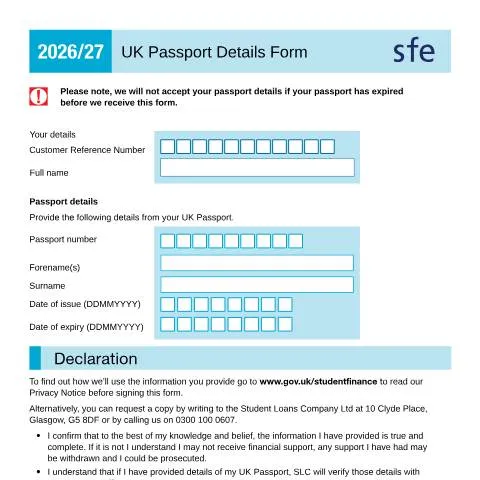
The Student Loans Company's UK Passport Details Form serves a highly specific purpose within the broader student finance verification process. This form becomes necessary when SLC requires additional identity confirmation beyond standard documentation, typically arising during application reviews, payment investigations, or when discrepancies emerge in your existing records. Unlike the main student finance application, this form focuses exclusively on passport verification and carries particular weight in determining your eligibility for continued support.
The timing of this request often catches applicants off-guard. You might receive it months after submitting your initial application, or even during an academic year when payments are already flowing. The form's arrival typically signals that SLC's verification systems have flagged something requiring additional scrutiny—not necessarily problematic, but demanding prompt attention to avoid payment disruptions.
Critical Passport Validity Requirements
The form's opening warning carries significant implications: SLC will not accept passport details if your passport has expired before they receive the form. This timing requirement extends beyond mere administrative preference—it reflects legal obligations under identity verification protocols that govern student finance operations.
Consider the practical scenarios this creates. If your passport expires on 15th March and SLC receives your form on 16th March, they cannot process it regardless of when you posted it. The date of receipt at SLC offices determines validity, not your submission date. This places particular pressure on applicants whose passports are approaching expiry, creating a narrow window for successful submission.
For applicants discovering their passport has expired after receiving the form, renewal becomes urgent. Standard passport renewals through HM Passport Office typically take three weeks, though this can extend during peak periods. Fast-track services exist, but the additional cost and limited availability mean planning becomes crucial. Some applicants mistakenly assume they can submit the form with an expired passport and update details later—this approach will result in rejection and potential delays to student finance payments.
Navigating Customer Reference Numbers and Personal Details
The Customer Reference Number field represents your unique identifier within SLC's systems, typically found on previous correspondence or your Student Finance account. This number differs from your student ID at university and shouldn't be confused with National Insurance numbers or application reference codes used during initial applications.
When completing personal details, exact matching becomes paramount. The full name you provide must correspond precisely to your student finance records, which may differ from your passport if you've undergone name changes since application. Common discrepancies arise with middle names—some applicants use initials on their student finance application but full names appear on passports, or vice versa.
Students who've married, divorced, or legally changed names face particular complexity. If your current passport reflects a different name than your student finance records, contact SLC before submitting the form. Attempting to reconcile name differences through this form alone often leads to processing delays, as verification systems may flag the mismatch for manual review.
Passport Information Fields: Precision and Common Pitfalls
The passport details section demands meticulous attention to formatting and accuracy. Each field serves specific verification purposes when cross-referenced with HM Passport Office databases.
| Field | Format Required | Common Issues |
|---|---|---|
| Passport Number | 9 characters (letters and numbers) | Confusing similar characters (0/O, 1/I) |
| Date of Issue | DDMMYYYY | Using MM/DD/YYYY or DD/MM/YY formats |
| Date of Expiry | DDMMYYYY | Misreading passport date format |
| Forename(s) | Exactly as printed | Abbreviating or adding middle names |
| Surname | Exactly as printed | Including titles (Mr, Mrs, Dr) incorrectly |
Date formatting proves particularly troublesome. UK passports display dates in DD MMM YYYY format (e.g., "15 JUN 2019"), but the form requires DDMMYYYY (15062019). Month abbreviations must be converted to numerical equivalents, with single-digit days and months requiring leading zeros.
Passport numbers demand careful transcription. UK passport numbers combine letters and numbers in a 9-character sequence, typically starting with a number. The font on passport pages can make certain characters ambiguous—the number zero and letter O appear similar, as do the number one and letter I. When uncertain, use additional lighting or magnification rather than guessing.
Forename and Surname Complexities
The distinction between forenames and surnames matters significantly for verification purposes. UK passports list names in "Surname, Forename(s)" order, but applicants sometimes reverse this when completing forms. Double-barrelled surnames should be entered exactly as shown, including hyphens or spaces as printed.
Students with multiple forenames face decisions about inclusion. If your passport shows "John Michael David Smith," enter all forenames in the forename field unless space constraints apply. Abbreviating to initials or selecting only some names can trigger verification failures when SLC's systems attempt automatic matching with HM Passport Office records.
Declaration Implications and Legal Obligations
The declaration section establishes legal framework surrounding your submission, extending beyond simple accuracy confirmation. By signing, you acknowledge several binding commitments that carry potential consequences for your student finance eligibility and broader legal standing.
The statement "I understand I may not receive financial support, any support I have had may be withdrawn" carries immediate practical implications. SLC possesses authority to suspend ongoing payments and demand repayment of funds already disbursed if false information is discovered. This extends beyond obvious fraud to include seemingly minor inaccuracies that suggest deliberate misrepresentation.
The verification clause specifically mentions HM Passport Office cross-referencing. This automated process occurs for all submissions, meaning any discrepancies between your form and official passport records will trigger immediate flags. The system checks not only current validity but also historical records, potentially revealing previous passport numbers or name changes that weren't disclosed.
Understanding prosecution risks requires recognizing the broader legal context. Student finance fraud falls under multiple pieces of legislation, including the Fraud Act 2006 and specific regulations governing public funding. While prosecution for minor administrative errors remains unlikely, patterns of misrepresentation or attempts to obtain funding through false identity claims carry serious legal consequences.
Privacy Notice Requirements
The form directs applicants to review SLC's Privacy Notice before signing, creating a legal obligation to understand how your information will be processed. This isn't merely administrative guidance—the Data Protection Act 2018 and UK GDPR require explicit consent for personal data processing, making your signature legally meaningful only if informed.
The Privacy Notice details retention periods, sharing arrangements with other government departments, and circumstances under which information might be disclosed. For students concerned about data privacy, requesting a physical copy through the Glasgow address or phone line ensures you receive current terms before committing to the declaration.
Signature Requirements and Submission Protocols
The explicit prohibition against digital signatures reflects stringent identity verification standards applied throughout student finance processes. This requirement creates practical challenges for students studying abroad, those with mobility limitations, or applicants accustomed to digital-first interactions with government services.
Ink signatures must be completed using permanent ink—pencil, felt-tip pens, or erasable ink won't be accepted. The signature should match those on file with SLC from previous documentation, though significant variations don't automatically trigger rejection if other verification elements align correctly.
Block capitals for your printed name ensure clarity during processing, particularly important given the manual verification elements involved. Processing staff must be able to definitively match printed names against passport details and existing records, making legibility crucial for avoiding processing delays.
Today's date in DDMMYYYY format establishes the legal execution date for your declaration. This date becomes significant for determining passport validity at the point of submission and may influence processing priorities during peak periods.
Strategic Timing and Submission Considerations
Successful submission requires understanding both internal SLC processing timelines and external factors affecting delivery and verification. The form return address—Student Finance England rather than the general SLC Glasgow office—indicates specialized processing arrangements that may operate under different timescales than standard student finance operations.
Processing typically takes 10-15 working days from receipt, though this can extend during peak periods such as start of academic year or immediately before payment runs. Students facing urgent deadlines should consider recorded delivery or special delivery services, ensuring proof of posting and faster transit times.
The verification process with HM Passport Office introduces additional variables beyond SLC's direct control. Automated systems handle most straightforward verifications within 24-48 hours, but complex cases requiring manual intervention can take significantly longer. Students with recently issued passports, those who've had passport numbers reissued, or applicants with name changes may experience extended processing times.
Managing Academic Year Pressures
Students receiving this form during academic years face particular pressure to maintain payment schedules. Late submission can disrupt maintenance loan payments, affecting accommodation costs, living expenses, and academic focus. Understanding your university's payment deadlines and SLC's processing schedules helps prioritize submission timing.
If you're approaching crucial academic deadlines—dissertation submissions, examination periods, or placement starts—factor potential delays into your planning. Some students benefit from temporary financial arrangements with their institutions while passport verification completes, though this varies significantly between universities and depends on individual circumstances.
Post-Submission Verification Outcomes
Once submitted, your form enters a verification pathway that determines not only immediate payment eligibility but potentially influences future student finance interactions. Successful verification typically results in automated confirmation and restoration of normal payment schedules without further correspondence.
Verification failures trigger different responses depending on the underlying issues identified. Minor discrepancies might prompt requests for additional documentation or clarification, while significant mismatches could initiate comprehensive eligibility reviews affecting your entire student finance entitlement.
Students should monitor their Student Finance accounts and email regularly following submission. SLC's communication protocols vary depending on verification outcomes—successful cases often receive minimal correspondence, while problematic cases generate detailed requests for additional evidence or explanations.
The verification process also updates your SLC records for future academic years, potentially streamlining subsequent applications or triggering additional verification requirements if patterns emerge suggesting ongoing identity confirmation needs.
Common Mistakes and How to Avoid Them When Completing Passport Details Forms
Even the most straightforward passport details forms can trip up applicants, leading to delays, rejections, or requests for additional documentation. Understanding the most frequent errors helps ensure your application proceeds smoothly through HM Passport Office processing.
Name-Related Errors and Variations
One of the most common stumbling blocks involves name discrepancies between your passport details form and supporting documents. If your birth certificate shows "William James Smith" but you've always been known as "Bill Smith," you'll need to provide evidence of name usage. This might include utility bills, bank statements, or employment records spanning several years that consistently show your preferred name.
Married applicants frequently encounter issues when their current documents don't match their birth name. If you're applying using your married name, ensure your marriage certificate is included and that all supporting documents reflect the same name variation. For divorced applicants who've reverted to their maiden name, a decree absolute alongside evidence of name usage becomes essential.
Double-barrelled surnames require particular attention to hyphenation and spacing. "Smith-Jones," "Smith Jones," and "SmithJones" are treated as different names by the system. Check your existing passport, driving licence, and other official documents to ensure consistency across your application.
Date and Place of Birth Complications
Birth date discrepancies, even minor ones, can halt processing entirely. If your birth certificate shows 15th March 1985 but you've mistakenly entered 15th April 1985 on your form, this will trigger a verification hold. Always double-check dates against your birth certificate, particularly if you're completing the form from memory.
Place of birth entries must match your birth certificate exactly. "Birmingham" and "Birmingham, West Midlands" might seem equivalent, but the system requires precise matching. If your birth certificate shows "St. Bartholomew's Hospital, London," don't abbreviate this to just "London" unless specifically instructed.
For applicants born outside the UK, ensure your place of birth reflects the administrative boundaries that existed at the time of your birth. Countries that have since changed names, split, or merged require the historical name as shown on your birth certificate.
Documentation Mismatches and Quality Issues
Photo specifications cause frequent rejections, even when applicants believe they've followed guidelines correctly. Beyond the basic requirements of neutral expression and plain background, subtle issues often arise. Shadows cast by overhead lighting, slight head tilts, or glasses that create reflections can all result in rejection.
If you wear glasses regularly, ensure there's no glare on the lenses and that your eyes are clearly visible. Contact lens wearers should avoid coloured lenses that alter eye colour, as this can complicate identity verification processes.
Supporting document quality matters significantly. Photocopies must be clear, complete, and show all security features where applicable. A birth certificate photocopy that cuts off part of the official seal or watermark will likely be rejected. Similarly, marriage certificates or change of name deeds must be copied in their entirety, including any endorsements or amendments.
Special Circumstances and Complex Applications
Not all passport applications follow the standard path, and certain circumstances require additional consideration when completing passport details forms. Understanding these special cases helps applicants prepare appropriate documentation and set realistic expectations for processing times.
Dual Nationality and Multiple Citizenship Scenarios
British citizens holding multiple passports must navigate specific requirements when completing UK passport forms. If you hold citizenship of another country, you're not required to surrender that passport when applying for or renewing your British passport, but you must declare this citizenship on your application.
The form will ask whether you hold any other nationality and whether you possess any other passports. Answer these questions completely and accurately. If you've travelled on a foreign passport since your last British passport was issued, be prepared to explain your travel history during any interview process.
Children of dual nationals face particular complexity. If one parent is British and the other holds foreign citizenship, the child may be eligible for multiple citizenships from birth. When completing passport details forms for such children, ensure you understand which citizenship route you're claiming and have appropriate documentation for that specific pathway.
Adopted Children and Complex Family Structures
Adopted children require additional documentation beyond standard birth certificates. Your adoption certificate becomes the primary identity document, and the passport details form will ask specific questions about your adoption circumstances. If your adoption was arranged through UK courts, you'll typically need both your original birth certificate and adoption certificate.
International adoptions involve more complex documentation requirements. Children adopted from overseas may need to provide evidence of their legal entry into the UK, adoption decrees from foreign courts, and potentially Home Office correspondence confirming their British citizenship status.
Step-children and children from complex family arrangements may face additional scrutiny. If parental responsibility has changed hands, or if there are legal restrictions on travel, these circumstances must be declared and supported with appropriate court orders or legal documentation.
Military Personnel and Diplomatic Families
Current and former military personnel often have unique circumstances affecting their passport applications. If you were born overseas while your British parent was serving in the armed forces, your birth may have been registered with military authorities rather than local civil registration systems. This can affect both the documents you need to provide and the information you enter on passport details forms.
Children born to diplomatic families face similar complexity. If you were born in a British embassy or consulate, or if your birth was registered through diplomatic channels, ensure you understand which documents constitute your official birth record and complete the form accordingly.
Military families who've lived in multiple countries during service careers should prepare comprehensive documentation of their movements and residence history. The passport office may require additional verification of your right to British citizenship if your birth and residence history is complex.
Digital Submission and Technical Considerations
The increasing digitisation of passport services has introduced new considerations for completing passport details forms. Understanding the technical requirements and digital processes can prevent application delays and ensure successful submission.
Online Application Systems and Data Security
When completing passport details forms online, the system employs multiple security measures to protect your personal information. Your session will time out after periods of inactivity, typically 20-30 minutes, so gather all required information before beginning your application. The system automatically saves progress at certain checkpoints, but you cannot rely on this for incomplete sections.
Browser compatibility can affect your application experience. The HM Passport Office online system works best with recent versions of Chrome, Firefox, Safari, or Edge. Older browsers or those with strict security settings may encounter difficulties uploading documents or submitting forms. Clear your browser cache before starting if you experience technical difficulties.
File upload requirements are strictly enforced. Digital photos must meet specific technical specifications beyond the visual requirements – typically JPEG format, minimum resolution of 600x750 pixels, and file sizes between 50KB and 10MB. The system will reject files that don't meet these technical parameters, even if the photo appears acceptable visually.
Document Scanning and Digital Submission Quality
When submitting supporting documents digitally, scan quality becomes crucial. Documents should be scanned at minimum 300 DPI resolution to ensure text remains legible and security features are visible. Avoid using phone cameras for document capture unless specifically supported by the application system, as these often produce lower quality images with distortion or poor lighting.
Colour accuracy matters for certain documents. Birth certificates, marriage certificates, and other official documents often include security features that rely on specific colours or watermarks. Scan these documents in colour rather than black and white, even if they appear predominantly monochrome.
Multi-page documents require careful handling. If your supporting documentation spans multiple pages, ensure each page is clearly legible and properly oriented. Some systems require separate uploads for each page, while others accept multi-page PDF files. Follow the specific instructions for your application type.
Payment Processing and Confirmation Systems
Digital payment systems integrated with passport applications have specific requirements and limitations. Debit cards are universally accepted, but some credit cards may face restrictions depending on their issuing bank's security policies. Prepaid cards and virtual payment systems are typically not accepted for government services.
Payment confirmation occurs in real-time, but the integration between payment systems and application processing can introduce delays. If your payment is successful but your application status doesn't immediately update, allow up to 24 hours before contacting support services. Keep your payment confirmation reference separate from your application reference, as you may need both for enquiries.
Failed payments don't automatically cancel your application, but they do place it on hold until payment is resolved. If a payment fails due to technical issues rather than insufficient funds, you may be able to retry payment using the same application reference rather than starting a new application entirely.
The system generates multiple confirmation emails throughout the process – payment confirmation, application submission confirmation, and processing updates. Ensure your email address is entered correctly and check spam folders regularly, as these confirmations contain essential reference numbers and tracking information needed for application monitoring and any subsequent correspondence with HM Passport Office.