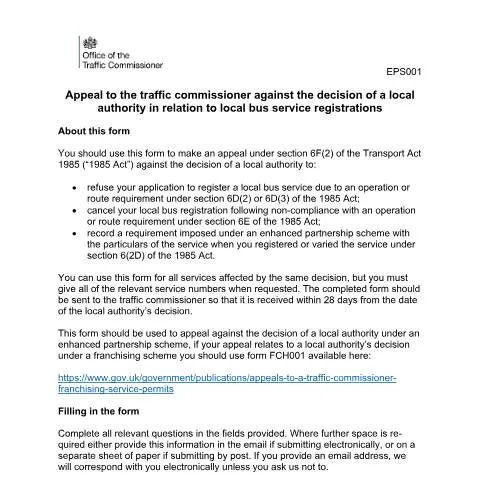
Understanding the Role of Traffic Commissioner Appeals in Enhanced Partnerships
Navigating the complexities of local transport services can often be a challenging endeavour for operators. The process becomes particularly intricate when a local authority makes a decision that adversely affects bus service registrations. Here, the Traffic Commissioner Appeals process under enhanced partnerships is crucial. This process allows operators to contest local authority decisions that result in cancellations or refusals related to bus service registrations, providing a vital mechanism for ensuring fair treatment and operational viability. Enhanced partnerships, introduced through the Transport Act 1985, aim to improve collaboration between local authorities and bus operators. However, complexities arise when a local authority makes a decision that an operator believes is unjust. The appeal process serves to address these grievances, allowing for a structured and formal review by the Traffic Commissioners for Great Britain.The Appeal Process: Who Needs to File and When?
Understanding the right to appeal is essential for both new and established bus operators. If a local authority refuses an application to register a local bus service or cancels an existing registration due to non-compliance, the affected operator can file an appeal using the designated form.- Time Frame for Appeals: Appeals must be submitted within 28 days from the date of the local authority's decision. Late submissions require a request for an extension, which needs to be justified.
- Who Can Appeal: Any holder of a Public Service Vehicle (PSV) operator’s licence is entitled to submit an appeal. This right is particularly significant for small operators who may feel disproportionately impacted by local authority decisions.
Diving into the Details: Sections of the Appeal Form
Completing the appeal form accurately is crucial. Let's explore the various sections in detail to ensure clarity and precision.Appellant Details
This section establishes the identity of the appellant. Operators will need to provide:- Name of the PSV operator: The legal name under which the operator's licence is held.
- PSV operator’s licence number: This unique identifier is essential for the Traffic Commissioner to locate the applicant’s records.
- Service registration numbers: Include all service numbers affected by the decision to ensure a comprehensive appeal.
Details of the Appeal
In this section, the appellant outlines the particulars of the appeal itself. Key components include:- Type of Decision: Indicate whether the appeal is against a cancellation, refusal, or recording of requirements.
- Date of Decision: Specify the date the local authority made its decision.
- Statement of Reasons: If the local authority provided a rationale for their decision, a copy must be enclosed.
Extension of Time
In cases where the appeal is initiated after the 28-day limit, operators may request an extension. This section should articulate the justification for the delay. Operators should provide a clear rationale, as this will influence the Traffic Commissioner’s decision on whether to grant an extension.Consequences of Filing an Appeal: Rights and Obligations
Filing an appeal to the Traffic Commissioner under enhanced partnership schemes helps safeguard the rights of bus operators, ensuring they have a platform to contest potentially damaging decisions.Rights Granted by the Appeal Process
By engaging in this process, operators are entitled to:- Fair Hearing: Operators can request a public hearing or opt for a decision based solely on submitted documentation.
- Referrals to Legal Representation: If an operator believes that legal counsel is necessary, they can engage a representative to submit the appeal on their behalf.
- Access to Information: Operators can obtain copies of all relevant documentation, including the local authority's decision and supporting evidence for the appeal.
Obligations of the Appellant
While the appeals process provides substantial rights, it also carries specific obligations:- Truthfulness: All information provided in the appeal must be true and accurate, as false information could lead to legal consequences.
- Timely Submission: Appeals must be submitted within the specified timeframe to avoid dismissal.
Navigating Refusals: What to Do If an Appeal is Denied
In some instances, appeals may be denied. Understanding the next steps is critical.Requesting a Review
If an appeal is rejected, operators have the option to request a review of the decision. This request should articulate why the initial decision is believed to be flawed.Considering Further Legal Action
If all administrative avenues have been exhausted without a satisfactory resolution, operators may consider seeking judicial review. This legal process involves challenging the lawfulness of a decision made by a public body, including Traffic Commissioners. It is advisable to consult a legal professional experienced in transport law before proceeding with this option.Learning from Experience: Common Pitfalls and Best Practices
Filing an appeal can be daunting. While each case is unique, certain common pitfalls can hinder the success of an appeal.Documentation Diligence
One of the most frequent issues operators encounter involves documentation. Missing or incomplete forms can lead to immediate dismissal of the appeal.- Ensure All Required Documents Are Included: Double-check that you have attached copies of the local authority’s decision and any statements of reasons provided.
- Clear Reasoning: Offer a well-structured argument as to why the decision was incorrect, supported by evidence where possible.
Timelines Matter
Always be aware of the timeframes involved. Submitting an appeal after the 28-day window can have severe repercussions.Historical Context: The Framework Behind Enhanced Partnerships
To fully appreciate the appeal process, one must understand the historical context that formulated the framework for enhanced partnerships. The Transport Act 1985 laid the groundwork for local bus services in the UK, aiming to enhance the operation and regulation of public transport. Enhanced partnerships were introduced to bolster collaboration between local authorities and bus operators, creating a structured approach to local transport governance.Transport Act 1985: Key Provisions
The Act outlines significant provisions:- Standardised processes for local authorities to regulate bus services.
- Procedures for operators to appeal against unjust decisions.
- Frameworks for enhanced partnerships to ensure collaborative efforts between local authorities and bus operators.
Final Considerations: Ensuring Compliance and Moving Forward
Operators should regularly review their engagements with local authorities and remain informed about their rights under the enhanced partnership schemes. Understanding the Traffic Commissioner appeals process is not merely about lodging an appeal—it's about cultivating an awareness of rights, obligations, and the importance of timely, accurate submissions. By following best practices and understanding the historical and legal context, bus operators can navigate the complexities of the appeals process more effectively. An operator's ability to advocate for their interests within this framework is crucial for sustaining their operations and ensuring compliance with local transport regulations. As such, familiarising oneself with these processes is an invaluable investment in one's business's future stability and growth.Understanding Enhanced Partnerships Schemes
Enhanced Partnerships Schemes represent a vital component in the regulatory landscape for public transport in the UK. These schemes are introduced under the Transport Act 2000 and further refined by the Bus Services Act 2017. The emphasis is on collaborative approaches between local authorities and bus operators to improve bus services and increase passenger numbers.
One of the key objectives of an Enhanced Partnership is to create a more integrated public transport system. This involves not just improving bus routes and schedules, but also ensuring that there are seamless transitions between different forms of transport—be it buses, trains, or any other mode. These partnerships often lead to improved infrastructure, better information systems for passengers, and occasionally even fare integration.
For such partnerships to be effective, significant commitments are needed from both local authorities and bus operators. It’s not merely a case of signing a memorandum; both parties must agree to implement a series of improvements that are measurable and sustainable. The Traffic Commissioners play a pivotal role in assessing these partnerships to ensure compliance with regulatory standards and to maintain the quality of service for the end-users.
Importantly, stakeholders need to be aware of the statutory requirements tied to these schemes. Local authorities must publish a 'Plan' detailing their proposals, and operators can appeal against decisions made regarding the Partnership if they feel unfairly treated or if the terms impede their ability to operate effectively.
The Appeal Process for Traffic Commissioner Decisions
When a decision is made by a Traffic Commissioner regarding an Enhanced Partnership Scheme, stakeholders have the right to appeal. Understanding the procedures involved in this appeal process is crucial for operators and local authorities alike.
Firstly, an appeal must be lodged within a specific timeframe stipulated by the Traffic Commissioner’s office. Typically, this is within 28 days of the decision being communicated. It is vital to gather all relevant documentation and evidence to support the appeal, as the process is both time-sensitive and detail-oriented.
The grounds for appeal vary, but they often center on issues such as alleged procedural errors, misinterpretation of the applicable laws, or failure to consider evidence that may have changed the decision's outcome. The appeals are not merely a second chance; they require a robust case that can stand up to scrutiny.
Once an appeal has been lodged with the Traffic Commissioner, a review will take place. The Commissioner may consider written submissions, and in some cases, a hearing may be held. This process often involves presenting evidence, and it's advisable for appellants to seek legal representation or expert advice to navigate this stage effectively.
Appeals are adjudicated on their merits, and the Traffic Commissioner has the authority to overturn, uphold, or vary the original decision. It's important to note that any changes resulting from an appeal may have wider implications, not just for the parties involved, but for the public transport ecosystem as a whole.
Real-World Examples of Enhanced Partnerships in Action
To truly grasp the impact of Enhanced Partnerships Schemes, examining real-world examples can provide valuable insights. Different regions in the UK have implemented these partnerships with varying degrees of success. For instance, the West Midlands has seen a significant overhaul of its bus services through an Enhanced Partnership, which has led to increased ridership and satisfaction among passengers. The partnership involved an extensive review of bus routes and schedules, resulting in more reliable services and improved connectivity with rail services.
In contrast, some areas have encountered challenges. For example, a proposed Enhanced Partnership in a rural area faced backlash due to perceived inequities among service providers—smaller operators felt overshadowed by larger companies. In these cases, it’s often necessary for local authorities and the Traffic Commissioners to engage in further dialogue to ensure that all voices are heard and that the partnership scheme serves the interests of the entire community.
Furthermore, the impact of Enhanced Partnerships is not limited to operational improvements. These schemes can also lead to broader social benefits, including reduced congestion and pollution, as more people opt for public transport over private vehicles. With ongoing discussions regarding public transport’s role in combating climate change, Enhanced Partnerships are increasingly being viewed as a vital component of sustainable urban planning.
Another notable example is the Greater Manchester Combined Authority, which has successfully implemented an Enhanced Partnership that focuses on integrating bus services with wider transport strategies. This integration includes accommodating cycling and walking, ensuring that public transport is part of a cohesive approach to mobility in the region. Here, the emphasis has been on not just improving bus services, but also enhancing the overall transport experience for residents and visitors alike.