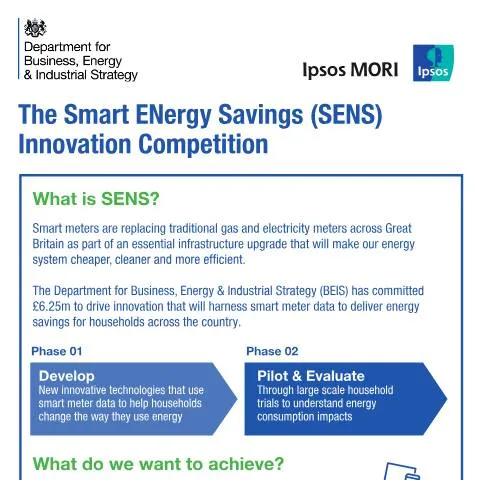
Unveiling the Smart Energy Savings (SENS) Competition
In an era where energy efficiency is paramount, the Smart Energy Savings (SENS) Competition emerges as an innovative approach to harness smart meter data. This initiative, supported by a substantial investment of £6.25 million from the Department for Business, Energy & Industrial Strategy (BEIS), is designed to empower households across Great Britain to revolutionize their energy consumption patterns. Let’s delve into the intricacies of this competition, exploring its objectives, processes, and impacts on our communities.
Strategic Objectives: A Greener Future
The SENS Competition aims not only to promote energy savings but also to enhance the overall engagement between energy suppliers and consumers. By leveraging smart meter data, the competition seeks to:
- Encourage Behavioural Change: Offering new functionalities and techniques to promote smarter energy use.
- Foster Innovation: Developing products that are engaging and easy to use, making energy saving an integral part of daily life.
- Improve Data Utilization: Testing the impact of innovative products on energy consumption through robust evaluation methods.
Pioneering New Technologies
The competition calls for innovative technologies that can assist households in changing their energy usage behaviors. During its initial phases, projects such as mobile applications and integrated smart thermostats have been developed to provide real-time insights and personalized feedback. These innovations are designed to:
- Deliver tailored energy advice based on individual consumption patterns.
- Facilitate increased comfort through enhanced control of heating and energy use.
- Support budgeting by offering insights into energy expenditure.
Understanding the Application Process for SENS
For innovators eager to participate in the SENS competition, a structured application process is in place. Detailed proposals must outline how their innovations will contribute to the competition's objectives. The following steps are typically involved:
- Proposal Submission: Interested parties must submit a comprehensive proposal, highlighting the innovative aspects and potential impacts of their projects.
- Evaluation Phase: Proposals will undergo a rigorous evaluation process, assessing their feasibility, scalability, and alignment with the competition’s goals.
- Funding Allocation: Successful proposals will receive funding to support the development and testing of their innovations.
Who Can Apply?
The SENS competition is open to a wide range of stakeholders including:
- Startups and established companies focused on energy innovation.
- Academic institutions collaborating on relevant technologies.
- Non-profit organizations aiming to promote energy efficiency.
Conducting Effective Trials: The Backbone of SENS
Once the innovative projects are funded, they enter the trial phase. This phase is crucial for evaluating the practical impacts of the developed technologies on energy consumption. The trials are designed to:
- Involve diverse household types to ensure a comprehensive understanding of behavioral impacts.
- Utilize various evaluation methodologies, including randomized control trials and matched control designs.
- Collect and analyze energy consumption data, supported by longitudinal surveys and qualitative interviews.
Key Evaluation Metrics
The success of the innovations will be measured through various indicators, including:
| Metric | Definition |
|---|---|
| Energy Consumption Reduction | Measuring changes in household energy use pre- and post-implementation. |
| User Engagement | Assessing how actively households interact with the new technologies. |
| Cost Savings | Calculating reductions in energy bills resulting from behavioural changes. |
| Satisfaction Levels | Understanding consumer perception and satisfaction with the innovations. |
Next Steps Post-Trial: What Happens to Your Submission?
Once trials are concluded, the next phase involves assessing the findings and determining the efficacy of the innovative solutions. Participants are encouraged to:
- Review trial results, understanding both the strengths and weaknesses of their products.
- Engage with feedback from participants to refine and enhance their offerings.
- Consider the scalability of their innovations for wider market application.
Addressing Challenges: Solutions for Common Issues
During and after the trial phase, participants may encounter various challenges. Here are some strategies to address these:
- Missing Data: If essential data is not available, reach out to the trial coordinators for assistance in obtaining necessary information.
- Trial Refusals: In cases where households decline participation, consider broadening outreach efforts or adjusting communication strategies to better engage potential participants.
- Adjustments to Products: If feedback indicates needed changes, be prepared to adapt your product rapidly to meet user needs.
Responding to Refusals and Appeals in the Evaluation Process
In the unfortunate event that a proposal or project is refused funding or deemed ineffective, participants have the opportunity to appeal the decision. The appeal process typically involves:
- Reviewing Feedback: Carefully analyze the feedback provided to understand the reasons for refusal.
- Formulating a Response: Develop a clear and concise response addressing the concerns raised in the initial evaluation.
- Submitting an Appeal: Follow the designated appeal process laid out by BEIS to formally contest the decision.
Learning from Rejections
Every experience, whether positive or negative, offers valuable lessons. Utilize feedback to refine proposals for future competitions or initiatives. Consider engaging with stakeholders to gather insights and broaden the understanding of market needs.
Final Reflections: The Broader Impact of SENS
As the SENS Competition unfolds, its significance extends beyond immediate energy savings. The initiative contributes to:
- A stronger alignment between energy suppliers and consumers, fostering a culture of transparency and collaboration.
- Increased awareness around energy consumption and its environmental impact, promoting sustainable behaviour.
- Development of a robust market for innovative energy-saving products and services, paving the way for future advancements.
The Smart Energy Savings Competition embodies a pivotal movement towards energy efficiency and consumer engagement in Great Britain. By actively participating in this initiative, households can not only benefit from reduced energy costs but also play a crucial role in shaping a sustainable energy future.
Understanding the Smart Energy Savings (SENS) Competition
The Smart Energy Savings (SENS) competition is an innovative initiative aimed at fostering new approaches to energy efficiency and sustainability within the UK. Launched by the Department for Business, Energy & Industrial Strategy (BEIS), this competition encourages businesses, charities, and public sector organizations to develop and trial novel solutions that can help reduce energy consumption and carbon emissions. With a focus on practical applications, SENS is designed to support a wide range of projects, from smart technologies to behavioral change interventions.
The competition directly addresses the UK’s commitment to achieving net-zero carbon emissions by 2050. This ambitious goal necessitates a collective effort to enhance energy efficiency across various sectors, including residential, commercial, and industrial environments. By providing funding and support for innovative projects, SENS aims to stimulate economic growth while contributing to environmental sustainability.
Eligibility Criteria and Application Process
Potential applicants to the SENS competition must ensure that they meet specific eligibility criteria to qualify. Generally, eligible entities include small and medium-sized enterprises (SMEs), large companies, public sector organizations, and non-profit organizations operating within the UK. However, applicants are advised to check the specific guidelines published for each competition round, as requirements may vary.
The application process involves several key stages:
- Registration: Interested parties must register on the official BEIS website to receive notifications about the competition and associated resources.
- Project Proposal Submission: Applicants must submit a detailed project proposal outlining their innovative idea, targeted outcomes, and how it aligns with the SENS objectives. The proposal should include technical specifications, budget estimates, and an implementation timeline.
- Assessment and Pitching: Proposals are reviewed by a panel of experts who evaluate the feasibility and potential impact of each project. Shortlisted applicants may be invited to present their ideas in person or via a virtual meeting.
- Funding Agreement: Successful applicants will enter into a funding agreement with BEIS, which outlines the terms and conditions of financial support. This document is critical, as it governs the reporting requirements and project milestones.
It's essential for applicants to collaborate with stakeholders throughout the application process, as partnerships can enhance the credibility of proposals and expand potential impact. Applicants should also be mindful of the Data Protection Act 2018 when handling any personal data in their submissions.
Examples of Successful Projects Funded by SENS
Since its inception, the SENS competition has funded numerous innovative projects that exemplify the creativity and resourcefulness of the UK’s energy sector. Below are a few noteworthy examples:
- Smart Home Energy Monitoring: A project that developed a user-friendly app enabling homeowners to monitor and control their energy use in real-time. The app's analytics provide personalized suggestions for reducing consumption, leading to significant savings on energy bills.
- Community Energy Initiatives: Several funded projects have focused on community-level energy efficiency, creating networks that empower residents to share resources, such as solar panels and battery storage systems. These initiatives not only promote sustainability but also strengthen community ties.
- Industrial Process Optimization: Funding has supported the implementation of smart sensors and IoT technologies in manufacturing facilities. These tools help monitor energy usage and optimize processes, cutting down waste and lowering operational costs.
These examples highlight the diverse range of projects supported by SENS, showcasing the potential for both environmental benefits and economic growth. By encouraging collaboration across sectors, the competition plays a crucial role in driving forward the UK's energy transition.