Navigating the Opt-Out of Holding a Comparable Trade Mark: A Practical Guide
Imagine you've successfully registered a trade mark under the EU's jurisdiction, only to find yourself needing to withdraw this registration from the UK system. The process may seem daunting, but understanding the nuances of the Opt Out of Holding a Comparable Trade Mark form can ease the transition. This form is crucial for entities seeking to remove a comparable trade mark from the UK register, thus relinquishing their rights under the UK Trade Marks Act 1994. This guide will break down the essentials of the process, allowing you to proceed with confidence.
Who Should Consider Opting Out?
The need to submit this form primarily applies to holders of trade marks that were previously registered within the EU framework. Following the UK's exit from the EU, many trade marks retained protection under UK law as "comparable trade marks." However, circumstances may arise where a holder wishes to opt out. Below are specific groups and scenarios where this may apply:
- EU Trade Mark Holders: If you hold a trade mark registered with the EU Intellectual Property Office (EUIPO) and had rights that extended to the UK, you are eligible for this opt-out.
- Business Entities: Companies or individuals operating in areas where they wish to clarify their trade mark portfolio or reduce administrative burdens may choose to opt out.
- Licensors and Licensees: Those involved in licensing agreements may need to opt out if a comparable trade mark is affecting their rights adversely.
It is vital to assess whether opting out aligns with your long-term business strategy, as it will remove the trade mark from the UK register entirely.
The Essence of the Opt-Out Form
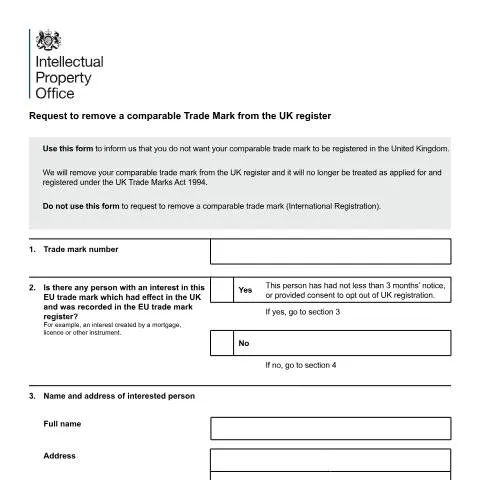
Completing the Opt Out of Holding a Comparable Trade Mark form is a straightforward yet sensitive task. It serves the essential function of notifying the Intellectual Property Office (IPO) that you no longer wish for your comparable trade mark to be recognized in the UK. By doing so, you forfeit your rights under UK law, which could have lasting implications on your brand's legal protections.
Understanding Form Requirements
Before diving into the specifics of the form, ensure you have all necessary information at hand:
- Trade Mark Number: This unique identifier is crucial for the IPO to process your request effectively.
- Details of Interested Parties: If any third party holds an interest in the trade mark (such as a mortgage or license), their details must be disclosed.
- Your Signature and Date: A signed submission verifies your intent and commitment to this change.
Step-by-Step Completion
Completing the form involves a series of specific steps:
- Provide the trade mark number in the designated field.
- Indicate if there is any person with an interest in the trade mark. If yes, you will need to provide their full name and address.
- Sign the document clearly, using block capitals for your name.
- Date the form appropriately to reflect your submission date.
Before submitting, double-check for accuracy, as any errors could delay the process.
Submission Channels: Choosing Your Method
Upon completing the form, you can opt to submit it via one of three channels: online, postal mail, or fax. Each method has its advantages:
| Submission Method | Pros | Cons |
|---|---|---|
| Fast confirmation of receipt; immediate processing. | Requires PDF conversion; possible email issues. | |
| Postal Mail | Physical receipt; no tech issues. | Longer processing time; potential delays in delivery. |
| Fax | Quick transmission; no digital formats needed. | Less common; may encounter technical issues. |
For electronic submissions, ensure your document is saved in PDF format as per the IPO guidelines, which makes the process smoother and more efficient.
Understanding the Review Process and Follow-Ups
Once your opt-out request is submitted, the IPO will review the submission for completeness. Following the assessment, you can expect the following:
- A confirmation email acknowledging receipt of your submission.
- A letter confirming the removal of your trade mark from the UK register, which will be sent to the trade mark owner or their representative.
Tracking your application is crucial; if you have not received confirmation within a reasonable timeframe, it’s advisable to follow up directly with the IPO. The contact details and further guidance can typically be found on their official website.
What Happens if You Encounter Issues?
Errors or missing information can complicate your request. Here’s how to address potential concerns:
- Incomplete Submissions: If the IPO identifies missing fields or insufficient information, they will likely reach out for clarification. Respond promptly to avoid delays.
- Refusals: In the event of a refusal, you may be informed of the specific reasons, allowing you a chance to rectify and resubmit your request.
- Documentation Queries: Should there be questions about attached documents, having backups and clear copies can assist in clarifying your case.
The Implications of Opting Out: Rights and Responsibilities
Once the opt-out process is complete, it's vital to understand the legal ramifications:
- Loss of Protection: By opting out, you relinquish your rights to the trade mark in the UK. This could expose your brand to potential infringements by others.
- Future Applications: You may need to consider alternative means of protecting your brand in the UK, possibly through new registrations or different IP strategies.
- Obligations to Third Parties: If you have previously entered into licensing or partnership agreements, ensure all parties are notified of this change to avoid contractual disputes.
Awareness of these factors can help mitigate risks associated with your intellectual property following the opt-out.
Additional Considerations for Unique Situations
There might be unique situations where opting out requires further scrutiny:
- International Stakeholders: For businesses operating internationally, consult legal experts to understand how removing a trade mark from the UK register may impact broader IP strategies.
- Minors or Vulnerable Parties: If a minor or someone lacking full legal capacity is involved, additional legal considerations may be necessary. Legal guardians should be involved in the decision-making process.
- Urgent Requests: If the situation necessitates immediate action, communicate this clearly to the IPO alongside your opt-out request.
These nuances can significantly impact the handling and processing of your opt-out request, and it’s crucial to approach them with a clear strategy.
A Closer Look at the Form's Sections
To assist in navigating the Opt Out of Holding a Comparable Trade Mark form, let’s dissect its sections for clarity:
Section 1: Trade Mark Number
Your trade mark number is the linchpin of your application. It’s imperative that this is accurately entered to avoid confusion or processing delays. Verify this number against your original EU trade mark registration.
Section 2: Interested Parties
If there are individuals or entities with a vested interest in the trade mark, their information should be meticulously documented here. The IPO mandates that these parties must have received a minimum notice of three months regarding the opt-out. Secure written consent if possible, as this can facilitate smoother processing.
Section 3: Name and Address of Interested Person
This section is critical for ensuring all stakeholders are acknowledged. Inaccuracies can lead to complications or delays, particularly if the IPO needs to engage with these parties during the review process. Provide full and correct details.
Section 4: Signature and Date
Your signature signifies the authenticity of the application. Ensure it is clear and legible, and remember to date your submission to establish the timeline.
In summary, every detail matters when submitting your opt-out request. A comprehensive understanding of the form and its implications can empower you to navigate the complexities of intellectual property rights disposition.
Final Thoughts: Empowering Your IP Strategy
Opting out of holding a comparable trade mark is a significant decision that should not be taken lightly. Engaging with the process effectively can help protect your interests in the long term. By understanding the form, your rights and responsibilities, and preparing adequately for potential challenges, you can ensure a smoother transition as you adjust your intellectual property portfolio post-Brexit.
Understanding the Grounds for Opting Out of a Comparable Trademark
When considering an opt-out from holding a comparable trademark, it's essential to understand the specific grounds on which such a decision can be based. Under the Trade Marks Act 1994 and the relevant sections of the UK Intellectual Property legislation, trademark holders may seek to opt out for various reasons.
Non-Use of Trademark: One primary ground for opting out can be based on the non-use of the trademark. If a trademark has not been used in the UK for a continuous period of five years, it may be vulnerable to cancellation. Trademark holders who foresee that they will not use their trademark actively can consider opting out to avoid unnecessary renewal fees and administrative burdens.
Risk of Confusion: Another reason for opting out could arise from the risk of confusing a comparable trademark with another existing mark. If a business finds that maintaining a comparable trademark may lead to legal disputes or a likelihood of confusion with other marks, it may opt to relinquish it. This decision is often informed by prior searches of registered and pending trademarks and consultations with legal advisors specialized in intellectual property.
Change in Business Strategy: Changes in business focus or restructuring can also motivate a trademark holder to opt out. For instance, if a company is shifting its brand strategy away from previously trademarked goods or services, it can make sense to opt out of holding a trademark that no longer aligns with its vision or operational model.
Understanding these grounds not only assists in evaluating whether to opt out but also informs future decisions regarding trademark management, which can significantly impact the brand’s positioning and legal protections.
The Process for Opting Out: Step-by-Step Guidance
Opting out of holding a comparable trademark in the UK involves a series of steps that must be diligently followed to ensure compliance with the law. Below is a structured approach to navigating this process.
Assess Eligibility: Before taking any formal steps, assess whether your trademark meets the criteria for opting out. This may involve reviewing usage records, consulting trademark databases, and possibly seeking legal advice if there are complexities involved.
Prepare Documentation: Gather all necessary documentation that supports your decision to opt out. This could include evidence of non-use, legal opinions regarding confusion with other trademarks, and strategic business documents that illustrate the need for opting out.
File the Application: Submit an application to the Intellectual Property Office (IPO). This application should include the relevant details of the trademark you wish to opt out of, along with the grounds for your decision. Ensure that you follow any specific format requirements indicated by the IPO and pay the appropriate fees associated with the application.
Await Confirmation: After filing, you will need to wait for a response from the IPO regarding the acceptance of your opt-out application. This can take several weeks. It’s wise to monitor communication from the IPO closely and respond promptly to any requests for further information.
Finalise the Opt-Out: Once your request is approved, ensure you receive official confirmation from the IPO regarding the cancellation of the trademark rights. Keep this documentation for your records, as it may be needed for future business decisions or if any queries arise about the trademark in the future.
By meticulously following this process, businesses can effectively manage their intellectual property portfolio and ensure that it aligns with their operational requirements.
Implications of Opting Out on Future Trademark Registration
Deciding to opt out of a comparable trademark can carry significant implications for future trademark registration and protection strategies. Understanding these ramifications is crucial for businesses looking to safeguard their intellectual property in the long run.
Impact on Brand Strategy: Opting out may alter how a business approaches its brand strategy. Companies that choose to relinquish their comparable trademarks may need to reevaluate their branding efforts for affected products. This could involve rebranding initiatives or the development of new trademarks.
Subsequent Trademark Applications: Opting out does not preclude a business from applying for a trademark in the future; however, it may introduce complications. If a trademark is opted out, and the market conditions change or the business decides to re-enter a specific segment, the company must undertake a new trademark search and application process. It’s important to note that the trademark landscape can change rapidly, and new trademarks may already be registered, possibly complicating future registration efforts.
Legal Considerations: After opting out, there may still be legal considerations to keep in mind. Businesses should be aware that opting out doesn't eliminate the possibility of disputes concerning the previously held trademark. If a similar or identical mark is registered by another party after the opt-out, businesses may need to navigate complex legal waters to protect their interests, potentially leading to litigation if they wish to contest the new registration.
In light of these implications, it’s advisable for businesses to consult with intellectual property attorneys to develop comprehensive strategies for trademark management that account for potential future needs and challenges. This foresight can prevent legal pitfalls and position a brand favourably in an increasingly competitive marketplace.