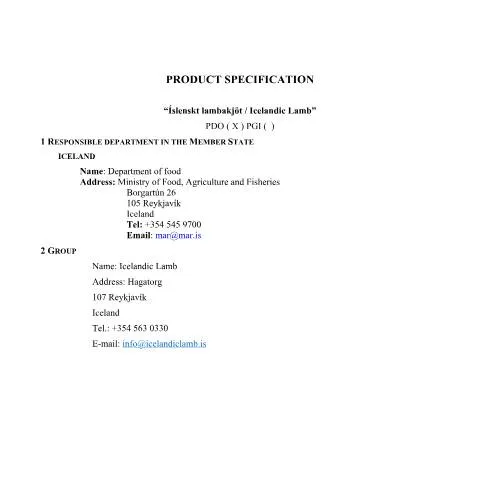
Understanding the Icelandic GI Product Name: Statement of Opposition
The Icelandic GI Product Name: Statement of Opposition serves an essential role within the regulatory framework established by the Department for Environment, Food & Rural Affairs (DEFRA). This document is critical for any stakeholders involved in the geographical indication (GI) process for the renowned Icelandic lamb, known in Icelandic as Íslenskt lambakjöt. Individuals, organizations, or entities may find themselves needing to submit this statement to contest the use of this GI name, aimed at protecting the cultural and economic heritage associated with Icelandic lamb.
The Process: From Initiation to Outcome
The pathway for submitting a Statement of Opposition involves several distinct stages, each of which must be meticulously followed to ensure compliance with regulatory requirements. The process typically initiates upon the notification of a new application for the GI name within the EU framework.
1. Triggering an Opposition
Upon publication of the GI application, stakeholders—including producers, industry associations, and even consumers—who believe they may be adversely affected by the application have a window of opportunity to lodge their opposition. This set period may vary; hence, keeping a close watch on official notifications is crucial.
2. Compiling the Necessary Details
The opposing party must prepare a comprehensive statement that outlines the grounds for their opposition. Key elements to consider include:
- Proof of identity: Establish who is filing the opposition and their vested interest.
- Reason for opposition: Clearly articulate why the application should not proceed, citing relevant laws or potential conflicts.
- Supporting evidence: Provide documentation that substantiates the claims made in the statement.
3. Submission of the Statement
This stage involves the formal submission of the Statement of Opposition to the relevant governing body, typically the European Commission, along with any supporting documents. Compliance with the specified format and submission guidelines is paramount. Failure to adhere could jeopardize the opposition.
4. Official Review and Consideration
Once submitted, the Department for Environment, Food & Rural Affairs will review the statement, analyze the submitted evidence, and determine if the opposition is valid. This process may be accompanied by requests for further information or clarification, during which time the opposing party may need to engage further with the authorities.
5. Decision Notification
Following the review period, a decision is rendered. Should the opposition be upheld, the GI application may be denied. Conversely, if the application is approved, the opposing party will be notified, at which point they may explore additional legal avenues for appeal if necessary.
Diving Deeper: Dissecting the Statement of Opposition Document
Understanding the intricacies of the Statement of Opposition form itself is vital. Each section has its importance, and meticulous attention to detail can prevent mishaps that could affect outcomes.
Section Breakdown
| Section | Description | Common Pitfalls |
|---|---|---|
| Applicant Details | Information about the opposing party including name, address, and contact information. | Omitting contact details can lead to communication issues. |
| Grounds for Opposition | Articulation of the basis for the opposition, including legal arguments and any claims of prior rights. | Vague reasons may weaken the opposition's validity. |
| Evidence Submission | Details of all supporting documents and evidence submitted alongside the statement. | Failure to list all evidence can lead to incomplete submissions. |
| Declaration | A sworn statement confirming the truthfulness of the submitted information. | Inadvertently providing false information can lead to penalties. |
Eligibility and Stakeholder Profiles
Not all individuals or organizations may hold the right to submit a Statement of Opposition. Understanding who qualifies is essential for ensuring that the opposition is valid and grounded in legitimate interests.
Who Can Oppose?
Eligible parties typically include:
- Producers: Local farmers and sellers of Icelandic lamb who have been established prior to the application of the GI.
- Industry Associations: Groups representing the interests of lamb producers and related entities.
- Consumers: Individuals demonstrating that the use or protection of the GI may materially affect their interests.
Exceptions to the Rule
In certain circumstances, individuals or entities that do not have a direct interest may still be able to contest the GI application. This includes:
- Consumer advocacy groups arguing for quality standards.
- Environmental organizations providing evidence against practices that may harm local ecosystems.
What to Do If Your Opposition Is Refused or Additional Evidence Is Needed
Receiving a refusal or a request for additional information can be disheartening. However, understanding the next steps can mitigate frustration and lead to a more favorable outcome.
Responding to Refusal
If your Statement of Opposition is refused, consider:
- Reviewing the Feedback: Carefully evaluate reasons for the refusal to identify areas needing improvement.
- Consulting with Legal Experts: Engaging professionals who specialize in agricultural law may provide significant insights into your situation.
- Filing an Appeal: Depending on the circumstances, you might have the right to appeal the decision within a specified period.
Addressing Requests for Additional Information
Receiving a request for more details from the authorities indicates that your initial submission was partially complete. Here's how to address this:
- Gather Additional Evidence: Compile any new documentation or testimony that strengthens your case.
- Clarify Previous Submissions: Ensure that all previously submitted information is as clear and concise as possible.
- Meet Deadlines: Typically, there will be a time frame given by the Department within which to respond, so timely action is crucial.
The Impact of Geographical Indications in the UK
Geographical Indications (GIs) such as Íslenskt lambakjöt not only hold immense cultural significance but also economic value. Understanding how the Statement of Opposition fits into the broader picture is vital for all stakeholders.
Economic Significance
For producers, being associated with a recognized GI can enhance marketability and create unique selling propositions. The GI status often allows for premium pricing, reflecting the product's unique qualities and heritage.
Cultural and Environmental Considerations
The opposition process also plays a critical role in maintaining the integrity of the GI system. Ensuring that only legitimate products bearing the Icelandic GI name are distributed protects not just the economy but also the cultural traditions tied to Icelandic lamb farming.
Concluding Thoughts: The Value of Vigilance
Submitting a Statement of Opposition can be a complex yet rewarding process for those invested in protecting the identity and quality of Icelandic lamb. Vigilance in adhering to regulations, maintaining comprehensive documentation, and understanding stakeholder rights ensures that the integrity of this unique product remains intact for generations to come. By exercising these rights responsibly, stakeholders contribute to preserving the rich tapestry of local agriculture while navigating the regulatory landscape effectively.
Understanding the Legal Framework for Statements of Opposition in the UK
In the UK, a statement of opposition regarding an Icelandic Geographical Indication (GI) product name is governed by several layers of legislation, primarily under the Trade Marks Act 1994 and the Geographical Indications (Wine and Spirits) Regulations 2018. A GI product name is defined as a name that identifies a product as originating from a specific place, where a given quality, reputation, or other characteristic is essentially attributable to that geographical origin.
To successfully lodge a statement of opposition against the registration of an Icelandic GI product name, it is essential to have legal standing, which usually requires the opposing party to demonstrate a real and effective link to the product in question. This may include existing rights to a similar name or the ability to establish misleading associations with the GI product in the marketplace. The opposition must be submitted to the UK Intellectual Property Office (UKIPO) within a specified timeframe, typically within two months of the publication of the GI application, with the possibility of a one-month extension upon request.
During the opposition process, various elements will be considered, such as existing trade marks, prior uses of the name, and any potential confusion among consumers. It is critical that all evidence provided in support of the statement of opposition adheres to the requirements set forth in both the relevant regulations and the UK's data protection laws under the Data Protection Act 2018 and UK GDPR. This ensures that personal data is handled appropriately, especially if the evidence includes information regarding individuals or businesses.
The Role of Stakeholders in the Opposition Process
The opposition process for an Icelandic GI product name is not just a matter for the immediate parties involved. Various stakeholders play pivotal roles in this procedure, including industry associations, local producers, and consumer advocacy groups. These stakeholders may intervene in the process, providing expert opinions or additional evidence that can influence the outcome.
Industry associations, for instance, may have a vested interest in protecting the integrity of certain product names that are geographically tied to specific regions. By submitting letters of support or expert evidence, they can substantiate claims regarding the reputation and quality associated with the disputed GI name.
Local producers, particularly those who might feel that their products are at risk due to the registration of a new GI name, can also participate actively in this process. They can provide testimony regarding the established use of a name in the marketplace, which can play a critical role in demonstrating the potential for consumer confusion or dilution of brand identity.
Consumer advocacy groups may also weigh in on these matters, especially if the GI product in question could mislead consumers regarding the authenticity or origin of the products they are purchasing. Such interventions are critical in illustrating the broader impact of a GI registration on consumer rights and market fairness.
To effectively engage these stakeholders, it is essential to ensure that all communications and submissions are conducted in clear, professional language, adhering to formal protocols as established by the UKIPO. This enhances the credibility of the statements made during the opposition process.
Strategies for Drafting an Effective Statement of Opposition
Crafting a compelling statement of opposition against an Icelandic GI product name requires strategic thought and precise legal drafting. One of the primary considerations is to ensure that the opposition clearly outlines the grounds upon which it is based. This could relate to existing trade marks, prior use, or misleading descriptions that could confuse consumers.
Firstly, it’s crucial to gather comprehensive evidence to support your claims. This includes documentation such as marketing materials, sales data, and any relevant consumer feedback that underscores the connection between your product and the geographic name at stake. Good quality evidence can significantly bolster your position, providing tangible proof of consumer associations that may be at risk.
Additionally, structuring your statement logically is vital. Start with a clear introduction that states your intention to oppose, followed by a detailed explanation of your interest in the name and the grounds for opposition. Each ground should be supported with factual evidence presented in a straightforward manner, avoiding overly complex legal jargon that could obscure the main points.
Moreover, consider the potential arguments that the opposing party may raise and prepare counterarguments. This proactive approach can strengthen your case and demonstrate that you have thoroughly considered all aspects of the opposition. Engaging a legal expert familiar with GI regulations and the UK’s intellectual property landscape can also provide an edge, as they can offer insights into potential challenges and help tailor your strategy accordingly.
Finally, be mindful of compliance with the procedural requirements set forth by the UKIPO. Missing deadlines or failing to adhere to submission guidelines can jeopardize your opposition. Keeping a meticulous record of all communications and ensuring that submissions are filed in a timely manner can facilitate a smoother opposition process.