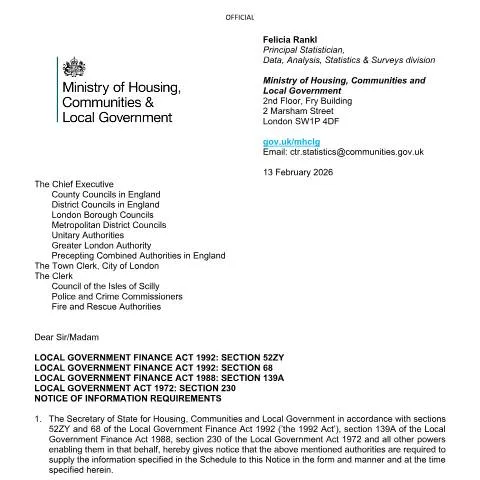
The Importance of the Council Tax Requirement Return
In the realm of local government finance, the Council Tax Requirement Return is an essential document that plays a pivotal role in determining the funding necessary for local authorities to deliver vital services. This return, required under various sections of the Local Government Finance Act, ensures that councils can adequately assess their financial needs and set appropriate council tax rates. Understanding this form is crucial for local councils, as it directly influences budget allocations and community services.
Who is Obliged to Submit This Return?
This return must be submitted by local authorities across England, which include County Councils, District Councils, and Metropolitan District Councils. Each of these entities, tasked with various local functions, must complete the Council Tax Requirement Return accurately, since it informs the council tax levels set for their communities.
- County Councils: Responsible for education, transport, and social services.
- District Councils: Manage local planning, housing, and waste collection.
- Metropolitan District Councils: Oversee services in metropolitan areas, providing a range of local services.
Filing Deadlines and Compliance
Timeliness is critical when submitting the Council Tax Requirement Return. Councils are generally required to complete and submit their returns by the end of January each year to align with the financial year starting from April 6. Non-compliance could lead to penalties and complications in setting council tax rates, impacting local funding.
Completing the Council Tax Requirement Return: A Step-by-Step Guide
The process of completing the Council Tax Requirement Return involves several critical steps that must be followed meticulously to avoid errors. Each line of the form has specific requirements and calculations that must be adhered to.
- Determine Your Council Tax Requirement: Councils must assess the total funding required to meet their service obligations.
- Include Local Precepts: Ensure that any local precepts that affect your council’s finances are included in your calculation.
- Consult the Relevant Statutory Provisions: Before finalizing the return, councils should consult the Local Government Finance Act and related regulations for compliance.
Each line of the form is designed to ensure that councils provide accurate and necessary information. For instance, line 2 requires councils to disclose the aggregate amount of any local precepts, which is critical for understanding local funding and expenditure.
Understanding the Impact of Errors and Omissions
Filing errors or omissions in the Council Tax Requirement Return can have significant repercussions for local councils. If a council misrepresents its financial requirements or fails to include necessary information, it risks setting an inappropriate council tax rate, which can lead to funding shortfalls. Accurate completion is crucial for several reasons:
- Legal Compliance: Errors could lead to non-compliance with statutory requirements and potential legal challenges.
- Community Impact: An inappropriate council tax rate could affect local services, community projects, and overall public satisfaction.
Steps to Take in Case of Mistakes
If a council discovers errors after submission, they must take immediate action. The first step is to notify the relevant authority and submit a corrected return as soon as possible. Councils should maintain transparent communication with local stakeholders about any impacts arising from the error.
Specific Considerations for Different Types of Councils
Different councils may encounter unique challenges when preparing their Council Tax Requirement Return. Here are specific considerations for various types of local authorities:
- Unitary Authorities: These councils handle all local services; therefore, their returns may be more complex due to the broad range of services provided.
- District Councils: Often dependent on County Councils for certain services, they must coordinate closely to ensure their returns reflect the shared financial responsibilities.
- London Borough Councils: Given the unique governance structure of Greater London, these councils might face additional regulations and scrutiny.
The Relationship Between the Council Tax Requirement Return and Local Services
The Council Tax Requirement Return is not just an administrative task; it directly determines how local governments fund essential services such as education, waste collection, and social services. A well-prepared return allows councils to:
- Plan Budgets Effectively: Accurate forecasting based on realistic council tax requirements enables councils to allocate resources efficiently.
- Communicate with Residents: Transparency regarding tax rates and funding helps build trust within the community, as residents understand how their taxes are spent.
Additionally, the results of the Council Tax Requirement Return directly influence the level of engagement from residents during budget consultations. If residents perceive a lack of transparency or fairness in the taxation process, it can lead to diminished trust and participation in local governance.
Referendums and Local Tax Increases
Local councils must also consider the possibility of referendums if their proposed council tax increases exceed certain thresholds. The 2026-27 principles set specific limits, compelling councils to seek approval from residents if their relevant basic amount of council tax is deemed excessive. This process not only engages the community but also ensures that councils are accountable for their financial decisions.
How to Monitor and Follow Up on Your Council Tax Requirement Return
After submitting the Council Tax Requirement Return, it is the responsibility of local authorities to monitor its progress and follow up accordingly. Regular communication with the Ministry of Housing, Communities and Local Government (MHCLG) can help ensure that any queries or issues are addressed promptly. Here are several practical steps councils can take:
- Maintain Records: Keep comprehensive records of submitted returns and any correspondence with the MHCLG.
- Set Reminders: Councils should establish internal reminders for key dates regarding feedback or follow-up actions from MHCLG.
- Engage with Financial Advisors: Consulting with financial advisors can provide councils with insights into addressing any issues that might arise regarding their returns.
Responding to Feedback from Authorities
If the MHCLG provides feedback or requests additional information regarding the Council Tax Requirement Return, councils must respond promptly. This can include providing further details on calculations or clarifications around local precepts. An efficient response can not only rectify issues but also foster a cooperative relationship with regulatory bodies.
Conclusion: Navigating the Council Tax Landscape
Understanding the Council Tax Requirement Return and its implications is paramount for local councils striving to serve their communities effectively. By ensuring accuracy and compliance in their returns, councils can secure necessary funding for local services, communicate transparently with residents, and engage constructively with government authorities. As councils navigate the complexities of local government finance, the Council Tax Requirement Return stands as a foundational element, bridging the gap between fiscal responsibility and community welfare.
Understanding Your Council Tax Band
Council Tax bands are crucial in determining how much you pay. Each property in England, Scotland, and Wales is assigned a band from A to H, based on its estimated value as of 1 April 1991 in England and Wales (or 1 April 2003 in Scotland). Band A represents properties valued up to £40,000, while Band H includes those valued over £320,000. The banding system aims to ensure a fair allocation of council tax based on the relative value of properties. If you believe your property is incorrectly banded, you can challenge this by contacting the Valuation Office Agency (VOA) in England or the equivalent body in Wales and Scotland.
When you move into a new property, verify its Council Tax band as soon as possible. You can check your band online through the VOA website. Understanding your band is essential for budgeting, as your local council sets the rates annually. Some councils offer discounts for certain groups, such as students, disabled individuals, or elderly residents, further affecting your financial obligation.
Exemptions and Discounts Available
Various exemptions and discounts can significantly reduce your Council Tax bill, depending on your circumstances. For example, if you live alone, you may qualify for a 25% single person discount. Similarly, properties occupied solely by full-time students, under 18s, or those with severe mental impairments may be entirely exempt from Council Tax.
Furthermore, certain properties, such as care homes or homes occupied by armed forces members, may also be exempt. It's essential to inform your local council as soon as your circumstances change, as failing to do so could lead to backdated charges. Each council has its own policies regarding discounts and exemptions, so it’s worth checking the specific regulations applicable in your area.
Additionally, councils often provide hardship funds to support those facing financial difficulties. If you’re struggling to pay your Council Tax, contact your local council's benefits department to explore assistance options.
Navigating Appeals and Disputes
If you disagree with your Council Tax bill or the valuation band of your property, you have the right to appeal. The appeals process begins by contacting your local council to discuss the issue. It’s often advisable to attempt to resolve the matter informally before proceeding with a formal appeal, as councils may be willing to adjust your bill based on your circumstances.
Should informal discussions not yield satisfactory results, you can formally appeal to the Valuation Tribunal. This independent body considers appeals regarding Council Tax banding and decisions made by local councils. To initiate an appeal, you must submit a completed appeal form, which is available on the Valuation Tribunal's official website.
It's important to note that appeals must typically be lodged within a specific timeframe; for banding disputes, this is generally within 6 months of your council's decision. Also, while your appeal is being processed, you are still required to pay your Council Tax bill. Failure to do so may result in further penalties or the council taking enforcement action against you.