New-build trailer identification: Understanding the DVSA's batch allocation system
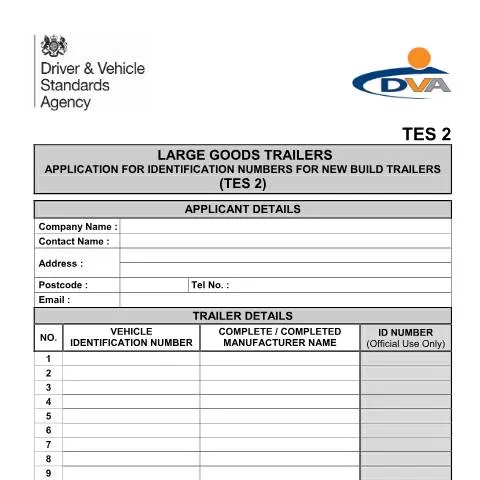
When trailer manufacturers in the UK complete a batch of new commercial trailers, they must obtain official identification numbers from the Driver and Vehicle Standards Agency before these vehicles can enter service. Form TES 2 serves as the gateway to this essential administrative process, allowing manufacturers to secure up to 40 identification numbers in a single application.
This system ensures that every new-build trailer receives a unique DVSA identification number, distinct from the manufacturer's own Vehicle Identification Number (VIN). The process forms part of the broader regulatory framework governing large goods trailers, where proper identification enables accurate record-keeping for testing, certification, and ongoing compliance monitoring.
Manufacturing context and regulatory positioning
The TES 2 application sits within a complex web of trailer manufacturing regulations. Unlike passenger vehicles, commercial trailers follow a different path from production line to public road. Manufacturers typically build trailers in batches, each requiring individual identification numbers that will accompany the vehicle throughout its working life.
The Vehicle Identification Number assigned by the manufacturer serves internal production purposes, but DVSA requires its own identification system for regulatory oversight. This dual numbering approach reflects the agency's need to track trailers through testing, annual examinations, and potential investigations while maintaining independence from manufacturer coding systems.
Form TES 2 bridges this gap by creating the official link between manufacturer VINs and DVSA identification numbers. The batch application system recognises the commercial reality that trailer manufacturers rarely produce single units, instead working with production runs that may span weeks or months.
Timing considerations for manufacturers
Manufacturers must consider their production scheduling when submitting TES 2 applications. The form requires declaration that trailers are "to be built/supplied" by the applicant, allowing applications before complete manufacture. This forward-looking approach enables manufacturers to secure identification numbers during production phases, avoiding delays when trailers reach completion.
However, this flexibility requires careful planning. Manufacturers submitting applications for trailers not yet built must ensure accurate VIN allocation and maintain clear records linking DVSA identification numbers to specific vehicles as production progresses.
Completing the manufacturer and trailer details
The TES 2 form divides into distinct sections reflecting the batch application concept. The applicant details section captures essential company information, requiring both company name and a designated contact person. This dual identification ensures DVSA can reach decision-makers while maintaining clear corporate accountability.
The address field serves multiple purposes beyond simple correspondence. DVSA may need to verify manufacturing premises or conduct inspections, making accurate address details crucial for operational reasons beyond postal delivery. The telephone number and email address provide alternative contact methods, particularly important given the technical nature of trailer manufacturing queries that may arise.
Vehicle identification number requirements
Each trailer entry requires a complete Vehicle Identification Number from the manufacturer. These VINs must follow established formatting standards and remain unique within the manufacturer's system. The form accommodates up to 40 trailers per application, reflecting typical batch sizes in commercial trailer production.
The "Complete/Completed" column allows manufacturers to indicate production status for each trailer. This flexibility supports applications spanning different production phases, where some trailers may be finished while others remain in various stages of assembly.
| Production Status | Application Timing | Documentation Required |
|---|---|---|
| Pre-production | VIN allocation complete | Production schedule confirmation |
| In progress | Frame assembly stage | Manufacturing records |
| Complete | Ready for testing | Full specification documentation |
Data protection compliance and declarations
The TES 2 form incorporates specific data protection provisions reflecting the Data Protection Act 2018 and UK GDPR requirements. The notice explains how DVSA collects, uses, and stores personal data submitted through the application, with specific reference to their privacy policy available at gov.uk/dvsa/privacy.
Importantly, the data protection notice highlights potential data sharing scenarios, particularly for criminal investigations or fraud prevention. This transparency reflects the regulatory environment where trailer identification numbers may become relevant to enforcement activities, accident investigations, or compliance monitoring.
The declaration section requires the applicant to confirm that listed trailers are "to be built/supplied" by the applicant company. This wording encompasses both direct manufacturing and supply arrangements, accommodating various business models within the trailer industry.
Electronic signature acceptance
DVSA explicitly accepts typed signatures for electronic submissions, recognising modern business practices while maintaining declaration authenticity. This provision supports efficient processing while ensuring legal validity of the commitment made by the signatory.
The requirement to print the full name alongside the signature creates a clear audit trail, enabling DVSA to verify signatory authority within the applicant company structure if questions arise during processing.
Submission pathways and processing expectations
Form TES 2 follows DVSA's digital-first approach, directing applicants to use the online service "Apply for a vehicle test or certificate for a lorry or trailer" for submission. This integrated system connects identification number applications with the broader trailer testing and certification framework.
The electronic submission route offers several advantages beyond simple convenience. Digital applications integrate directly with DVSA's internal processing systems, reducing manual data entry and associated error risks. The system can also provide immediate acknowledgment of receipt and enable automated status updates as applications progress.
However, the electronic system requires careful preparation of application data. Unlike paper submissions where minor corrections may be possible during processing, digital applications typically require complete accuracy at submission. Manufacturers should verify all VINs, company details, and trailer specifications before finalising their submission.
Alternative contact channels
DVSA provides specific contact details for TES 2 queries, reflecting the technical nature of trailer identification applications. The dedicated email address [email protected] connects applicants with specialists familiar with trailer manufacturing requirements and identification number allocation procedures.
The Customer Service Centre telephone line (0300 123 9000) offers broader support but may require transfer to specialist teams for complex technical queries. This tiered support structure reflects the balance between accessible general assistance and specialist technical knowledge required for trailer applications.
Integration with broader trailer certification processes
TES 2 applications form part of a larger regulatory sequence that manufacturers must navigate. The identification numbers obtained through this process become essential for subsequent testing applications, where trailers must demonstrate compliance with safety and performance standards before entering service.
The timing of TES 2 submission can significantly impact overall project schedules. Manufacturers planning testing programmes must ensure identification numbers are available before booking test slots, as DVSA's testing systems require valid identification numbers for all applications.
This interconnection extends beyond initial certification. The identification numbers obtained through TES 2 applications remain with trailers throughout their operational life, appearing on annual test certificates, compliance documentation, and any enforcement records. Manufacturers should therefore maintain clear records linking DVSA identification numbers to customer delivery documentation.
Batch processing considerations
The 40-trailer limit per TES 2 application reflects practical processing constraints rather than regulatory restrictions. Manufacturers with larger production runs may submit multiple applications, though this requires careful coordination to avoid VIN duplication or administrative confusion.
Sequential batch applications should clearly indicate their relationship to avoid processing delays. DVSA may query applications containing similar VIN patterns or overlapping production schedules, particularly where multiple applications arrive from the same manufacturer within short timeframes.
Record-keeping and compliance implications
Successful TES 2 applications create ongoing compliance obligations for manufacturers. The identification numbers allocated by DVSA must be accurately recorded against specific trailers and maintained throughout the manufacturing and supply process.
These records become crucial if DVSA conducts compliance inspections or investigates specific trailers. Manufacturers must demonstrate clear linkage between DVSA identification numbers and individual vehicles, including any subsequent modifications or specification changes that occur during production.
The "Official Use Only" column on the TES 2 form indicates where DVSA will record allocated identification numbers. Manufacturers should ensure they capture this information accurately when DVSA returns processed applications, as these numbers form the foundation for all subsequent regulatory interactions.
Beyond regulatory compliance, accurate identification number records support customer service and warranty administration. Trailer operators may reference DVSA identification numbers when reporting issues or requesting information, requiring manufacturers to maintain accessible cross-reference systems linking these numbers to internal production records and customer databases.
Regional Variations and Cross-Border Considerations
While trailer identification processes are primarily governed by UK-wide regulations through the DVLA, certain regional nuances can affect your application, particularly if you operate across England, Scotland, Wales, or Northern Ireland. Scottish trailer operators may encounter specific requirements when transporting goods to and from offshore islands, where additional documentation might be needed for ferry operators who maintain their own vehicle registers.
Northern Ireland presents unique considerations due to its land border with the Republic of Ireland. Trailers regularly crossing this border may require additional documentation beyond standard UK identification numbers, particularly for commercial operations. The Northern Ireland Protocol arrangements can affect how trailer identification is processed, especially for trailers that will be used in cross-border trade activities.
Welsh operators should be aware that while DVLA correspondence is available in Welsh, technical documentation and identification plates typically follow English-language standards. However, Welsh local authorities may have specific requirements for trailers used in certain council-operated services or waste collection activities.
Cross-border operations with mainland Europe require careful consideration of how UK identification numbers interact with international transport requirements. Post-Brexit arrangements mean that trailers operating internationally may need additional permits or documentation, though the core UK identification number remains the primary identifier for domestic purposes.
Regional variations also extend to enforcement practices. Metropolitan areas often have stricter compliance checks, particularly around construction sites where unidentified trailers are frequently spotted. Rural areas may have more flexible interpretation of certain requirements, though legal obligations remain identical regardless of location.
Digital Integration and Future-Proofing Your Application
The DVLA increasingly integrates digital systems across its operations, affecting how trailer identification numbers are processed and maintained. Understanding these digital frameworks can streamline your application and ensure long-term compliance with evolving administrative requirements.
Electronic Vehicle Licensing (EVL) systems now link trailer identification numbers with broader vehicle databases, enabling automated cross-referencing during roadside inspections. This integration means that incomplete or inaccurate applications can trigger system-wide alerts, potentially delaying not just your trailer registration but also affecting related vehicle documentation.
Digital submission capabilities vary depending on your applicant category. Fleet operators with established DVLA accounts may access streamlined online portals, while individual applicants typically rely on traditional postal submissions. However, supporting documentation increasingly accepts digital formats, provided they meet specific technical standards for image resolution and file formats.
Future regulatory changes are likely to expand digital requirements. The DVLA's strategic roadmap indicates increased integration with HM Revenue and Customs systems, potentially linking trailer identification with tax obligations for commercial operators. Early adoption of digital record-keeping practices positions your operation advantageously for these anticipated changes.
Blockchain and distributed ledger technologies are being explored for vehicle identification systems across Europe. While implementation timelines remain uncertain, establishing comprehensive digital records now ensures compatibility with potential future systems. This includes maintaining digital copies of all application materials, correspondence, and supporting documentation.
API integrations with fleet management systems are becoming standard for larger operations. Understanding how your trailer identification numbers will integrate with existing business systems can influence application timing and documentation strategies. Some operators coordinate multiple applications to align with system upgrade schedules, optimising operational efficiency.
Compliance Monitoring and Ongoing Obligations
Securing identification numbers for new-build trailers initiates ongoing compliance obligations that extend far beyond the initial application process. Understanding these continuing requirements prevents costly violations and ensures sustained operational legitimacy.
Annual compliance reviews may be triggered for certain trailer categories, particularly those exceeding specific weight thresholds or operating in regulated industries. These reviews examine whether your trailer's actual specifications continue matching its registered identification details. Modifications, even minor ones, can necessitate formal notification procedures to maintain identification validity.
Record-keeping obligations extend throughout the trailer's operational lifetime. The DVLA expects operators to maintain comprehensive documentation linking identification numbers to maintenance records, inspection certificates, and operational logs. Digital record-keeping systems must comply with Data Protection Act 2018 requirements, particularly regarding data retention periods and access controls.
Insurance implications directly connect to identification number compliance. Insurers increasingly cross-reference policy details with DVLA databases, and discrepancies can void coverage retroactively. Regular reconciliation between insurance records and official identification documentation prevents potential coverage gaps.
Enforcement mechanisms have evolved significantly, with automated number plate recognition systems now capable of identifying unregistered or incorrectly documented trailers. These systems operate continuously across major transport corridors, meaning compliance failures are detected more rapidly than previously possible.
Transfer of ownership procedures require careful attention to identification number continuity. When selling or transferring trailers, proper documentation ensures new owners inherit valid identification without bureaucratic complications. Failure to complete transfer procedures correctly can leave original owners liable for violations committed by subsequent operators.
Disposal obligations apply when trailers reach end-of-life status. Proper deregistration procedures prevent continued liability and ensure identification numbers are properly retired from active systems. Environmental regulations increasingly link to identification systems, particularly for trailers containing regulated materials or operating in environmentally sensitive areas.
International compliance becomes relevant for trailers operating beyond UK borders. European transport regulations may require additional documentation or registration procedures, though UK identification numbers typically remain the primary reference point for returning vehicles.