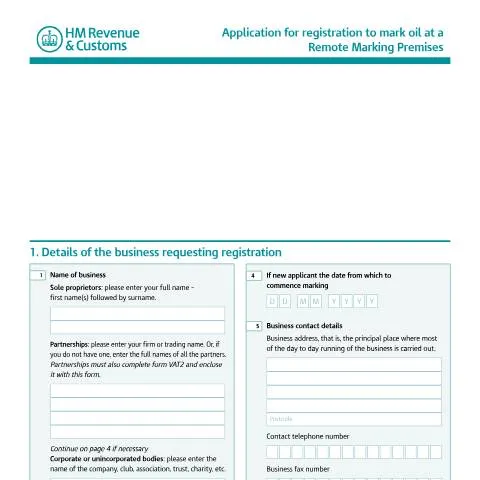
Navigating the Application for Approval to Mark Oil at Remote Marking Premises
In the realm of the UK’s hydrocarbon oil management, the Application for Approval to Mark Oil at a Remote Marking Premises is a pivotal document. This application caters primarily to businesses engaged in the marking of mineral oil products, a crucial step for compliance with UK tax regulations and duty management. It is essential for businesses intending to mark oil remotely, ensuring they adhere to specific legal requirements set forth by HM Revenue & Customs (HMRC).
Understanding the Stakeholders: Who Needs to Apply?
This application is predominantly directed at various types of entities that handle mineral oil, including but not limited to:
- Sole Traders: Individuals operating independently in the oil sector.
- Partnerships: Businesses formed by two or more individuals sharing ownership and responsibilities.
- Corporate Entities: Registered companies, clubs, associations, trusts, and charities.
Regardless of the type of business, all applicants must demonstrate a valid business need for remote marking facilities. This requirement becomes particularly pertinent when considering aspects such as:
- The scale of operations: Large-scale businesses are more likely to require remote marking.
- The nature of products handled: Companies dealing in marked oil are subject to increased scrutiny and regulation.
- Compliance history: Previous compliance issues can affect the approval process.
The Regulatory Framework: Why the Need for This Application?
The necessity for the approval to mark oil remotely stems from a complex framework established to regulate the production, distribution, and use of hydrocarbon oils in the UK. Primarily governed by the Hydrocarbon Oil (Registered Remote Markers) Regulations 2005 and the Customs and Excise Management Act (CEMA) 1979, these regulations ensure that oil marking is performed correctly and responsibly. The relevant sections dictate:
- How oil should be marked to identify its duty status.
- The obligations of those who are permitted to mark oil.
- The security measures that must be in place to prevent misuse of marking substances.
Understanding this backdrop is crucial for any business contemplating the application, as non-compliance can lead to significant penalties or even criminal prosecution. The implications of failing to adhere to these regulations emphasize the importance of the application process.
Unpacking the Application Form: Key Sections and Requirements
The application form itself is structured to elicit comprehensive information from the applicant. Each section serves a specific purpose:
- Business Details: This includes the name, VAT registration status, and contact details. Sole proprietors must provide their complete names, while corporate applicants should furnish their registered names.
- Premises Information: Applicants must detail all locations where marking will take place, including security arrangements for both the marking equipment and substances.
- Marking Equipment and Methods: Specific methodologies for oil marking must be outlined here, which can include methods of marking on receipt into storage or directly from producers.
- Declaration: This part requires the applicant to agree to comply with regulatory obligations and affirm that all provided information is true and complete.
It’s critical that applicants provide accurate information to avoid delays or rejections. Errors can lead to significant setbacks, impacting the ability to commence operations as intended.
Cautionary Tales: Common Pitfalls When Completing the Application
While filling out the application form, applicants often encounter specific challenges that can hinder their progress:
- Incomplete Information: Failing to fully complete the sections, particularly regarding premises and marking methods, can lead to delays.
- Failure to Provide Supporting Documentation: For partnerships, accompanying forms like VAT2 must be submitted to ensure the application is processed.
- Misrepresentation: Providing inaccurate details, either accidentally or intentionally, can result in severe penalties.
To avoid these pitfalls, taking the time to meticulously review the form and ensuring all required documents are attached is essential.
The Process After Submission: What to Expect?
Upon submission, the application enters a review phase conducted by HMRC. It’s essential to understand what happens next:
- Assessment by HMRC: The department will evaluate the application against established criteria, including compliance history and business need.
- Potential Audit: In some instances, HMRC may conduct an audit of the applicant's premises to verify the information provided.
- Approval or Rejection: After review, a decision will be communicated, typically via formal written correspondence.
For those who face rejection, the correspondence should outline the reasons, offering an opportunity to correct any deficiencies in a subsequent application.
Long-Term Implications of Approval: Compliance and Responsibilities
Once approved, businesses must adhere to ongoing compliance obligations, which include:
- Regular Reporting: Depending on the scale of operations, businesses may be required to submit regular reports detailing marking activities and outputs.
- Security Measures: Maintaining robust security for marking equipment and substances is a continual obligation.
- Continued Training: Staff involved in marking must be adequately trained in compliance protocols and security measures.
Failure to uphold these responsibilities can lead to penalties, suspension, or revocation of approval, which can have dire consequences for business operations.
Additional Assistance: Resources and Support Available
Businesses looking to apply for approval can access a wealth of resources to guide them through the process:
- HMRC Guidance Documents: Detailed publications, such as Notice 179, provide critical information on the requirements and obligations for registered remote markers.
- Professional Advice: Networking with industry professionals or legal advisors specializing in tax compliance can offer invaluable insights.
- Workshops and Training Sessions: Various organizations offer workshops that cover the application process and ongoing compliance requirements.
Engaging with these resources can help streamline the application process and ensure a better understanding of the regulatory framework.
The Bigger Picture: The Role of Remote Marking in the Oil Industry
Remote marking facilities play a significant role in the broader context of the UK oil industry. By allowing businesses to mark oil at designated locations, the government aims to:
- Enhance Compliance: Simplifying the marking process assists businesses in adhering to tax laws while promoting fair competition.
- Facilitate Trade: Streamlining the marking process can improve the efficiency of oil distribution, benefiting both producers and consumers.
- Ensure Environmental Safety: By regulating the marking of oil, the government ensures that hydrocarbon oils are managed responsibly, reducing the risk of environmental contamination.
Understanding how this application fits into the larger regulatory landscape helps stakeholders appreciate its importance not only for their business but for the industry as a whole.
Understanding the Regulatory Framework for Oil Marking Approval
Before embarking on your application to mark oil at a remote marking premises, it’s essential to grasp the regulatory context established by HM Revenue & Customs (HMRC). The approval process is closely aligned with the Oil Marking Regulations, which are designed to ensure that marking is conducted in compliance with the law, particularly regarding tax obligations. Understanding the legal provisions related to the specific duties applicable to marked oils is critical. Under UK law, marked oils are usually subjected to lower excise duties, which is why the HMRC maintains strict oversight over the marking process.
The regulations specify not only who can apply for an approval but also the conditions under which the oil marking operations can be carried out. Factors such as the intended use of the oil, the type of marking technology employed, and the security measures in place at the premises will influence the HMRC's decision regarding your application. As part of your preparation, you should familiarize yourself with the specific clauses of the legislation that pertain to your situation. This may include reviewing the relevant sections of the Finance Act and associated statutory instruments. It’s also beneficial to consult with a legal expert in taxation or a compliance advisor who has experience in handling oil marking applications.
Preparing Your Application: Essential Documentation and Information
When applying for approval to mark oil at a remote marking premises, the completeness and accuracy of your application are paramount. The documentation required can vary based on the specifics of your operation, but some common elements include:
- Business Information: Detailed information about your business, including your HMRC registration number, business structure, and contact details.
- Premises Details: Comprehensive information about the location where the oil marking will take place. This includes the address, layout of the premises, security measures, and any relevant health and safety protocols.
- Marking Systems and Techniques: A thorough description of the marking technology you plan to use, including the type of marker agent, application method, and any equipment involved.
- Operational Procedures: An outline of your operational plan, including how you will ensure compliance with the regulations, manage stock, and conduct regular audits.
- Risk Assessments: Evidence of risk assessments conducted to identify potential hazards associated with your oil marking processes and the measures taken to mitigate these risks.
In addition to these documents, keep in mind the importance of providing detailed information about your National Insurance number and any relevant historical compliance records with HMRC. If you or your business have faced penalties or compliance issues in the past, be transparent about these in the application, as this may impact your approval chances.
Common Challenges and Solutions in the Application Process
The journey to obtaining approval for marking oil at a remote marking premises is not without its challenges. Applicants may encounter several obstacles during the process, but understanding these challenges can prepare you for navigating them effectively.
One common challenge is the complexity of the application forms. Those unfamiliar with government forms may find the alphanumeric codes and specific terminologies confusing. To overcome this, consider enlisting the help of a consultant who has experience with HMRC applications. They can provide guidance on how to accurately complete forms such as the APM (Application for Premises Marking) and ensure that all necessary documentation is included.
Another challenge is ensuring that your proposed marking methods comply with the latest technological and security standards. HMRC may require that your operation uses approved marking agents that are compliant with current regulations. Engaging with suppliers who are experienced in providing compliant marking solutions can help mitigate this risk.
Furthermore, dealing with potential delays in the approval process is another area of concern. The review period can be lengthy, sometimes taking several weeks to months. To reduce uncertainty, maintain open lines of communication with your HMRC case officer throughout the process. Regular check-ins can provide insights into the status of your application and address any questions HMRC may have.
Lastly, be prepared for the possibility of an inspection by HMRC before your application is approved. This inspection will assess your premises, procedures, and compliance with the regulatory requirements. Ensuring that everything is in order ahead of time can facilitate a smoother inspection process and increase your chances of receiving approval.