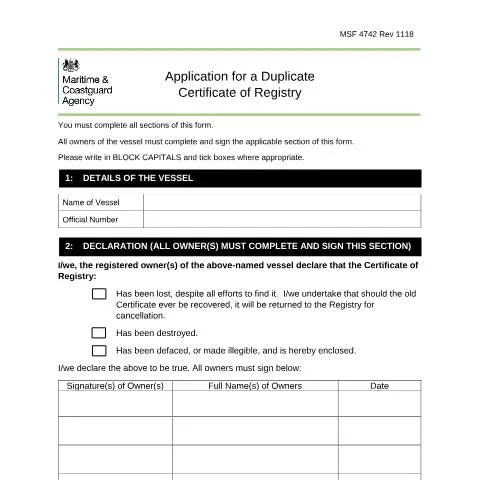
Navigating the Waters of Maritime Registration: Understanding the Duplicate Certificate of Registry (MSF 4742)
For vessel owners in the United Kingdom, the importance of maintaining accurate and up-to-date documentation cannot be overstated. One crucial document that plays a vital role in maritime operations is the Certificate of Registry. However, situations may arise where this document is lost or damaged, prompting the need for a replacement. The Application for a Duplicate Certificate of Registry (MSF 4742), issued by the Maritime and Coastguard Agency (MCA), provides the necessary framework for sailors to secure a duplicate of their vessel's registration certificate.
Understanding the Legal Implications of the Certificate of Registry
The Certificate of Registry serves as a crucial legal document confirming the ownership and registration of a vessel. It is not merely a piece of paper; it embodies various rights and responsibilities under UK maritime law. The implications of possessing a valid Certificate of Registry include:
- Proof of Ownership: This certificate acts as legal evidence that you are the rightful owner of the vessel.
- Navigation Rights: A registered vessel is recognized by the UK authorities, allowing it to navigate UK waters legally.
- Insurance Compliance: Many insurance providers require a valid Certificate of Registry to issue maritime insurance policies.
Thus, understanding the significance of this document is vital for any vessel owner. The loss or destruction of this certificate can lead to complications, which is why the MSF 4742 form is essential for securing a duplicate without unnecessary delays.
Who is Eligible to Apply for a Duplicate Certificate?
Eligibility to apply for a duplicate Certificate of Registry is typically restricted to the registered owner(s) of the vessel. The following categories of individuals or entities can submit an application:
- Individual Owners: Sole proprietors listed on the original registry.
- Partnerships: Joint ownership arrangements where all partners are named.
- Companies: Entities that own the vessel must have duly authorized representatives complete the application.
It is essential that all owners sign the application form, as failure to do so can result in delays or rejection of the application. This requirement ensures that all parties agree on the status of the vessel's registration and acknowledge any loss or damage to the original certificate.
Steps to Secure Your Duplicate Certificate: A Detailed Walkthrough
The process for obtaining a duplicate Certificate of Registry via the MSF 4742 form involves several key steps:
- Complete the Application Form: Fill out the MSF 4742 form in BLOCK CAPITALS. Ensure that each section is accurately completed to avoid processing delays.
- Declare the Status of the Original Certificate: Clearly state whether the certificate has been lost, destroyed, or rendered illegible.
- Gather Supporting Documentation: If applicable, include the original (if defaced) or any other relevant documentation that may aid your application.
- Pay the Required Fee: Enclose the appropriate payment for processing the duplicate application. Ensure to check the latest fee schedule from the MCA.
- Submit Your Application: Send the completed form and any supporting documents to the Registry of Shipping and Seamen at their Cardiff address.
Important Considerations During the Application Process
While the process may seem straightforward, there are crucial considerations to keep in mind:
- Timeliness: Processing times may vary; hence, apply as soon as the certificate is lost or damaged.
- Fees: Check the latest fee structure on the MCA website, as fees may change periodically.
- Contact Information: Ensure that the contact details provided on the form are accurate for any follow-up communications.
What Happens If Your Application is Denied?
In some instances, an application for a duplicate might be denied. Reasons for denial can include:
- Incomplete forms
- Insufficient documentation
- Unsigned declarations by all registered owners
If faced with a denial, the first step is to review the notification carefully for the reasons stated. The MCA typically provides guidance on how to rectify the issue, allowing you to resubmit your application after making the necessary amendments.
What to Do in Case of Errors Post-Issue
Upon receiving your duplicate Certificate of Registry, ensure to verify the details meticulously. In the event of any discrepancies, such as misspellings or incorrect ownership information, take the following steps:
- Notify the MCA: Contact the Registry of Shipping and Seamen immediately to report the error.
- Submit Correction Requests: You may need to complete specific forms to request the correction of the information.
- Settle Any Additional Fees: Be prepared for potential fees associated with issuing a corrected certificate.
Acknowledging the Value of the Certificate
The duplicate Certificate of Registry holds the same legal standing as the original document. However, it is essential to understand that if the original certificate is later found, it must be returned to the MCA for cancellation. Failure to do so could lead to legal complications regarding ownership and registration.
Privacy and Data Protection in the Application Process
Submitting personal information is a necessary part of the application process. Under the Data Protection Act 2018 and UK GDPR, the MCA is obligated to handle your data responsibly. The information collected is used solely for maintaining the UK ship register and ensuring compliance with maritime laws.
For further details on how your personal data is handled, refer to the MCA’s privacy policy, available on their website. It is advisable to familiarize yourself with these policies to understand your rights concerning the data you provide.
Keeping Your Documentation Up to Date
Maintaining an accurate record of your vessel's registration is key to smooth sailing in UK waters. The importance of a valid Certificate of Registry extends far beyond mere compliance; it enhances your vessel's credibility and ensures that you are protected under maritime law.
As part of good maritime practice, regularly check your documentation for any necessary updates, especially following changes in ownership, vessel modifications, or changes in personal information. Keeping abreast of these requirements will save you time and potential legal hurdles down the line.
Conclusion: Empowering Vessel Owners through Proper Documentation
Obtaining a duplicate Certificate of Registry through the MSF 4742 form is an essential process for UK vessel owners. This document not only verifies ownership and registration but also serves as a safeguard against potential legal issues. By following the outlined steps and remaining vigilant regarding your documentation, you can ensure that your maritime activities remain compliant and trouble-free.
Understanding the Importance of a Duplicate Certificate of Registry
When you own a vessel registered in the UK, the Certificate of Registry is a vital document. It serves as proof of ownership and provides essential information about the vessel, such as its name, port of registry, and tonnage. If you lose this document, applying for a duplicate is not merely a formality; it is a necessary step in ensuring your rights as a vessel owner are protected. A duplicate certificate is crucial for various legal and operational reasons, including compliance with maritime regulations, navigation requirements, and secure transactions involving the vessel.
Moreover, having a duplicate Certificate of Registry can prevent potential disputes regarding ownership, especially if you intend to sell the vessel or if it becomes involved in a legal matter. The duplicate functions as a safeguard against claims that may arise from loss or theft of the original document. Therefore, understanding the procedure of applying for a duplicate certificate is essential for every vessel owner.
Fill in your form directly online
No printing: type your details into the boxes of the official form, tick, then download the PDF ready to send.
- 1Type into the form boxes
- 2Tick in one click
- 3Save and download the PDF
The Application Process in Detail
Applying for a duplicate Certificate of Registry (MSF 4742) involves several steps that must be meticulously followed to ensure a smooth process. First and foremost, you will need to gather all necessary documentation. This includes your current Certificate of Registry if available, proof of identity, and any other supporting documents that substantiate your claim for a duplicate.
The application form, MSF 4742, can be obtained from the Maritime and Coastguard Agency (MCA) website or their local offices. Once you have filled out the form, it is crucial to double-check that all information is accurate and complete, as any discrepancies can lead to delays or rejection of your application.
After submitting your completed application, you should expect a processing period, which can vary. Generally, the MCA aims to process applications for a duplicate within a reasonable timeframe, but it is wise to follow up if you have not received any updates within two to three weeks. You can do this by contacting the MCA directly through their customer service line, where representatives are available to assist you with any queries regarding your application status.
Common Pitfalls and How to Avoid Them
While the application process for a duplicate Certificate of Registry may seem straightforward, there are common pitfalls that applicants often encounter. One of the most frequent mistakes is not providing sufficient proof of identity or ownership. Ensure that when you submit your application, you include a copy of an official photo ID, such as a passport or driving licence, and any documents that verify your ownership of the vessel, such as purchase invoices or previous registration certificates.
Another common issue arises from submitting incomplete or inaccurate forms. Take the time to review your application thoroughly before submission. Ensure that all fields are filled out, especially the sections requesting your National Insurance number and contact information. Missing information can lead to significant delays in the processing of your application.
Furthermore, applicants sometimes underestimate the importance of adhering to the specific instructions provided with the MSF 4742 form. For example, the form may require that it be submitted in a specific format or that certain documents be certified copies. Failing to follow these guidelines can result in your application being rejected outright.
Finally, always keep copies of everything you submit. This ensures you have records of your application and can provide evidence if any issues arise. By avoiding these common pitfalls, you can streamline your application process and increase the likelihood of a successful outcome.