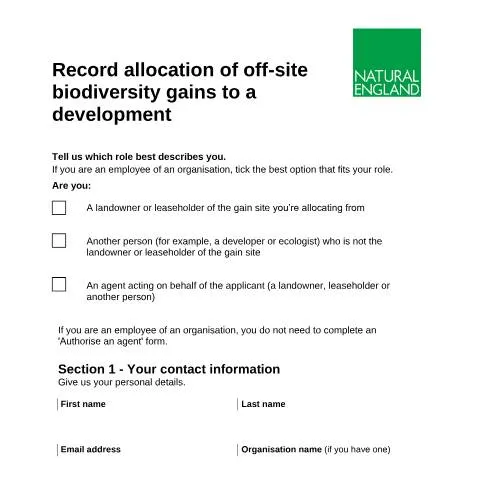
The Importance of the Record Allocation of Off-Site Biodiversity Gains Form
In the intricate landscape of environmental management and development in the UK, understanding the nuances of documentation is essential, especially when it pertains to biodiversity. The Record Allocation of Off-Site Biodiversity Gains form, administered by Natural England, serves a crucial role in the allocation of habitats to mitigate the impacts of development on biodiversity. This document is particularly significant in the wake of the Environment Act 2021, which champions the concept of biodiversity net gain (BNG) within developmental projects.
The BNG requirement stipulates that developers must account for biodiversity losses caused by their projects and must ensure that any ecological damage is compensated for through enhancements to biodiversity elsewhere. This form is an official means by which developers, landowners, and ecology professionals can formalize their commitments to ecological restoration and enhancement, thus contributing to the UK's broader environmental goals.
Navigating the Unique Features of This Form
While various forms exist for different administrative purposes within the realms of environmental management, the Record Allocation of Off-Site Biodiversity Gains form stands out for specific reasons:
- Specificity to Off-Site Gains: Unlike other biodiversity forms that might encapsulate on-site measures, this document strictly pertains to off-site ecological compensation.
- Stakeholder Inclusion: It mandates consent from multiple landowners or leaseholders involved, thereby ensuring transparent collaboration.
- Statutory Metrics Requirement: It necessitates the inclusion of statutory biodiversity metrics, aligning with best practices and scientific benchmarks.
This form’s distinctiveness is not merely procedural; it holds substantial implications for local ecosystems and the duties of developers under UK legislation.
The Historical and Regulatory Framework Behind the Form
To truly comprehend the Record Allocation of Off-Site Biodiversity Gains form, one must look at the history of biodiversity stewardship in the UK. The implementation of the Natural Environment and Rural Communities Act 2006 and subsequent policy changes laid the groundwork for robust biodiversity protection mechanisms. However, it wasn't until the Environment Act 2021 that biodiversity net gain was formally mandated in planning.
This act requires that all developments achieve a quantified biodiversity net gain of at least 10% post-development, fostering a shift in how ecological impact assessments are perceived and executed. The Record Allocation form acts as a tool to facilitate compliance with this requirement, ensuring developers allocate appropriate off-site biodiversity gains as part of their project submissions to local planning authorities.
Who Needs to Engage with This Form?
Understanding who is directly impacted by the Record Allocation of Off-Site Biodiversity Gains form is crucial for successful completion and compliance. The following categories of individuals and organisations are involved:
Landowners and Leaseholders
Landowners or leaseholders of the land from which biodiversity gains are being allocated play a pivotal role. Their consent is necessary for developers who are looking to compensate for biodiversity loss on their developments. Here, the form ensures their voices are heard and their rights protected.
Developers and Ecologists
Individuals in these roles are responsible for ensuring that the biodiversity impacts of their projects are assessed and mitigated appropriately. Developers often engage ecologists to conduct biodiversity assessments and calculate necessary off-site gains, which are then documented through this form.
Agents Representing Stakeholders
In instances where an agent is acting on behalf of a landowner or developer, they must complete this form with the same diligence as the primary stakeholders. Their role involves ensuring all necessary information and consents are accurately represented.
It is important to note that while these are the main roles expressed in the form, there may be exceptions or special considerations for individuals and entities not fitting neatly into these categories.
Complex Scenarios: When the Form Takes on Added Significance
Certain scenarios complicate the normal procedures associated with the Record Allocation of Off-Site Biodiversity Gains form. Here are a few notable cases:
International Developers
Developers from outside the UK must navigate additional regulatory measures and may need a thorough understanding of local biodiversity policies and laws. Compliance with the form is essential to facilitate any biodiversity gain proposals within UK jurisdictions.
Minors and Vulnerable Parties
In cases involving minors or vulnerable parties who may own land, obtaining consent becomes more complex. The law typically requires involvement from a legal guardian or representative, creating additional steps in the allocation process.
Urgent Developments and Time Constraints
In scenarios where developments are under tight deadlines, completing the Record Allocation form might be an urgent priority. Stakeholders must ensure they allow enough time for consent from all necessary parties, as failure to adhere to timelines could result in project delays or penalties.
Completing the Form: What You Need to Know
Filling out the Record Allocation of Off-Site Biodiversity Gains form is a meticulous process. Here are the critical components that stakeholders must address:
Contact Information
The form begins with a section for personal details. It is vital to include accurate contact information, as this facilitates communication with Natural England throughout the application process. Ensure to provide:
- First and Last Name
- Email Address
- Mobile Telephone Number
- Organisation Name (if applicable)
- Role in Organisation (if applicable)
Consent from Landowners and Leaseholders
A crucial element of the form is the section dedicated to consent. It requires the names and signatures of all relevant landowners or leaseholders agreeing to the allocation. Consent must be clear and unequivocal, emphasizing the necessity of collaboration in biodiversity efforts.
Details of Development
This section is where the developer outlines the project specifics. It includes crucial information such as:
- Biodiversity gain site number
- Project name
- Planning reference
- Local planning authority
The accuracy here is paramount as it aligns with previously submitted Biodiversity Gain Plans to local authorities.
Habitat Allocation Declaration
This section requires the use of statutory biodiversity metrics to validate the habitat allocations. It is necessary to include:
| Habitat ID | Area or Length to Allocate (ha or km) |
|---|---|
| [Insert Habitat ID] | [Insert Area or Length] |
Accurate metrics are vital, as these figures directly influence planning decisions and ensure environmental standards are met.
Final Declaration and Submission Steps
Before submission, the declarant must acknowledge that all provided information is accurate and reflect their understanding of the obligations outlined in the application. Following this, the form should be saved, attached to an email, and sent to:
Importantly, developers should not send statutory biodiversity metrics until they have been explicitly requested by Natural England.
Consequences of Non-compliance and Importance of Accuracy
The implications of failing to properly complete and submit the Record Allocation of Off-Site Biodiversity Gains form can be significant. Inaccuracies or omissions may lead to:
- Delays in the planning process, affecting project timelines.
- Increased scrutiny from environmental regulators, leading to potential fines or legal action.
- Negative impacts on local ecosystems due to inadequate compensation measures.
Moreover, as the UK pivots towards a more sustainable development ethos, the importance of rigorous biodiversity documentation cannot be overstated. The success of biodiversity net gain initiatives relies heavily on responsible stakeholder engagement and adherence to frameworks established by Natural England.
Understanding Rights and Data Protection Issues
Given the sensitive nature of personal data involved in completing the Record Allocation of Off-Site Biodiversity Gains form, it is critical to be aware of the data protection rights prescribed under the Data Protection Act 2018 and the UK GDPR.
Natural England, as the data controller, outlines how personal information is processed and the rights stakeholders have concerning their data. Such rights include:
- The right to access personal data.
- The right to rectify inaccuracies in personal information.
- The right to erasure under certain conditions.
Understanding these rights ensures that stakeholders can protect their information and navigate the administrative processes with confidence.
The Road Ahead: What Happens Next?
Once the Record Allocation of Off-Site Biodiversity Gains form is submitted, natural England will reach out to the applicant via email detailing the next steps. This typically includes:
- Confirmation of receipt of the application.
- Instructions regarding the payment of the application fee, which is currently set at £45.
- Guidance on any additional information that may be required for processing.
This follow-up is crucial as it helps maintain transparency and keeps all parties informed about the status of their applications.
In conclusion, the Record Allocation of Off-Site Biodiversity Gains form is not just another bureaucratic hurdle in the development process; it is a vital tool for environmental stewardship in the UK. Engaging with it requires diligence, attention to detail, and a collaborative spirit among stakeholders to ensure that biodiversity is both protected and enhanced for future generations.
Understanding Off-Site Biodiversity Gains
Off-site biodiversity gains refer to ecological benefits achieved when conservation initiatives, habitat restoration, or enhancements occur outside the immediate development site. This approach is often necessary when on-site measures are insufficient to meet biodiversity net gain (BNG) targets, especially in light of the UK's commitment to ecological conservation and the Environment Act 2021. Understanding how to effectively document and allocate these gains through official forms is essential for developers, landowners, and conservationists alike.
Under the Environment Act, new developments must demonstrate a measurable improvement in biodiversity, which often requires off-site interventions. The allocation of these gains involves careful calculation and adherence to the guidelines set by Natural England, the government’s adviser for the natural environment in England.
When considering off-site biodiversity gains, it’s crucial to assess the condition of potential habitats to ensure they can support the species targeted for enhancement or reintroduction. Projects may involve the restoration of degraded habitats, creation of new green spaces, or enhancement of existing ecosystems. Each action must align with the overarching goals for biodiversity uplift, and the allocation of records must reflect the area’s specific ecological needs and conditions.
Completing the Allocation Form: Step-by-Step Guide
When it comes to completing the Record Allocation of Off-Site Biodiversity Gains form, attention to detail is paramount. Below is a comprehensive guide outlining the step-by-step process for filling out this form correctly and ensuring compliance with relevant regulations.
- Step 1: Identify Project Information - Start by clearly stating the project name, location, and the nature of the development. Ensure that this aligns with the planning permission and any associated ecological assessments.
- Step 2: Detail Off-Site Biodiversity Gains - Provide a thorough description of the biodiversity gains being allocated. This should include the type of habitat improvements or restorations undertaken, clear metrics for assessing success (e.g., area restored in hectares), and the anticipated ecological outcomes. Reference any ecological surveys or assessments that substantiate your claims.
- Step 3: Link to Biodiversity Net Gain Targets - It is essential to understand how your off-site gains contribute to the overall biodiversity net gain targets set for your development. Include detailed calculations and how they correlate with the on-site biodiversity impacts.
- Step 4: Include Stakeholder Engagement - Off-site projects often involve multiple stakeholders. Document any consultations with Natural England, local conservation groups, or other relevant authorities. This adds credibility to your form and demonstrates a collaborative approach to biodiversity enhancement.
- Step 5: Review and Submit - Before final submission, review the completed form meticulously. Confirm that all required information is filled out accurately and that supporting documents are attached. Errors or omissions could delay approval, and potentially jeopardize your conservation efforts.
By following these steps, stakeholders can ensure a streamlined process for documenting off-site biodiversity gains, facilitating compliance with regulatory frameworks while promoting sustainable ecological practices.
Monitoring and Reporting Off-Site Biodiversity Gains
Once off-site biodiversity gains are allocated and implemented, monitoring and reporting become crucial components of the process. Continuous assessment ensures that stated goals are being met and allows for timely adjustments if necessary. Compliance with the Environmental Act requires that these gains not only be recorded but also monitored to measure their long-term efficacy.
Monitoring should involve:
- Establishing Baseline Conditions - Before any off-site project begins, it is essential to conduct a thorough ecological survey to establish baseline biodiversity conditions. This will provide a reference point against which future progress can be measured.
- Regular Assessments - Conduct scheduled assessments to evaluate the health of the newly restored or improved habitats. This may include vegetation surveys, wildlife counts, and habitat quality assessments. The frequency of assessments can depend on the type of habitat and the expected recovery rate.
- Documentation of Findings - Maintain detailed records of all monitoring activities, outcomes, and any observed changes in biodiversity. This documentation should correlate with the information provided in the Record Allocation of Off-Site Biodiversity Gains form, allowing for transparent tracking of progress over time.
- Adaptation and Feedback - Use the findings from monitoring to inform future management decisions. If specific restoration efforts are not yielding the anticipated results, consider adaptive management strategies, which may involve altering methodologies or enhancing certain aspects of the project.
Additionally, reporting requirements may involve submitting findings to local authorities or Natural England, ensuring that they are informed of progress and any challenges encountered along the way. By adhering to a robust monitoring and reporting framework, stakeholders can demonstrate their commitment to the UK’s biodiversity goals and contribute to ongoing conservation efforts.