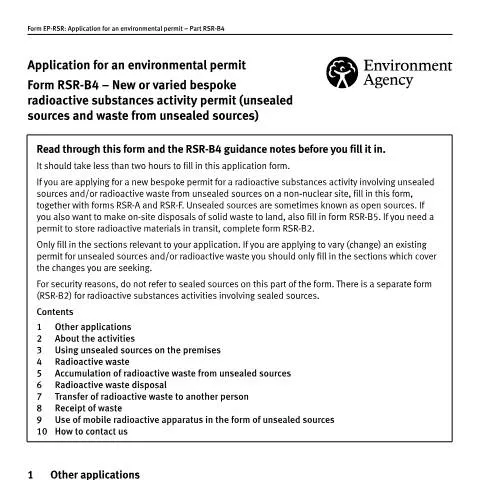
Understanding Form Part RSR-B4: A Key Step in Environmental Compliance
Navigating the complexities of environmental regulations can be daunting, particularly when it comes to managing radioactive materials. For any establishment involved in activities using unsealed sources, the Form Part RSR-B4 from the Environment Agency serves a crucial role. This form is required for applying for or varying a permit related to unsealed sources and waste arising from these sources, which falls under the jurisdiction of the Environmental Permitting Regulations in the UK.
Who Needs to Engage with Form RSR-B4?
The submission of Form RSR-B4 is particularly relevant to businesses and organisations that handle unsealed radioactive materials. These entities might include:
- Research Institutions: Universities and laboratories conducting scientific research involving radioactive substances.
- Healthcare Facilities: Hospitals and clinics that utilise radioactive materials for diagnosis and treatment.
- Industrial Operations: Companies employing radioactive sources for testing or measuring operations.
- Educational Bodies: Schools or colleges with specialized programs that involve radioactive materials.
Exceptions to this application requirement typically include companies engaged solely in activities involving sealed sources, which necessitate a different form, specifically Form RSR-B2.
Diving Deep into the Form Sections
Form RSR-B4 comprises several sections, each crafted to address specific components of your radioactive materials usage and management. Below, we explore these sections to help you understand the nuances involved in completing the form.
1. Application Type
The initial section requires you to specify whether you are applying for a new permit or seeking to vary an existing one. If you choose to vary an existing permit, it is essential to provide the permit number. This distinction is crucial because variation options are not available for standard rules permits.
2. Activity Details
This section is integral as it prompts you to identify the specific radioactive substances activities pertinent to your operations. You will need to check relevant boxes corresponding to your activities, such as:
- Keeping or using radioactive material
- Disposing of radioactive waste
- Accumulating radioactive waste
- Receiving radioactive waste for disposal
- Utilising mobile radioactive apparatus
Your responses here should reflect your operational intentions clearly and accurately.
3. Justifying Your Activities
Justification is a key theme throughout your application. In this section, you are required to comprehensively describe your reasons for using unsealed sources. This includes how you plan to manage the storage of these sources when they are not in use. Typically, this involves detailing safety measures, containment protocols, and compliance with statutory guidelines.
4. Radioactive Waste Management
Highlighting the management of radioactive waste, this section outlines your strategies for minimising waste production through the adoption of 'best available techniques.' You will need to provide a document reference detailing your assessment of these techniques, reinforcing your commitment to environmental stewardship.
5. Accumulation and Disposal Plans
When dealing with unsealed sources, understanding how to accumulate and dispose of radioactive waste is paramount. This section requires you to:
- Describe the accumulation plans for radioactive waste
- Provide chemical and physical details of the waste
- Outline measurement processes for monitoring waste activity levels
Proper documentation here not only showcases compliance but also enhances safety and accountability.
6. Emergency Roles and Compliance
For organisations that might fall under emergency protocols such as the National Arrangements for Incidents Involving Radioactivity (NAIR) or RADSAFE schemes, this section requires clarification of your emergency roles and whether you want standard conditions related to these protocols included in your permit.
Historical Context and Regulatory Framework
The necessity of Form RSR-B4 is rooted deep within UK environmental policy and legislative frameworks aimed at managing radioactive substances. The Environmental Permitting (England and Wales) Regulations 2016 provide the foundational legal structure, ensuring that activities involving radioactive sources are conducted with minimal risk to both public health and the environment.
The role of the Environment Agency is pivotal in enforcing these regulations, and they offer guidance to applicants to promote compliance. The adherence to such regulations is not only a legal obligation but also a moral one, ensuring that the handling of radioactive materials is carried out responsibly.
Submission Methods: Navigating Your Options
Once the form is completed, it is essential to understand the submission channels available. The Environment Agency allows for several methods:
- Online Submission: Most applications can be conveniently submitted online through the Environment Agency’s dedicated portal, which offers real-time updates on application status.
- Postal Submission: Alternatively, completed forms can be sent via post to the relevant regional office. Ensure that you account for postal delays when considering deadlines.
- In-Person Submission: Although less common, some applicants may prefer to submit their application in person. This can facilitate direct engagement with agency staff, allowing for immediate feedback.
Each method has its advantages and potential drawbacks; selecting the most appropriate one depends on your specific circumstances and preferences.
Preparing Your Supporting Documentation
Accompanying documentation is crucial to reinforce your application’s integrity. Depending on your operational profile, prepare the following:
- Risk Assessments: Clearly outline how risks associated with the use of unsealed sources will be managed.
- Safety Procedures: Provide detailed descriptions of safety protocols and emergency response measures relevant to radioactive materials.
- Waste Management Strategies: Include plans for waste reduction, handling, and disposal that align with best practices.
Organising these documents beforehand can expedite the review process and increase the likelihood of successful permit issuance.
Understanding Potential Outcomes
Upon submission, applicants can expect a review process, which may take several weeks. During this time, the Environment Agency assesses the application to ensure that all requirements are met. Possible outcomes include:
- Permit Granted: If your application meets all regulatory standards, you will receive your permit, allowing you to proceed with using unsealed sources.
- Conditional Approval: In some cases, additional measures or clarifications may be required before finalising your permit. This stage often involves further communication with the agency.
- Refusal: If significant concerns are identified during the review process, the application may be refused. However, applicants typically have the right to appeal the decision.
Understanding these potential outcomes can help applicants manage expectations and prepare for post-application actions, should they be needed.
Conclusion: Making the Process Seamless
Completing Form Part RSR-B4 is a multi-faceted process that demands attention to detail and a comprehensive understanding of both operational activities and regulatory requirements. By engaging with the form thoroughly and thoughtfully, applicants are not only complying with the law but also fostering a safer environment for everyone affected by their operations. As the landscape of environmental regulation continues to evolve, staying informed and prepared will be key to successful navigation.
Understanding the Unsealed Sources and Waste Management Regulations
The management of unsealed sources and associated waste is governed under specific regulations that aim to ensure safety and compliance in handling radioactive materials. In the UK, the control of unsealed radioactive sources and their waste is primarily regulated under the Ionising Radiations Regulations 2017 and the Environmental Permitting (England and Wales) Regulations 2016. This framework is designed to protect both public health and the environment by ensuring that any activity involving ionising radiation is adequately controlled and monitored.
When applying for or varying a Part RSR-B4 permit, it is essential to understand how these regulations apply to your specific circumstances. The permit process is not merely a bureaucratic formality; it is a legal requirement aimed at ensuring that all activities involving radioactive materials adhere to stringent safety standards. The application process will scrutinize how you manage unsealed sources, including their use, storage, and disposal, ensuring that the risks are adequately mitigated through robust procedures and practices.
Key Considerations for Permit Application and Variation
When preparing your application for a Part RSR-B4 permit or for a variation of an existing permit, several key considerations must be accounted for. First and foremost, you should conduct a detailed risk assessment that evaluates the potential hazards associated with the use of unsealed sources. This assessment will be a foundational part of your application, demonstrating your awareness of the risks and your preparedness to manage them effectively.
In addition to the risk assessment, it is crucial that you outline your management systems and procedures clearly. This may include detailing how you intend to monitor the use of radioactive materials, training staff on safety protocols, and documenting all handling and disposal procedures. The Environment Agency, which processes these permits, places significant weight on your operational plans, as they provide assurance that you have a comprehensive understanding of both the operational and regulatory landscape.
Moreover, if your operations change—whether through expansion, modification of source usage, or changes in waste disposal methods—you are legally required to vary your permit. It's essential that you stay abreast of any regulatory changes that may impact your permit conditions and ensure that your application for variation is submitted as soon as you identify the need for changes.
Common Challenges and Mistakes in the Application Process
The application process for a Part RSR-B4 permit can be complex, and several common challenges arise that can hinder the timely approval of your application. One frequent issue is the lack of clarity in the information provided. It is imperative to be as specific and detailed as possible in your application forms. Vague descriptions or inadequate data can lead to delays as the Environment Agency may require additional information before proceeding.
Another challenge is underestimating the timeframes involved in the application process. Many applicants may assume that approval will be granted quickly; however, this is rarely the case. It is wise to allocate sufficient time for the permit application process, considering any potential back-and-forth communication with the Environment Agency. Generally, applicants should expect several weeks to months from submission to approval, depending on the complexity of the application and the current workload of the Agency.
Lastly, maintaining compliance with submitted information is critical. After receiving your permit, you must adhere to the conditions laid out within it. Regular audits and reviews of your practices against the permit conditions can prevent unintentional breaches, which could lead to enforcement actions or the revocation of your permit. Therefore, establishing a culture of compliance and regular training for your team can mitigate risks associated with non-compliance.