Traditional Farm Buildings Under Heritage Protection: When Maintenance Becomes a Contractual Obligation
Across England's countryside, thousands of traditional farm buildings stand as silent witnesses to agricultural history. Many of these structures—stone barns, timber-framed granaries, thatched cattle sheds—face an uncertain future without proper maintenance. Under the Countryside Stewardship scheme, landowners can secure annual payments to preserve these heritage assets through options HS1 and HS8, but this financial support comes with stringent documentation requirements.
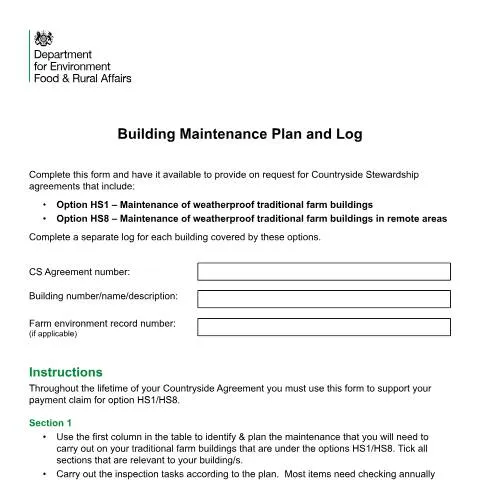
The Building Maintenance Plan and Log (CS31) represents more than mere paperwork—it transforms routine building upkeep into a contractual commitment with the Rural Payments Agency. Each inspection, repair, and maintenance task must be meticulously recorded, creating an auditable trail that spans the entire agreement period. This systematic approach ensures that public funds genuinely contribute to heritage conservation rather than subsidising neglect.
For participating farmers and landowners, the implications extend far beyond annual compliance checks. The document establishes a legal framework where maintenance standards become enforceable obligations, with payment recovery mechanisms triggered by inadequate record-keeping or substandard work.
Distinguishing HS1 from HS8: Location Determines Your Obligations
The Countryside Stewardship scheme recognises that traditional buildings in remote locations face additional challenges. This distinction shapes both payment rates and maintenance expectations through two separate options:
| Option | Coverage Area | Key Characteristics | Documentation Requirements |
|---|---|---|---|
| HS1 | Standard locations | Weatherproof traditional farm buildings with reasonable access for materials and labour | Complete CS31 log with annual inspections and storm damage assessments |
| HS8 | Remote areas | Buildings in locations where transport costs and specialist access significantly increase maintenance expenses | Identical CS31 requirements but higher payment rates reflect additional logistical challenges |
The remote area designation under HS8 acknowledges practical realities: scaffolding costs more when access roads are unsuitable for heavy vehicles, specialist craftspeople charge travel premiums, and material deliveries require additional planning. However, the maintenance standards remain identical—only the financial recognition differs.
Crucially, each building requires its own separate CS31 log, regardless of proximity to other structures. A farmstead with five traditional buildings needs five individual maintenance plans, each tracking specific elements like roof materials, rainwater systems, and structural components relevant to that particular structure.
Anatomy of the Five-Year Maintenance Commitment
The CS31 form structures maintenance obligations across a five-year framework, reflecting the typical duration of Countryside Stewardship agreements. This extended timeline recognises that heritage building conservation requires consistent attention rather than sporadic intervention.
Annual Inspection Cycles
Every participating building must undergo systematic annual inspections, with specific attention to:
- Roof areas: Ground-level and high-point assessments of all covering materials
- Internal roof spaces: Below-gutter inspections for water ingress evidence
- Rainwater disposal systems: Gutter clearance and flow functionality checks
- Structural elements: Ridge tiles, verges, flashings, and material-specific components
The inspection methodology varies significantly depending on roof materials. Slate and tile roofs require careful examination for slippage and cracking, while thatched buildings demand assessment of moss growth, algae development, and bird damage. Sheet metal installations need joint and clip inspections, whereas asphalt areas focus on splits and upstand integrity.
Storm Response Protocols
Beyond routine annual checks, the CS31 framework mandates post-storm inspections following severe weather events. These additional assessments recognise that traditional building materials—particularly thatch, slate, and lead weatherings—are vulnerable to sudden damage that could escalate without prompt attention.
Storm inspections follow identical procedures to annual assessments but trigger immediate documentation requirements. Landowners must record inspection dates, identify new damage, and complete any necessary maintenance tasks within reasonable timeframes to maintain compliance.
Section-by-Section Documentation Strategy
The CS31 form divides maintenance obligations into two complementary sections, each serving distinct compliance purposes within the broader Countryside Stewardship framework.
Section 1: The Systematic Planning Matrix
Section 1 operates as a comprehensive planning and tracking system, organising maintenance tasks by building component rather than chronological sequence. The tabular format requires landowners to:
- Identify relevant components by ticking applicable building elements
- Schedule inspection dates across the five-year agreement period
- Record storm inspection dates when severe weather necessitates additional checks
- Confirm task completion through systematic tick-box verification
This matrix approach prevents maintenance gaps by ensuring every building component receives appropriate attention. A traditional stone barn might require attention to slate roofing, ridge tiles, lead flashings, and cast-iron rainwater goods—each with specific inspection protocols and maintenance standards.
Section 2: Detailed Problem Documentation
While Section 1 tracks compliance with planned maintenance, Section 2 captures the substance of maintenance activities. This narrative section requires:
- Problem identification: Brief descriptions of issues discovered during inspections
- Maintenance descriptions: Specific details of repair and maintenance work completed
- Photographic evidence: Numbered before-and-after images demonstrating work quality
- Cross-referencing: Clear connections between Section 2 entries and Section 1 completion ticks
The photographic requirement deserves particular attention. Images must demonstrate both the necessity of maintenance work and its appropriate completion. A leaking gutter repair, for instance, needs before-images showing the problem and after-images confirming proper water flow restoration.
Material-Specific Maintenance Protocols
Traditional farm buildings incorporate diverse materials, each requiring specialised maintenance approaches that the CS31 framework accommodates through detailed component-specific guidelines.
Historic Roofing Materials
Slate and tile roofs demand careful attention to slippage patterns and cracking development. The CS31 requirements recognise that replacement materials must match existing installations—a critical consideration where original slate quarries no longer operate or historical tile manufacturing has ceased.
Thatch presents unique challenges requiring specialist knowledge. The maintenance protocols acknowledge that rakeing down moss growth and debris removal require different techniques from modern roofing maintenance. Similarly, early failure signs at ridges and chimney abutments need prompt attention to prevent wholesale thatch replacement.
Metal and Modern Materials
Sheet metal roofs and cladding systems require attention to thermal movement joints and fixing clip integrity. The CS31 framework recognises that temporary repairs may be appropriate for minor splits and cracks, provided they maintain weather-tightness until comprehensive restoration becomes necessary.
Lead weatherings and flashings present particular documentation challenges. These materials often require specialist repair techniques, and the maintenance log must demonstrate that work maintains both functional effectiveness and historical authenticity.
Compliance Verification and Payment Protection
The CS31 maintenance log serves dual purposes: demonstrating ongoing heritage conservation efforts and protecting annual Countryside Stewardship payments from recovery action. Understanding this relationship helps landowners appreciate why meticulous record-keeping extends beyond bureaucratic compliance.
RPA Inspection Protocols
The Rural Payments Agency conducts periodic inspections of Countryside Stewardship agreements, with traditional building maintenance representing a high-priority compliance area. Inspectors assess both the physical condition of buildings and the quality of maintenance documentation.
During site visits, RPA inspectors typically:
- Compare maintenance log entries against observable building conditions
- Verify that recorded inspection dates align with weather events and seasonal patterns
- Assess photograph quality and relevance to described maintenance activities
- Check material specifications against heritage conservation best practices
Inadequate documentation can trigger payment reductions or recovery proceedings, even where actual maintenance work meets acceptable standards. The CS31 log therefore functions as crucial evidence of compliance rather than mere administrative convenience.
Cross-Compliance with Planning Requirements
Many traditional farm buildings benefit from listed building protection or sit within conservation areas, creating additional compliance layers beyond Countryside Stewardship requirements. The CS31 maintenance approach must align with any planning consent conditions or listed building consent requirements.
This intersection can create practical challenges. Planning authorities might specify particular repair materials or techniques that differ from standard agricultural maintenance practices. The maintenance log should reflect these requirements, demonstrating compliance with both heritage protection and agricultural support scheme obligations.
Strategic Maintenance Planning Across Agreement Periods
Successful Countryside Stewardship participation requires forward-thinking maintenance strategies that extend beyond immediate repair needs. The five-year CS31 framework encourages systematic approaches that prevent deterioration rather than merely responding to damage.
Budgeting for Cyclical Maintenance
Traditional building maintenance follows predictable cycles that smart landowners incorporate into their planning. Ridge tile repointing might be necessary every 15-20 years, while gutter replacement could be required every 25-30 years, depending on material quality and environmental exposure.
The annual Countryside Stewardship payments should contribute to maintenance reserves that fund major restoration projects beyond routine annual work. This approach ensures that buildings remain in good condition throughout multiple agreement periods rather than deteriorating during intervals between schemes.
Specialist Contractor Relationships
Heritage building maintenance often requires specialist skills—thatching, lime mortar pointing, lead working, or stone carving. Developing relationships with appropriate contractors during agreement periods helps ensure that emergency repairs can be completed promptly when storm damage or sudden deterioration occurs.
The CS31 documentation should reflect the use of appropriately skilled contractors, particularly for materials like thatch or lime mortar where incorrect techniques can cause long-term damage. Recording contractor qualifications and techniques used provides additional evidence of responsible stewardship.
Ultimately, the Building Maintenance Plan and Log transforms heritage conservation from aspiration into measurable commitment. Through systematic documentation and regular assessment, traditional farm buildings receive the consistent attention necessary for long-term survival, while landowners secure ongoing financial support for this essential conservation work. The administrative burden reflects the genuine complexity of heritage building maintenance—complexity that deserves both public support and rigorous accountability.
Digital Documentation and Record-Keeping Requirements
Maintaining accurate digital records of your building maintenance activities forms a crucial component of Countryside Stewardship compliance monitoring. The Rural Payments Agency (RPA) increasingly relies on digital submissions and electronic documentation during scheme inspections, making proper record-keeping systems essential for successful participation.
Your maintenance log must include photographic evidence taken before, during, and after major repair works. These images should clearly show the building's reference number or distinctive features that allow RPA inspectors to identify the specific structure. Date stamps on photographs prove particularly valuable during compliance checks, especially when demonstrating that work was completed within the agreed timeframe specified in your management plan.
Digital mapping tools integrated with the Rural Land Register can help track maintenance activities across multiple buildings within your stewardship agreement. The RPA's online portal allows you to upload supporting documentation directly to your scheme record, creating an audit trail that demonstrates ongoing compliance with your management obligations.
Consider implementing a cloud-based documentation system that automatically backs up your maintenance records. This approach protects against data loss while ensuring that records remain accessible during farm visits or RPA inspections. Many land managers find that smartphone apps designed for agricultural record-keeping can streamline the documentation process, allowing real-time updates to maintenance logs while work is in progress.
Invoice management requires particular attention when claiming reimbursement for eligible maintenance costs under certain Countryside Stewardship options. Retain all receipts for materials, specialist contractor services, and equipment hire. The RPA may request detailed cost breakdowns during payment claims, particularly for higher-value maintenance projects that exceed standard payment rates.
Regular data validation helps identify potential compliance issues before they become serious problems. Cross-reference your maintenance activities against the specific requirements outlined in your Countryside Stewardship agreement, ensuring that all work aligns with the conservation objectives defined for each building or structure.
Seasonal Maintenance Scheduling and Weather Considerations
Effective building maintenance under Countryside Stewardship requires careful coordination with seasonal constraints and weather patterns that significantly impact both the timing and success of repair work. Traditional building materials commonly found in heritage farm structures respond differently to environmental conditions throughout the year, making seasonal planning essential for maintaining structural integrity while preserving historic character.
Lime mortar repairs, frequently required for older farm buildings within stewardship schemes, must avoid periods of frost risk or extreme heat. The optimal working window typically falls between April and October, when temperatures remain consistently above 5°C and overnight frost becomes unlikely. However, summer heat waves exceeding 25°C can cause rapid moisture loss in lime mortars, leading to poor carbonation and reduced structural performance.
Roof maintenance activities face particular seasonal constraints under Countryside Stewardship agreements. Thatch repairs require dry conditions and stable weather patterns, as wet thatch materials compromise the installation quality and longevity of repairs. Traditional slate or tile work becomes hazardous during winter months when ice formation creates dangerous working conditions for contractors.
Wildlife protection requirements add another layer of seasonal complexity to maintenance scheduling. Barn owl nest boxes, often installed as part of Countryside Stewardship biodiversity measures, require maintenance timing that avoids breeding seasons typically running from March through August. Similarly, bat roost sites in traditional farm buildings may restrict access during hibernation periods from October through March.
Weather monitoring systems can help optimise maintenance timing while ensuring compliance with Countryside Stewardship environmental conditions. Many land managers now use local weather stations or smartphone apps that provide detailed forecasts specifically tailored to agricultural activities, including temperature ranges, humidity levels, and precipitation probability.
Emergency repair protocols become particularly important during severe weather events that may damage buildings covered by stewardship agreements. Storm damage, flooding, or extreme temperature fluctuations can compromise structural integrity, requiring immediate temporary measures to prevent further deterioration while maintaining compliance with heritage conservation requirements.
Develop contingency plans that identify priority buildings requiring immediate attention during adverse weather conditions. These plans should include contact details for approved contractors familiar with traditional building techniques, suppliers of appropriate heritage materials, and temporary protection measures that preserve both structural integrity and historic character.
Integration with Environmental Land Management Schemes and Future Transitions
The evolution from Countryside Stewardship towards the Environmental Land Management (ELM) scheme framework represents a significant shift in how building maintenance obligations will be structured and funded in coming years. Understanding this transition becomes crucial for long-term maintenance planning, particularly for participants with existing Countryside Stewardship agreements that extend beyond 2024.
Sustainable Farming Incentive (SFI) components within the ELM framework place increased emphasis on integrated land management approaches that connect building maintenance with broader environmental outcomes. Traditional farm buildings may qualify for enhanced payment rates when maintenance activities demonstrate measurable benefits for biodiversity, carbon storage, or water quality improvement alongside heritage preservation objectives.
The Landscape Recovery scheme, designed for larger-scale environmental transformation projects, may offer opportunities for comprehensive building restoration programmes that exceed the scope of individual Countryside Stewardship options. These projects typically require detailed feasibility studies and long-term management commitments spanning 20-30 years, making thorough maintenance planning essential for successful applications.
Local Nature Recovery partnerships emerging under the ELM framework create opportunities for collaborative maintenance approaches across multiple farm holdings. Shared resources for specialist contractors, bulk purchasing of traditional materials, or coordinated training programmes can reduce individual costs while improving maintenance quality across entire landscapes.
Carbon accounting requirements within future environmental schemes may influence building maintenance approaches, particularly regarding energy efficiency improvements and embodied carbon considerations in material selection. Traditional lime mortars, local stone, and timber from sustainably managed woodlands may attract premium payments when their use demonstrates measurable carbon benefits compared to modern alternatives.
Transition planning requires careful consideration of existing Countryside Stewardship commitments and their alignment with emerging ELM opportunities. Buildings currently under stewardship management may require modified maintenance approaches to meet evolving environmental standards while preserving heritage value and maintaining compliance with existing agreement terms.
Monitoring and evaluation systems under ELM schemes will likely incorporate more sophisticated environmental measurement tools, including biodiversity indicators, soil health assessments, and water quality monitoring. Building maintenance activities may need to demonstrate quantifiable environmental improvements beyond simple heritage preservation, requiring more detailed record-keeping and outcome measurement.
Consider engaging with local environmental groups, heritage organisations, and agricultural advisers to understand how building maintenance activities can contribute to broader landscape-scale environmental objectives. This collaborative approach may unlock additional funding opportunities while ensuring that maintenance work supports multiple environmental and heritage outcomes simultaneously.