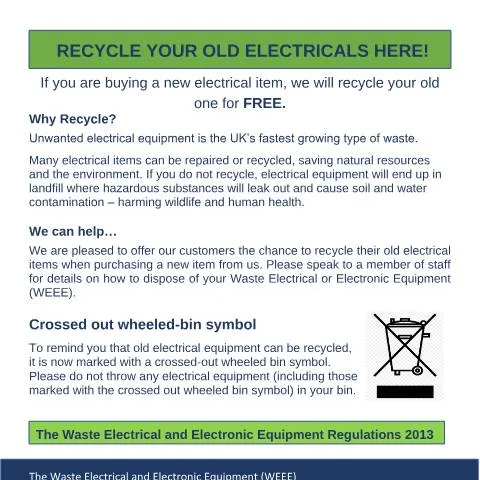
Understanding the WEEE Regulations: A Guide for Electrical Distributors in the UK
The Waste Electrical and Electronic Equipment (WEEE) Regulations are a crucial component of the UK's environmental policy aimed at reducing electronic waste and promoting sustainable disposal practices. Managed by the Office for Product Safety and Standards (OPSS), these regulations impose specific responsibilities on distributors and retailers who sell electrical and electronic equipment within the United Kingdom. This guide provides an overview of the key elements of the WEEE regulations concerning distributor templates and take-back schemes, highlighting what businesses need to know to comply and how these measures benefit consumers and the environment.
The Purpose and Scope of the WEEE Regulations
The primary objective of the WEEE Regulations is to ensure the environmentally responsible disposal and recycling of electrical and electronic equipment (EEE). As electrical goods become increasingly prevalent in everyday life, their improper disposal poses significant risks to soil, water, wildlife, and human health due to hazardous substances such as heavy metals and chemicals.
Under UK law, the WEEE Regulations apply to all distributors, including retailers, importers, and online sellers, who supply new electrical and electronic equipment to consumers. The regulations mandate that these entities facilitate the collection and recycling of old electrical items, thereby supporting the UK's commitment to sustainable waste management and circular economy principles.
Distributor Responsibilities and Take-Back Schemes
One of the key obligations established by the WEEE Regulations is that distributors must provide consumers with the opportunity to recycle their old electrical equipment free of charge when purchasing new items. This is often implemented through take-back schemes, which can be in-store or via designated collection points.
Distributors are required to:
- Offer a free take-back service on a like-for-like basis, meaning the old item must be of the same type as the new purchase.
- Ensure the proper collection, handling, and environmentally sound treatment of WEEE.
- Provide clear information to consumers about their rights and how to recycle electrical equipment effectively.
Labeling and Consumer Information
Electrical products sold in the UK must feature the crossed-out wheeled-bin symbol, which indicates that the item should not be disposed of with regular household waste. This labeling is a visual reminder to consumers that their electrical equipment can and should be recycled separately.
In addition to labeling, businesses are encouraged to inform customers about the importance of recycling electrical waste and the environmental hazards associated with improper disposal. This helps foster responsible consumer behavior and supports national recycling targets.
Legal Framework and Compliance
The WEEE Regulations are underpinned by the Waste Electrical and Electronic Equipment Regulations 2013, which implement the European Union's WEEE Directive into UK law. These regulations require distributors to establish systems for the collection, treatment, and recycling of WEEE, ensuring compliance with environmental standards.
Failure to meet these obligations can result in legal penalties, including fines and enforcement actions by the Office for Product Safety and Standards. Therefore, it is essential for distributors to maintain records of collected WEEE and demonstrate their compliance with the regulations.
Implications for Businesses and Consumers
For businesses, adhering to the WEEE regulations not only ensures legal compliance but also enhances corporate responsibility and customer trust. Offering free take-back schemes can serve as a competitive advantage and demonstrate commitment to environmental sustainability.
Consumers benefit from easier access to recycling facilities, reducing the likelihood of improper disposal and environmental harm. The regulations empower consumers to make environmentally conscious choices and contribute to the UK's waste reduction goals.
Conclusion
The WEEE regulations, managed by the Office for Product Safety and Standards, establish a clear framework for the responsible disposal of electrical and electronic waste in the UK. By implementing effective take-back schemes and providing transparent information, distributors play a vital role in protecting the environment and promoting sustainable consumption. Compliance with these regulations not only fulfills legal obligations but also supports broader efforts to reduce electronic waste and conserve natural resources for future generations.