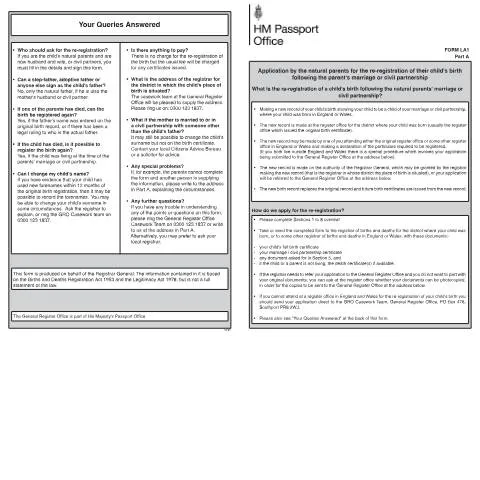
When Natural Parents Unite: Creating a New Birth Record After Marriage or Civil Partnership
The moment natural parents marry or enter into a civil partnership, their child's legal status transforms in ways that extend far beyond emotional bonds. What many couples don't realise is that this union opens the door to re-registering their child's birth – essentially creating a fresh birth record that reflects the child as born within the marriage or civil partnership, rather than outside it.
This administrative process, governed by the Births and Deaths Registration Act 1953 and the Legitimacy Act 1976, allows couples to replace their child's original birth certificate with one that shows the child as "legitimate" under English and Welsh law. The General Register Office, now part of HM Passport Office, oversees this transformation through a specific application procedure that requires both parents' involvement and careful documentation.
Unlike simple name changes or corrections to birth certificates, re-registration creates an entirely new birth record. The original record doesn't disappear but becomes superseded, meaning all future birth certificates will be issued from the new record showing the child's status within the parents' marriage or civil partnership.
Navigating the Eligibility Maze: Who Can Apply and When
The right to re-register a birth following marriage or civil partnership isn't automatic – it comes with specific conditions that must be met precisely. The most fundamental requirement is that both applicants must be the child's natural parents who have subsequently married each other or entered into a civil partnership.
This biological connection cannot be substituted or transferred. Step-fathers, adoptive fathers, or any other parental figures have no standing to make this application, regardless of their legal relationship to the child or mother. The law is uncompromising: only the natural father, provided he is now the mother's husband or civil partner, can participate in this process.
When Death Complicates the Picture
Death of one parent doesn't automatically preclude re-registration, but it does create additional hurdles. If the father has died, re-registration remains possible only if his name appeared on the original birth record or if there has been a legal ruling establishing paternity. This might involve court decisions, DNA evidence previously submitted to legal proceedings, or formal acknowledgement of paternity documented before death.
The death of the child presents a different consideration entirely. Re-registration can proceed, but only if the child was alive at the time of the parents' marriage or civil partnership. This temporal requirement ensures that the legal benefit of legitimacy applied to the living child, even if briefly.
Complex Family Arrangements
Modern family structures often present scenarios where the mother has married or entered a civil partnership with someone other than the child's natural father. In such cases, the birth certificate itself cannot be amended to reflect the child as legitimate, but other legal avenues may exist for surname changes through different procedures. These situations typically require consultation with Citizens Advice Bureau or legal professionals rather than the standard re-registration process.
Decoding the Application Form: Section-by-Section Requirements
The application form demands meticulous attention to detail across eight sections, each serving a specific legal and administrative purpose. Understanding what information is required – and why – can prevent delays and ensure smooth processing.
| Section | Information Required | Critical Notes |
|---|---|---|
| 1 | Child's current details | Must match original birth record exactly |
| 2 | Natural father's information | Requires signature and declaration |
| 3 | Natural mother's information | Must correspond with marriage certificate |
| 4 | Marriage/civil partnership details | Date must be after child's birth |
| 5 | Supporting documentation | Additional evidence may be requested |
| 6 | Register office selection | Where declaration will be made |
The Child's Details: More Complex Than It Appears
Section 1 requires the child's full forenames as originally registered, along with the surname by which you wish the child to be known going forward. This seemingly straightforward requirement contains several complications. If you have evidence that your child has used different forenames within 12 months of the original birth registration, these new names may be incorporated into the re-registration.
Surname changes face additional restrictions. While re-registration often allows the child to take the father's surname or a hyphenated version combining both parents' names, this isn't guaranteed. If the child is 16 years or older, their written consent becomes mandatory before any surname modification can proceed.
Parental Information and Documentation Standards
Sections 2 and 3 require comprehensive details about both natural parents, including full names, dates of birth, occupations, and addresses at the time of the child's birth. This information must align precisely with the marriage or civil partnership certificate, creating a documented chain of identity that registrars can verify.
The marriage or civil partnership details in Section 4 serve as the legal foundation for the entire application. The ceremony date must demonstrably occur after the child's birth – an obvious requirement that nonetheless requires careful verification, particularly when dealing with couples who may have had multiple ceremonies or legal proceedings.
Documentary Evidence: Building an Unassailable Case
Success in re-registration depends heavily on providing the correct supporting documentation. The General Register Office requires specific certificates and may request additional evidence depending on individual circumstances.
The essential documents include the child's full birth certificate – not the short-form version often used for routine purposes. This detailed certificate contains all the information originally recorded about the birth, including parental details that must match the re-registration application exactly.
Your marriage or civil partnership certificate provides the legal authority for the re-registration. This document must be an official certificate issued by the registering authority, not a ceremonial copy or souvenir version that some venues provide.
When Additional Evidence Becomes Necessary
Section 5 of the application form allows registrars to request supplementary documentation based on individual circumstances. This might include evidence of name changes, proof of residence, or documentation establishing facts that aren't clearly demonstrated in the primary certificates.
If either the child or a parent has died since the original registration, death certificates become part of the required documentation. While not always mandatory, providing these certificates proactively can prevent delays and additional correspondence.
For couples living outside England and Wales, the documentary requirements may expand to include proof of current residence and explanation of why attendance at a UK register office isn't possible. These cases follow a special procedure requiring direct submission to the General Register Office.
The Registration Journey: From Application to New Certificate
The re-registration process follows one of two paths, depending on the complexity of your case and the registrar's assessment of your application. Understanding these pathways helps set realistic expectations for timing and potential complications.
Direct Registration at Local Level
In straightforward cases where all documentation is in order and no complications arise, the local registrar can complete the re-registration immediately. You can attend any register office in England or Wales – not necessarily the one where the child was born – to make your declaration and complete the process.
During this appointment, the registrar will review your completed form and supporting documents, verify the information against their records, and create the new birth record. This new record becomes the authoritative version, and all future birth certificates will be issued from it rather than the original registration.
Referral to General Register Office
More complex cases require referral to the General Register Office Casework Team in Southport. This typically happens when documentation raises questions, when circumstances don't fit standard patterns, or when additional verification is needed.
If your case requires referral, you don't need to surrender your original documents permanently. Register offices can arrange for photocopying, allowing you to retain your certificates while the General Register Office reviews copies. This prevents the inconvenience and risk of losing important documents during the assessment process.
The Casework Team can be reached on 0300 123 1837 for queries about referral procedures, timing, or specific requirements for unusual circumstances.
Financial Considerations and Certificate Issuance
One of the most attractive aspects of re-registration is that the process itself carries no charge. Unlike many other administrative procedures involving birth records, creating the new registration doesn't require payment to the General Register Office or local registrar.
However, this free service doesn't extend to certificate issuance. Once the new birth record is created, obtaining birth certificates follows the standard fee structure applied to all certificate requests. The current fees vary depending on the type of certificate requested and the method of application, whether in person, by post, or through online services.
This fee structure means you should consider how many certificates you're likely to need in the near future. Since the original birth record becomes superseded, any existing certificates from the old record may be questioned or rejected for official purposes, making it prudent to obtain several new certificates during your initial request.
Special Circumstances and Alternative Procedures
Not every family situation fits the standard re-registration model, and the General Register Office has developed procedures for handling exceptional circumstances that still fall within the legal framework.
When Parents Cannot Complete the Form Personally
Circumstances may prevent one or both parents from completing the application personally. This might involve serious illness, imprisonment, mental incapacity, or other situations where direct participation becomes impossible. In such cases, the General Register Office will consider applications submitted by third parties, but requires detailed explanation of the circumstances and often additional supporting evidence.
These situations require direct correspondence with the Casework Team rather than standard application procedures. The explanation must demonstrate why the parents cannot participate and provide evidence that the third party has legitimate authority to act on their behalf.
International Complications
Couples living outside England and Wales face additional procedural requirements but aren't excluded from re-registration. The special procedure involves submitting applications directly to the General Register Office rather than attending local register offices.
These international cases often require additional documentation proving current residence and explaining why UK attendance isn't feasible. Processing times typically extend beyond domestic applications due to the additional verification steps and correspondence involved.
Name Change Complexities
While re-registration often facilitates surname changes, the process isn't guaranteed to accommodate all desired modifications. The registrar has discretion in approving surname changes, particularly when they don't follow conventional patterns or when family circumstances are complex.
For forename changes, the 12-month window following original registration provides opportunity for modification, but requires evidence that the child has actually used the new names during this period. School records, medical records, or other official documentation may be necessary to demonstrate consistent use of different forenames.
Understanding the Long-term Implications
Re-registration creates permanent changes that extend beyond the immediate certificate replacement. The new birth record becomes the definitive legal document for all future purposes, affecting everything from passport applications to inheritance rights.
The original birth record doesn't disappear from official systems but becomes marked as superseded. This means historical research or legal investigations can still access the original information if necessary, but routine administrative purposes will reference only the new record.
For the child, this change can have profound implications for identity documents, educational records, and legal proceedings throughout their life. The legitimacy conferred by re-registration may affect inheritance rights, succession claims, and other legal matters that distinguish between children born within and outside marriage or civil partnership.
Parents should also consider the timing of re-registration in relation to other life events. If passport applications, school enrollments, or other significant administrative processes are pending, coordinating the re-registration timing can prevent complications arising from mismatched documentation.
The General Register Office Casework Team remains available on 0300 123 1837 to address specific questions about individual circumstances and provide guidance on complex situations that don't fit standard procedures. Their expertise becomes particularly valuable when family circumstances involve multiple jurisdictions, unusual legal arrangements, or time-sensitive requirements that demand careful coordination of the re-registration process.