When Medical Certification Meets Legal Necessity: Navigating Stillbirth Documentation
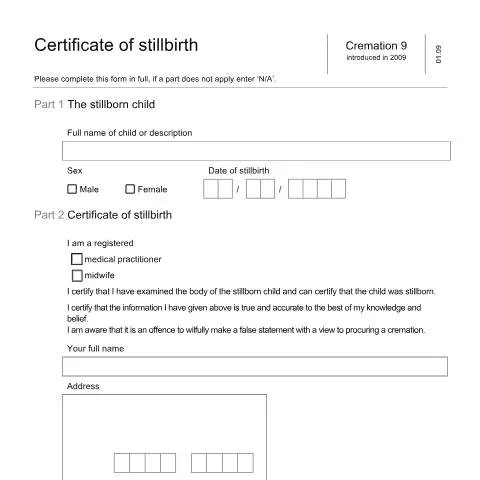
Following a stillbirth in England and Wales, families face the profound challenge of managing both grief and administrative requirements. Among the essential documents that bridge medical practice and legal obligation stands the Certificate of Stillbirth Cremation 9 form, introduced by the Ministry of Justice in 2009 as part of comprehensive cremation regulations. This certification serves as a crucial gateway, ensuring that stillborn children receive dignified cremation whilst maintaining the strict medical oversight required by law.
The form operates within a carefully constructed framework where registered medical practitioners or qualified midwives must provide formal verification that a child was indeed stillborn before cremation can proceed. This requirement reflects the gravity of the situation and the need for absolute certainty in what represents one of the most sensitive areas of healthcare administration.
The Professional Responsibility: Who Holds the Certifying Authority
The Certificate of Stillbirth Cremation 9 form places certification responsibility exclusively in the hands of two categories of healthcare professionals. Registered medical practitioners holding current General Medical Council (GMC) registration represent the primary certifying authority, bringing their comprehensive medical training to bear on this solemn determination.
Alternatively, qualified midwives registered with the Nursing and Midwifery Council may also complete this certification. This recognition acknowledges the central role midwives play in stillbirth cases, often being the healthcare professionals most intimately involved with the circumstances leading to and surrounding the loss.
The form specifically requires professional identification details, including GMC reference numbers for doctors or Personal Identification Numbers (PIN) for midwives registered with the Nursing and Midwifery Council. This creates a clear audit trail linking each certification to a specific, accountable healthcare professional whose qualifications and standing can be verified if necessary.
Examination Requirements and Clinical Responsibility
Central to the certification process is the requirement that the certifying professional has examined the body of the stillborn child. This isn't merely administrative box-ticking but represents a fundamental clinical responsibility. The examining practitioner must be satisfied beyond reasonable doubt that the child was stillborn, bringing their professional expertise to this determination.
The examination requirement ensures that certification isn't based on second-hand information or assumptions but on direct professional assessment. This protects both the integrity of the cremation process and provides families with assurance that their child's case has received appropriate medical attention and verification.
Completing the Documentation: Technical Requirements and Practical Considerations
The form's structure reflects the dual nature of stillbirth certification, balancing essential child identification with professional medical verification. Part 1 focuses on basic information about the stillborn child, requiring either a full name or appropriate description if no name has been chosen. This flexibility recognises that not all families will have selected a name, particularly in cases of earlier pregnancy loss.
Sex determination requires selection between male and female options, though the form's instruction to enter 'N/A' where parts don't apply provides flexibility for situations where sex cannot be determined or where families prefer not to specify. The date of stillbirth must be recorded using the standard UK format, establishing the crucial temporal reference point for all subsequent proceedings.
| Section | Required Information | Completion Notes |
|---|---|---|
| Part 1 - Child Details | Name/description, sex, date | Enter 'N/A' if not applicable |
| Part 2 - Certification | Professional status, examination confirmation | Must tick appropriate professional category |
| Professional Details | Full name, address, qualifications | Include GMC number or NMC PIN |
| Legal Declaration | Signature and date | Acknowledges criminal liability for false statements |
Professional Details and Registration Requirements
Part 2 demands comprehensive professional identification from the certifying healthcare worker. Beyond basic contact information, the form requires detailed registered qualifications, ensuring that only appropriately trained and authorised professionals can complete this certification.
The requirement for GMC reference numbers or Nursing and Midwifery Council PIN numbers creates a direct link to professional regulatory bodies. This enables verification of the certifier's current registration status and provides a mechanism for accountability should questions arise about the certification's validity.
Legal Framework and Criminal Liability Considerations
The Certificate of Stillbirth Cremation 9 form operates under the authority of Regulation 20(1)(c)(i) of the Cremation (England and Wales) Regulations 2008. This regulatory framework establishes the legal foundation for cremation procedures whilst ensuring appropriate safeguards against potential abuse or error.
Perhaps most significantly, the form includes an explicit warning about criminal liability, stating that "it is an offence to wilfully make a false statement with a view to procuring a cremation". This stark reminder underscores the serious legal consequences that could follow any deliberate misrepresentation or fraudulent completion of the certification.
The criminal liability provision serves multiple purposes: it protects the integrity of the cremation process, provides legal recourse in cases of deliberate falsification, and ensures that healthcare professionals approach the certification with appropriate gravity and care.
Regulatory Compliance and Professional Standards
Healthcare professionals completing this form must navigate not only the immediate legal requirements but also their broader professional obligations. Medical practitioners face potential GMC sanctions for inappropriate certification, whilst midwives risk Nursing and Midwifery Council disciplinary action for failures in their professional duties.
The intersection of criminal law and professional regulation creates multiple layers of accountability, ensuring that certification decisions receive the serious consideration they warrant whilst providing robust protection against potential abuse of the cremation system.
Integration Within the Broader Cremation Process
The Certificate of Stillbirth Cremation 9 form represents just one component within a comprehensive regulatory framework governing cremation procedures. Its completion typically follows medical confirmation of stillbirth and precedes the formal cremation authorisation process managed by cremation authorities.
Families should understand that this medical certification, whilst essential, doesn't automatically authorise cremation. Additional documentation and procedures typically follow, including formal application to cremation authorities and completion of other required forms depending on specific circumstances and local authority requirements.
The form's integration with broader cremation procedures means that any errors or omissions can create delays at a time when families are already dealing with profound loss. Accurate completion becomes not just a legal requirement but a compassionate necessity to avoid additional distress through administrative complications.
Timing Considerations and Processing Expectations
Unlike many administrative processes where timing flexibility exists, stillbirth certification often operates under considerable time pressure. Families typically wish to proceed with cremation arrangements promptly, making swift and accurate completion of the Certificate of Stillbirth Cremation 9 form particularly important.
Healthcare professionals should be prepared to complete certification within reasonable timeframes whilst maintaining the thoroughness and accuracy that the legal framework demands. This balance between compassionate responsiveness and regulatory compliance requires careful professional judgement and often benefits from institutional protocols to ensure consistent approaches.
Practical Challenges and Professional Considerations
Healthcare professionals encountering the Certificate of Stillbirth Cremation 9 form for the first time may face several practical challenges. The requirement for direct examination of the stillborn child, whilst medically straightforward, can present logistical complexities depending on where the stillbirth occurred and subsequent arrangements for the child's care.
In hospital settings, established protocols typically ensure smooth certification processes. However, complications can arise when stillbirths occur in community settings, during home births, or where multiple healthcare professionals have been involved in care. Clear institutional guidelines about who should complete certification and under what circumstances become essential for avoiding delays or confusion.
Documentation requirements extend beyond the form itself, as healthcare professionals should maintain appropriate records of their examination and certification decision. This supports both professional accountability and provides a basis for responding to any subsequent queries about the certification.
Special Circumstances and Complex Cases
Certain situations can complicate the certification process, requiring careful professional judgement and sometimes additional consultation. Cases where multiple healthcare professionals have been involved may require determination of who is best placed to provide certification based on their direct involvement and examination of the child.
International families or those from overseas may present additional considerations, particularly if subsequent arrangements involve repatriation or if cultural practices create specific requirements around handling and timing. Whilst the Certificate of Stillbirth Cremation 9 form itself doesn't address these complexities, healthcare professionals should be aware that additional documentation or procedures may be required.
Emergency situations, weekend occurrences, or cases involving healthcare professionals who are unavailable can create practical challenges requiring institutional protocols for ensuring appropriate certification can still be provided without unreasonable delay.
Quality Assurance and Error Prevention Strategies
Given the legal implications and emotional sensitivity surrounding stillbirth certification, healthcare institutions typically implement quality assurance measures to prevent errors and ensure consistent standards. These may include peer review processes, standardised protocols for examination and certification, and clear guidance about when to seek additional medical opinion or support.
Professional development and training around stillbirth certification helps ensure that healthcare workers understand both the technical requirements and the broader legal framework within which they operate. This becomes particularly important as the Certificate of Stillbirth Cremation 9 form may be encountered relatively infrequently by individual practitioners, making familiarity with requirements less certain than with more routine documentation.
Institutional protocols should address common scenarios including out-of-hours certification needs, cases where the primary attending professional is unavailable, and situations requiring additional medical consultation or second opinions about stillbirth determination.
Record Keeping and Professional Documentation
Healthcare professionals completing the Certificate of Stillbirth Cremation 9 form should maintain comprehensive records of their involvement, examination findings, and certification decision. These records serve multiple purposes: supporting professional accountability, providing a basis for responding to any subsequent queries, and ensuring continuity of care information is available if needed.
Professional documentation should include details of the examination undertaken, any clinical findings relevant to the stillbirth determination, and the basis for the certification decision. This level of detail supports both professional standards and provides protection should the certification ever be questioned or reviewed.
The intersection of clinical care, legal requirements, and family needs makes stillbirth certification a uniquely challenging area of healthcare practice. The Certificate of Stillbirth Cremation 9 form provides the formal mechanism for meeting these obligations whilst ensuring that families can proceed with cremation arrangements during an already difficult time. Professional completion of this certification represents not just regulatory compliance but an essential service supporting families through one of life's most challenging experiences.
Special Circumstances and Complex Cases in Stillbirth Certification
Certain circumstances surrounding a stillbirth can create additional complexities in the certification process that require careful navigation through specific administrative pathways. Understanding these scenarios beforehand can prevent delays and ensure proper documentation during an already difficult time.
Multiple Births and Stillbirth Combinations
When multiple births occur with mixed outcomes—where one or more babies are stillborn whilst others survive—separate documentation requirements apply for each infant. Each stillborn child requires their own individual stillbirth certificate, even when part of twins, triplets, or higher-order multiples. The surviving children will receive standard birth certificates through the usual registration process.
Parents must attend separate appointments for registering the live births and stillbirths, as these follow different administrative procedures. The registrar will require detailed information about the birth order and timing for each child, which the hospital or birthing centre should provide in comprehensive medical documentation. This information becomes particularly crucial for legal and inheritance purposes, as birth order can affect certain rights and entitlements.
Home Births and Birthing Centre Complications
Stillbirths occurring outside hospital settings, such as at home or in standalone birthing centres, require additional coordination between healthcare providers and registration authorities. The attending midwife or healthcare professional must ensure all required medical documentation is completed correctly, as there may not be immediate access to hospital-based administrative systems.
Independent midwives and birthing centre staff must coordinate closely with local registration offices to ensure proper certification procedures are followed. Parents in these situations may face slightly longer processing times as documentation moves between different healthcare providers and administrative systems. It's advisable to confirm with your healthcare provider that they have experience with stillbirth certification procedures outside hospital environments.
International and Cross-Border Considerations
Families with international connections may require additional documentation beyond the standard UK stillbirth certificate. If parents hold foreign citizenship or plan to relocate, certain countries require specific medical certifications or translations of UK stillbirth documents for their own administrative purposes.
The Foreign, Commonwealth & Development Office can provide guidance on whether apostille certification is required for UK stillbirth certificates to be recognised in other countries. Some nations require additional medical documentation or sworn translations, which must be arranged through accredited translation services. Parents should consider these requirements early in the process, as obtaining additional certifications can take several weeks.
Military families stationed in the UK may have additional reporting requirements to their home country's military authorities, depending on their service branch and nationality. The base administrative office can provide guidance on any parallel documentation processes that may be required.
Financial Implications and Support Systems
The financial impact of stillbirth extends beyond immediate medical costs, encompassing various administrative fees, support entitlements, and longer-term financial planning considerations that families often overlook during their initial grief period.
Statutory Entitlements and Benefits
Parents who experience stillbirth after 24 weeks of pregnancy remain eligible for certain statutory benefits, including Statutory Maternity Pay (SMP) or Maternity Allowance if they meet the qualifying conditions. The stillbirth certificate serves as crucial evidence for these claims, as it confirms both the pregnancy duration and outcome.
Employers must treat stillbirth leave identically to standard maternity leave for entitlement purposes, meaning eligible mothers can take up to 52 weeks of leave. Partners may also qualify for Statutory Paternity Pay and leave. The Department for Work and Pensions requires the stillbirth certificate as supporting documentation for benefit applications, making proper certification essential for accessing financial support.
Families receiving Universal Credit may be eligible for additional elements or adjustments to their payments. The stillbirth certificate helps establish eligibility for certain disability-related or caring responsibilities elements if ongoing medical care is required. However, these adjustments require separate applications and assessments beyond the initial certification process.
Insurance and Financial Planning Considerations
Life insurance policies that include coverage for stillbirth require the official stillbirth certificate as proof of claim. Some policies distinguish between different gestational ages or circumstances surrounding the stillbirth, making the detailed medical information on the certificate crucial for claim processing.
Private health insurance providers may cover certain costs associated with stillbirth, including additional medical investigations or counselling services. The certificate provides necessary documentation for these reimbursement claims. Parents should review their policy terms carefully, as coverage varies significantly between providers and policy types.
Funeral expenses, while emotionally difficult to consider, represent a significant financial consideration. Some local authorities provide free or subsidised burial or cremation services for stillborn children, with eligibility often depending on the gestational age confirmed in the stillbirth certificate. Private funeral directors typically require the certificate before proceeding with arrangements.
Tax Implications and Considerations
HMRC recognises stillbirth for certain tax purposes, particularly regarding Child Benefit eligibility and tax credit adjustments. While Child Benefit cannot be claimed for a stillborn child, the certificate may be relevant for timing considerations if other children are involved or if the stillbirth affects household composition for tax purposes.
Self-employed parents may be eligible for Maternity Allowance based on their National Insurance contributions, with the stillbirth certificate serving as required evidence. The timing of the stillbirth within the tax year can affect eligibility periods and payment calculations, making accurate certification dates crucial for financial planning.
Long-term Record Keeping and Future Administrative Needs
The stillbirth certificate often proves necessary for various administrative purposes months or years after the initial registration, making proper storage and understanding of future requirements essential for families.
Medical Records Integration and Future Healthcare
Healthcare providers maintain separate records for stillbirth cases that can impact future medical care and family planning decisions. The stillbirth certificate number often appears in maternal medical records and may be referenced during subsequent pregnancies or medical consultations.
Genetic counselling services frequently require stillbirth certificates when assessing family history and risk factors for future pregnancies. The detailed medical information contained in the certification process can inform important healthcare decisions years later. Some specialist services maintain their own databases that cross-reference stillbirth certificates with ongoing research or family support programmes.
NHS patient records systems flag stillbirth history, which can trigger additional care protocols during future pregnancies. The certificate serves as the authoritative document linking these various medical record systems, ensuring continuity of care across different healthcare providers and time periods.
Legal and Estate Planning Implications
Stillbirth certificates can have unexpected relevance for inheritance and estate planning purposes, particularly in complex family situations. While stillborn children cannot inherit or be named as beneficiaries, the certificate may be required to clarify family composition for legal documents or trust arrangements.
Some legal proceedings require comprehensive family history documentation, where stillbirth certificates provide official evidence of pregnancy outcomes. This can be relevant for medical negligence claims, insurance disputes, or family court proceedings where complete reproductive history becomes legally significant.
Property transfers and certain financial arrangements may require disclosure of all pregnancies and outcomes, making the stillbirth certificate a necessary document for complete legal compliance. Solicitors handling complex estate matters often request these certificates to ensure accurate documentation of family circumstances.
Administrative Archive and Retrieval Systems
The General Register Office maintains stillbirth records indefinitely, but accessing these records becomes more complex over time. Understanding the archive system helps families plan for future document needs and ensures important information remains accessible.
After several decades, stillbirth records may be transferred to historical archives, potentially changing the application process for obtaining certified copies. The certificate reference numbers and registration details become increasingly important for locating records in these archive systems.
Digital preservation efforts are gradually converting historical stillbirth records to electronic formats, but this process varies by registration district and time period. Families should consider obtaining multiple certified copies during the initial registration period, as future retrieval may involve additional complexity or cost.
Local registration offices periodically update their record-keeping systems, and older stillbirth certificates may require special handling or verification processes. Maintaining clear records of the original registration details, including the registrar's name and office location, can significantly simplify future administrative requirements.