Navigating the Withdrawal Process: Understanding the DS02c Form
When a company submits an application to be struck off the register, various reasons may prompt its directors to reconsider. The decision to withdraw that application is formalised through the DS02c form, a document that serves as a pivotal tool for companies wishing to remain active. Understanding the implications of this withdrawal process involves grasping the nuances of the form, its specific usage, and the broader context within the Companies Act 2006.
Deciphering the DS02c Form: A Closer Look
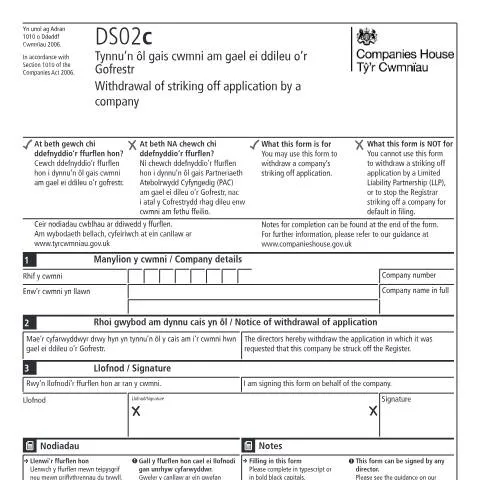
The DS02c form is specifically designed to withdraw a striking-off application made by a company. It is essential to note that this form is distinct from those applicable to Limited Liability Partnerships (LLPs) or to prevent a registrar from striking off a company due to default in filing. Thus, its scope is strictly limited.
Key Sections of the DS02c Form
- Company Details: This section requires the company number and full name, ensuring consistency with the public register.
- Notice of Withdrawal: Here, the directors must indicate their intent to withdraw the application, which is formalised through a signature.
- Presenter Information: Although optional, providing contact details can facilitate communication in case of inquiries about the form.
Each component of the DS02c is critical for a successful withdrawal; inaccuracies can lead to delays or complications.
The Procedural Role of the DS02c
This document forms part of a larger administrative process. When a company applies for striking off, it effectively signals its desire to cease trading. However, circumstances may arise that warrant a change of heart. Completing the DS02c allows the company to re-enter the fold of active entities, thereby preserving its legal entity status, relationships, and contracts.
Why Withdraw a Striking Off Application?
- Change in Business Strategy: A company may decide to pursue new opportunities.
- Financial Recovery: Improved financial standing may prompt the desire to continue operations.
- Legal or Compliance Issues: A change in regulatory requirements or compliance issues could necessitate active status.
Understanding these motivations emphasizes the importance of the DS02c form as a safeguard for corporate flexibility.
Filling Out the DS02c: Common Pitfalls to Avoid
Completing the DS02c requires careful attention to detail. Any oversight could lead to a return of the form or further complications.
Checklist for Completion
- Ensure the company number and name match the public register.
- Confirm that a director has signed the form, as this is a mandatory requirement.
- Determine if the withdrawal follows an application to strike the company off the register.
Utilising this checklist can significantly reduce the risk of errors.
Submission Channels: Where and How to Send the DS02c
The completed DS02c form can be submitted to any Companies House address, but for efficiency, it is advised to send it to the most appropriate location. For companies registered in England and Wales, the suitable address is:
The Registrar of Companies, Companies House, Crown Way, Cardiff, Wales, CF14 3UZ.
Online vs. Paper Submission
While the Companies House primarily accepts paper forms, it is advisable to check for any online submission options, as they may expedite the process. A comprehensive understanding of the available submission options can streamline your experience.
After Submission: What’s Next?
Once the DS02c form is submitted, companies should remain vigilant. Companies House will review the withdrawal request, and depending on the circumstances, communication may be established if there are any issues or further requirements. Keeping track of the status of your application is vital to ensure that the withdrawal is successfully processed.
Tracking Your Application
Companies can track their application status through the Companies House online services or via direct communications. It is advisable to maintain records of all correspondences and filings to mitigate any issues that may arise.
Addressing Complications: What to Do in Case of Refusal or Errors
Should the DS02c form be refused—whether due to missing information or discrepancies—companies need to act promptly. Companies House will typically inform you of any issues. Here are steps to address complications:
- Review the correspondence from Companies House to identify the issue.
- Correct any inaccuracies in the DS02c form.
- Resubmit the form, ensuring all information is accurate and complete.
Timely action is crucial to avoid further complications or delays.
Unique Scenarios: Special Considerations for Different Companies
Foreign companies or those with complex shareholding structures may face additional challenges when filing the DS02c. Understanding the nuances of each situation can help in successfully navigating the withdrawal process.
Foreign Companies’ Considerations
For foreign entities, additional legal requirements may apply. Companies must ensure compliance with UK regulations while completing the DS02c form. It is wise to consult legal experts familiar with UK corporate law to ensure proper adherence to all relevant guidelines.
Minor Companies or Complex Structures
For companies with minors involved or complex governance structures, further documentation may be necessary to validate the withdrawal of the striking-off application. Consulting legal advisors in such scenarios can be instrumental.
Conclusion: The DS02c Form as a Strategic Tool
The DS02c form serves as more than just a bureaucratic requirement; it represents a strategic opportunity for companies to pivot and adapt to changing circumstances. Understanding its intricacies, from filling out the form correctly to knowing where to send it, is essential for any company wishing to continue its operations in the UK. By navigating this process effectively, companies can safeguard their interests and pursue new avenues for growth.
Understanding the Striking Off Process
The striking off process in the UK allows companies that are no longer trading to remove themselves from the Companies House register. This can serve various purposes, such as reducing administrative burdens and potential liabilities associated with running a company. However, several important steps need to be followed, and it is crucial to understand the implications of this decision.
When a company is dissolved, it ceases to exist legally, and its assets may be sold off or passed to creditors. Understanding the process starts with the filing of the DS01 application, which companies must submit to initiate the striking off. It's important to note that once the application is submitted, the company will not be able to carry out any business activities until the application process is complete.
The DS02c form is required when a company decides to withdraw its striking off application after it has been submitted but before it has been processed. This can occur for various reasons, such as changes in business direction or additional funding being secured.
Before submitting a DS02c, it's essential to first notify all relevant parties, including creditors and shareholders, about the decision to withdraw the striking off application. Transparency plays a critical role in maintaining trust and legal compliance throughout this process.
Common Reasons for Withdrawing a Striking Off Application
Companies may find themselves needing to withdraw a striking off application for various reasons. Understanding these reasons can help business owners make informed decisions about their company's future and navigate the complexities of administrative procedures effectively.
Change in Business Strategy: A company might decide to pivot its business model or explore new opportunities that require the continuation of its legal entity. For example, a business may identify a lucrative market or client base that necessitates its presence in the market.
Securing Additional Funding: If a company has identified potential investors or funding sources that are contingent on the business remaining operational, this may be a compelling reason to withdraw the application. Maintaining corporate status can also foster confidence among investors.
Regulatory Compliance: Certain companies may initially file for striking off due to regulatory challenges but later find ways to resolve these issues. It’s essential to remember that a company must comply with all applicable regulations, and an operational status may provide more leeway in resolving outstanding compliance matters.
Outstanding Debts or Obligations: If a company realizes that it has outstanding debts or legal obligations that need to be addressed, it may opt to withdraw its application to engage with creditors and resolve these issues proactively.
Asset Management Considerations: Some businesses may possess valuable assets that require a structured approach to management. Institutions may determine that these assets can be better managed while the company maintains its operational status.
It's essential to reflect on these factors carefully and ensure that withdrawing the application aligns with the long-term objectives of the business. The guidance of a legal or financial advisor can be invaluable in navigating these decisions.
Step-by-Step Guide to Completing the DS02c Form
Filling out the DS02c form may seem straightforward, but it requires attention to detail to ensure accuracy and compliance with Companies House requirements. Below is a detailed, step-by-step guide on how to complete the DS02c effectively:
Header Information: Start by filling in the top section with your company's registered name and number. This information is critical as it allows Companies House to identify the company linked to the withdrawal application accurately.
Contact Information: Provide a contact address where you can be reached for any queries. This address must be one where you receive official communication relating to the company.
Date of Application: In the next section, specify the date when the original striking off application (DS01) was submitted. This is vital as it provides the context for the withdrawal and ensures that Companies House processes the application correctly.
Reason for Withdrawal: Clearly outline the reason for withdrawing the application. Providing a comprehensive explanation can expedite processing and reduce the likelihood of additional queries from Companies House.
Director’s Signature: The form must be signed by a director of the company or an authorized representative. Ensure that the signatory is duly authorized to act on behalf of the company, as any discrepancies may lead to rejection of the application.
Submit the Form: Once completed, submit the DS02c form to Companies House via the appropriate method (online or by post). Retain a copy of the completed form and any correspondence for your records.
Await Confirmation: After submission, you will receive a confirmation from Companies House once your DS02c application has been processed. Keep an eye on your communications in case further information is requested.
Following these steps meticulously can help ensure that your withdrawal application is processed smoothly and efficiently, preventing any unnecessary delays or complications.