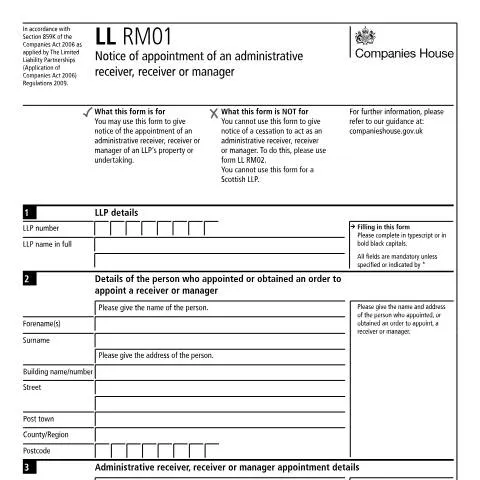
Understanding the LL RM01: Navigating the Appointment Process
In the dynamic world of business, decisions often necessitate the appointment of an administrative receiver, receiver, or manager to handle assets and liabilities effectively. The form LL RM01 is a key document for limited liability partnerships (LLPs) in the UK, facilitating this vital process. This document enables stakeholders to notify Companies House of such appointments, ensuring compliance with the legal framework established by the Companies Act 2006 and the Limited Liability Partnerships Regulations 2009.
Who Initiates the LL RM01 Filing?
The submission of the LL RM01 is primarily the responsibility of the individual or entity that appoints the receiver, manager, or administrative receiver. This could be a creditor, a partner, or a court which has issued an order for such an appointment. Understanding the specific roles involved is crucial, as different parties may have different responsibilities and implications in the process.
Key Parties Involved
- Administrative Receiver: This individual is tasked with managing the affairs of the LLP, particularly in times of financial distress.
- Person Making the Appointment: This could be an LLP partner, a creditor, or a court, depending on the circumstances leading to the appointment.
- Companies House: The regulatory body that oversees the filing of the LL RM01 and maintains public records.
Filling Out the LL RM01: Precision is Key
Completing the LL RM01 accurately is crucial for its acceptance by Companies House. The form requires specific information about the LLP and the appointed individual. Here’s how to ensure you provide all necessary details:
Essential Information Required
- LLP Details: Include the full name and registration number of the LLP, ensuring they match the public register.
- Appointment Details: Specify the nature of the appointment (administrative receiver, receiver, or manager) and whether it covers the whole or part of the LLP's property.
- Contact Information: Optionally, provide a contact name and details to facilitate any queries from Companies House.
Submission Pathways: Online vs. Paper
Filing the LL RM01 can be done through various methods, each with its unique benefits. Understanding these pathways can assist in determining the most efficient approach for your LLP.
Online Submission
Utilising the online services provided by Companies House can expedite the submission process. The online portal allows for immediate processing and reduces the chance of errors due to legibility issues.
Paper Submission
Alternatively, the LL RM01 can be submitted via post. Ensure that the form is completed in bold black capitals as required, and double-check for completeness to avoid delays. If opting for this method, sending the form to the correct address is vital.
Timing: When to Submit the LL RM01
Timeliness is crucial when filing this form. The appointment should be reported to Companies House as soon as possible to ensure compliance and clarity in the management of the LLP’s assets.
Key Dates and Follow-Up
- Appointment Date: Clearly state when the appointment took place; this is essential for record-keeping.
- Submission Deadline: While there is no strict deadline, prompt filing can prevent complications.
- Subsequent Actions: Once submitted, the appointment will be registered, and the information will be available on the public register.
Understanding the Regulatory Framework
The LL RM01 is governed by specific regulations that define its use and importance within the context of UK company law. Familiarity with these regulations can aid in understanding why accurate filings are necessary.
The Companies Act 2006
This Act lays the groundwork for how companies, including LLPs, operate and manage their affairs, including the appointment of receivers. Section 859K specifically details the requirements for notifying Companies House regarding such appointments.
The Limited Liability Partnerships Regulations 2009
This regulation complements the Companies Act by providing specific frameworks for LLPs, ensuring they operate transparently and in accordance with legal expectations.
Handling Potential Issues: Errors or Missing Information
In the event of a mistake or omission in the LL RM01 submission, it is crucial to address the issue promptly to avoid enforcement actions or penalties.
Steps to Take in Case of Mistakes
- Identify Errors: Review the submitted form against the required information to spot inaccuracies.
- Contact Companies House: Reach out for guidance on how to rectify the submission.
- Submit Corrections: Depending on guidance received, you may need to file an amended form or provide additional documentation.
Monitoring Your Submission: Where to Find Updates
Once the LL RM01 is submitted, it’s important to track its status to ensure it is successfully processed and recorded.
Checking Submission Status
- Online Access: Companies House provides online tools to check the status of filings.
- Contacting Companies House: Inquiries can also be made via phone or email to obtain updates.
Special Considerations: Unique Scenarios
There may be specific circumstances or unique profiles that require different considerations when submitting the LL RM01.
Foreign Entities and Minors
- Foreign Individuals or Entities: Ensure compliance with UK regulations and possibly seek legal advice to handle unique legal requirements.
- Minors: If the appointing party is a minor, legal guardianship or assistance may be required for submission.
Complex Situations
If the LLP is involved in legal disputes or insolvency proceedings, consulting a legal advisor is prudent to navigate the complexities of the law adequately.
Final Thoughts: Ensuring Compliance and Transparency
Filing the LL RM01 is more than an administrative task; it is a critical step in ensuring that the affairs of an LLP are managed transparently and within legal boundaries. The act of appointing an administrative receiver, manager, or receiver holds significant implications for the business's future. By understanding the nuances of the LL RM01 process, stakeholders can navigate this essential requirement with confidence.
Understanding the Roles of an Administrative Receiver, Receiver, and Manager
In the context of limited liability partnerships (LLPs) in the UK, it is crucial to understand the distinct roles of an administrative receiver, receiver, and manager, especially when dealing with financial challenges. Each of these roles has specific legal responsibilities and powers that can significantly impact the partnership and its stakeholders.
An administrative receiver is typically appointed when a charge holder (usually a lender) has security over the assets of the LLP. Their primary responsibility is to manage the assets of the partnership in a way that maximises their value and aims to repay the secured debt. Administrative receivership is governed by the Insolvency Act 1986, which outlines the powers and duties of the receiver. They must act in the best interests of the secured creditor while also considering the rights of other partners and stakeholders.
Receivers, on the other hand, are generally appointed when there is a default on a loan secured against the assets of the LLP. The role of a receiver is to take control of the assets and generate income from them to pay off debts. Unlike administrative receivers, receivers do not have to consider the interests of unsecured creditors, which can lead to different outcomes for the LLP. Their authority and the extent of their powers are defined in the charge agreement.
A manager can be appointed under different circumstances, typically not linked to insolvency. Managers may be appointed to oversee and manage the day-to-day operations of the LLP, especially when the partners are unable to fulfill their roles due to various reasons, such as illness or absence. The appointment of a manager can help maintain the continuity of business operations and protect the interests of all partners.
The Process of Appointing an Administrative Receiver or Receiver
Appointing an administrative receiver or receiver involves several legal steps that must be adhered to strictly, as outlined in the relevant legislation. The process often begins with the secured creditor declaring a default on the loan agreement. Following this declaration, the creditor can take the necessary steps to appoint a receiver or administrative receiver, typically by providing a notice in writing. It's essential to ensure that all communications and notices are compliant with the requirements of the Insolvency Act 1986.
The appointment itself can be performed by executing a deed or agreement that specifies the powers and duties of the receiver. It is highly advisable for creditors to seek legal advice during this process to ensure that the appointment is valid and enforceable. Once appointed, the receiver must notify Companies House through form LL RM01 within 14 days of the appointment. This notification serves to inform other stakeholders and the public about the change in management of the LLP.
After the appointment, receivers must follow a strict protocol, which includes assessing the LLP's assets, managing its finances, and reporting to the creditors regularly. They are required to adhere to the principles of the Insolvency Code of Ethics, ensuring transparency and fairness throughout the process. If the administrative receiver or receiver identifies that the LLP is insolvent, they may initiate further actions such as restructuring or liquidation, depending on the best outcomes for creditors and partners.
Legal Considerations and Protecting Partner Interests
When appointing an administrative receiver or receiver, several legal considerations come into play, particularly concerning the rights of partners and creditors. The appointment can have a significant impact on the LLP's ongoing operations and the personal liability of partners. Partners must be aware that while an administrative receiver or receiver acts in the interests of secured creditors, they must also consider the implications for all stakeholders, including unsecured creditors.
It is vital for partners to understand their rights and duties during this process, as the appointment of a receiver can affect their decision-making powers. In some situations, partners may seek to challenge the appointment if they believe it was executed improperly or if they dispute the grounds for the appointment. Engaging with legal counsel early in the process can help ensure that partners' interests are adequately represented, and that their concerns are heard.
Furthermore, the Data Protection Act 2018 and UK GDPR provide guidelines on how personal data should be processed during such appointments. Stakeholders must ensure compliance with data protection laws, especially when handling sensitive information related to the LLP's finances and partner identities. Adhering to these regulations not only protects individual rights but also safeguards the integrity of the overall administrative process.