Navigating the Application for Tax-Free Insurance Benefits
When faced with uncertainty surrounding your income tax obligations, especially after experiencing illness or disability, understanding your rights and the related processes becomes crucial. The application to receive insurance benefits without tax deductions is pivotal, offering financial relief for individuals needing access to their benefits without the immediate burden of tax deductions. This article delves into the specifics of the application process, the necessary preparations, and the implications of your choices.
Understanding the Role of the Application Form
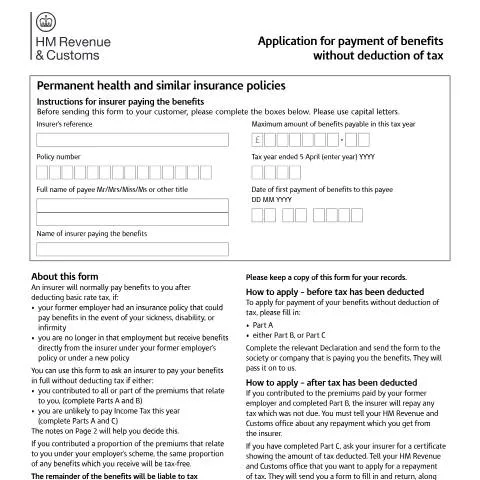
The request for payment of benefits without tax deductions serves an essential function for individuals who have been insured under a permanent health or similar insurance policy. Generally, insurers deduct basic rate tax from payments made to individuals who are no longer employed but still receive benefits from their previous employer's policy. This application provides a channel through which individuals can reclaim their rights, ensuring they receive the full benefit amount without initial tax deductions.
Who Should Consider Applying?
Several profiles may find themselves eligible for this application:
- Former Employees: Individuals who had a health insurance policy through their employer and are now receiving benefits directly from the insurer.
- Individuals with Limited Tax Liabilities: Those who believe their total income will not exceed the personal allowance for the tax year.
- Policy Contributors: Any individual who contributed to the premiums on their insurance policy which may entitle them to tax-free payments.
Preparation: Gathering Required Documentation
Before commencing the application process, it is critical to prepare the necessary documentation. This not only streamlines your application but ensures that you do not face delays due to missing information.
Essential Documents to Compile
- Insurance Policy Details: Gather your policy number and the insurer’s reference.
- Personal Information: Prepare your full name, National Insurance number, and the address of your HM Revenue and Customs (HMRC) office.
- Income Forecast: An estimate of your income for the tax year, including all sources, to determine your tax liabilities.
Decoding the Application Form Sections
The application form is divided into distinct parts, each with specific requirements and implications. Understanding each section is key to successful completion.
Part A: Claimant's Details
This section collects necessary information about the claimant. Ensure that you fill this out using capital letters to avoid any processing issues.
- National Insurance Number: This is a vital identifier for tax and benefit purposes.
- Postcode: Make sure this is accurate to avoid delays in correspondence.
Part B: Declaration of Premium Contributions
If you contributed to the premiums of your employer's policy, you must complete this declaration. Here, you will affirm your contribution status, which is crucial for determining the tax-free benefit portion.
Note: Misrepresenting your contributions can lead to penalties, so ensure accuracy.
Part C: Declaration for Tax Exemption
This section is for individuals who believe they will not be liable for income tax this year. Thoroughly assess your financial situation to ensure eligibility.
Upon completion, the form must be signed and dated. Ensure that the signature matches your official documents to avoid discrepancies.
Submitting Your Application: The Next Steps
Once the form is complete, it’s time to submit it correctly:
- Direct Submission to Insurer: Send the completed form to the insurance company or society that is responsible for processing your benefits. They will liaise with HMRC on your behalf.
- Keep a Copy: Maintaining a copy of the application is essential for your records. This can serve as proof of your request and assist in any follow-up communications.
What Happens After Submission?
After your form is submitted, several outcomes are possible, depending on the accuracy of your application and the information provided:
Successful Applications
If your application is approved, the insurer will begin to pay benefits without deducting tax. However, if you contributed to the premiums, ensure that you report this accurately to HMRC to clarify your tax position.
Need for Additional Information
In some instances, HMRC may contact you for further clarification or additional documentation. Respond promptly to avoid delays in your benefits.
Refusal or Errors in the Application
Should your application be refused, it is essential to understand the reasons behind the decision. Common issues may include:
- Incomplete Information: Double-check that all required sections are filled out and that documents are attached.
- Ineligibility for Tax-Free Benefits: If you are deemed likely to exceed your personal allowance, the application may be rejected.
If you suspect an error during the submission, contact your insurer or HMRC directly to resolve the issue as quickly as possible.
Understanding Your Rights and Obligations
Applying for these benefits transcends merely filling out a form; it’s about understanding your rights as a policyholder and the implications of your choices. The benefits you receive can significantly impact your financial situation, especially during challenging times.
Realising the potential tax liabilities associated with your benefits is crucial. If you discover that your income increases after receiving the benefits, you must inform HMRC promptly, as failing to do so can lead to future tax complications.
Historical Context and Regulatory Framework
The regulations surrounding the payment of benefits without tax deduction can be traced back through various reforms aimed at protecting individuals' financial interests in the UK. The current guidelines are governed by the HMRC policies and the Data Protection Act 2018, which ensures that personal data is handled appropriately, especially in processes involving insurance payouts and tax calculations.
Understanding this regulatory backdrop not only equips you with knowledge but also arms you with the necessary context to navigate potential future changes in legislation that may affect your benefits.
Practical Tips for a Smooth Application
To ensure a smooth application process, consider the following practical tips:
- Double-Check Your Information: Always review your application for accuracy before submitting it.
- Keep Records of Correspondence: Maintain a detailed log of any communications with your insurer or HMRC regarding your application.
- Stay Informed: Regularly check for updates or changes in tax regulations that may affect your insurance benefits.
Conclusion: Empowering Your Application Journey
Engaging with the application for tax-free insurance benefits is more than a bureaucratic task; it is a step towards reclaiming financial autonomy during uncertain times. By understanding the roles, procedures, and implications of this application, you can better navigate the complexities of tax regulations and insurance policies, ultimately leading to improved financial wellbeing.
Understanding Tax-Free Insurance Benefits: Eligibility Criteria
In the UK, certain insurance benefits can be received without tax deductions, but the eligibility criteria can be intricate. It's crucial to grasp who qualifies and under what conditions. Generally, tax-free insurance benefits apply to specific types of insurance, such as life insurance or critical illness cover, which can sometimes allow for a tax-free payout to the beneficiary upon the insured person’s death or diagnosis of a severe illness.
To be eligible for tax-free benefits, you must ensure that the policy is set up correctly. For instance, if the policy is written in trust, the proceeds may be exempt from inheritance tax, allowing beneficiaries to receive the full amount without any deductions. A trust can help avoid the complexities surrounding Probate, ensuring that the benefits reach the intended recipient without the usual tax implications.
Several factors can affect your eligibility. For example, if you hold a policy that falls under the category of 'qualifying policies'—typically those that meet specific investment and premium criteria—these may benefit from tax relief. Additionally, if you're receiving benefits under a critical illness insurance policy, it's essential to check whether the payments are classed as income or capital, as this can influence tax obligations.
Documenting Your Claims: Required Paperwork and Procedures
To apply for insurance benefits that you believe should be tax-free, specific documentation is essential. The process can vary depending on the insurance provider and the type of benefit being claimed. Typically, you will need to provide the following:
Insurance Policy Documents: Ensure you have your original policy documents, which may detail the terms of your coverage, benefits payable, and any clauses regarding taxation.
Proof of Identity: A valid form of identification, such as a passport or driver’s license, will usually be required to process your claim. This is particularly important under the Data Protection Act 2018, which mandates that personal data must be handled securely.
Medical Evidence (if applicable): If claiming on a critical illness policy, you may need to provide medical evidence supporting your diagnosis. This documentation should come from a qualified healthcare professional and clearly state the condition that qualifies for the insurance payout.
Completed Claim Forms: Most insurance companies provide specific claim forms that must be filled out accurately. It’s critical to ensure all sections are completed to prevent delays in processing your claim.
Tax Declaration: Depending on your circumstances, you may also need to complete a tax declaration form, confirming your understanding of the tax implications or lack thereof on the benefit you are claiming.
Once you have gathered the required documentation, submit your claim through the prescribed channel, often an online portal or via a postal service. Keep copies of all documents submitted, as you may need them for future reference or in case of any disputes.
Tax Implications: What Happens After Your Claim is Approved
Once your claim for tax-free insurance benefits is approved, understanding the potential implications on your financial situation is vital. Although the payout itself may not be subject to income tax, there are other considerations to keep in mind.
Inheritance Tax (IHT): If the policy is not written in trust, the payout may be included in your estate for IHT purposes. This could lead to a significant tax obligation for your beneficiaries if your total estate exceeds the IHT threshold. As of the 2023-2024 tax year, the threshold is £325,000, but this can change annually.
Impact on Other Benefits: Receiving a substantial tax-free payout may affect your eligibility for means-tested benefits such as Universal Credit or Jobseeker’s Allowance. These benefits consider your total income and savings, so even a one-off payment could lead to a reduction or suspension of payments.
Reporting Requirements: While the payout itself may be tax-free, it is prudent to report it to HM Revenue & Customs (HMRC) to clarify your tax position. You might consider consulting a tax adviser to ensure compliance and to explore any potential tax planning strategies post-payout.
Future Insurance Considerations: If you have multiple insurance policies, ensure you regularly review them to ascertain their tax implications. Engaging with a financial advisor can help you structure your policies effectively, especially if you're considering new investments or insurance coverage.
By being informed about these various elements, you ensure that your financial decisions remain sound in light of your new circumstances and that your beneficiaries are cared for in the way you intend.