Understanding the Social Finance Fund Contribution Document
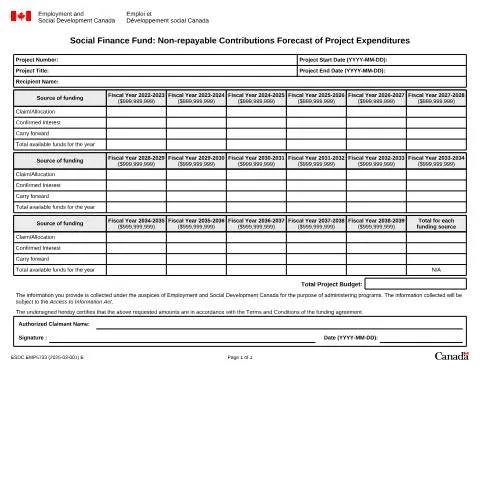
The Social Finance Fund: Non-repayable Contributions Forecast of Project Expenditures (EMP5733) form serves a crucial role in the framework of Canada's social finance initiatives. This official document is essential for organizations that seek funding for projects aimed at social innovation and community development. Understanding its intricacies can elevate your organization's ability to manage and allocate funds effectively, ensuring compliance with Employment and Social Development Canada (ESDC) requirements.
The Landscape of Social Finance in Canada
Social finance represents a robust approach to funding initiatives that yield social, environmental, and financial returns. Over the years, Canada has recognized the importance of blending philanthropic and commercial funding to tackle pressing social issues. The establishment of the Social Finance Fund is part of a broader strategy to encourage innovative solutions that can be sustained over time.
With substantial financial commitments from the government, the fund aims to support projects that align with the Social Finance Strategy. By understanding the background and legislative framework, applicants can better appreciate the significance of their contributions and how they align with national objectives.
Key Stakeholders and Their Roles
Various stakeholders are involved in the successful execution of projects funded through this program. It is essential to identify these parties and understand their responsibilities:
- Project Recipients: These are organizations or groups that apply for and receive funding. They must adhere to the guidelines set by ESDC.
- Employment and Social Development Canada (ESDC): The federal department responsible for administering the Social Finance Fund, ensuring that projects meet the established criteria.
- Government of Canada: Provides oversight and funding mechanisms to support social finance initiatives.
- Community Stakeholders: Local entities that may collaborate or be impacted by funded projects, providing essential support and insights.
The Process of Filling Out the EMP5733 Form
Completing the EMP5733 form is a structured process that requires careful attention to detail. Below is a breakdown of each section of the form:
- Project Information: This section captures fundamental details about the project, including the project number, title, and recipient name. Ensure that all entries are accurate to avoid delays.
- Fiscal Year Projections: Here, you will enter the anticipated funding needs across multiple fiscal years. Be meticulous; this information is critical for budget planning and resource allocation.
- Total Project Budget: Summarize the total amount requested for your project. This figure must reflect your detailed forecast of expenditures.
Tips for Accurate Completion
- Double-check all figures for accuracy.
- Provide comprehensive descriptions where necessary.
- Consult with financial advisors if unsure about budget estimations.
Submission Protocol: Where, When, and How
Once you have completed the EMP5733 form, the next step is submission. Understanding the protocol can prevent unnecessary delays.
Submission Timeline
Be aware of submission deadlines, as they can vary based on the fiscal year and project cycle. Generally, it is advisable to submit your application as early as possible to avoid last-minute complications.
How to Submit
The form must be submitted to ESDC via their designated channels, which could be electronic or paper-based depending on current regulations. Always check the latest guidelines before submission.
What Happens After Submission?
After you submit the EMP5733 form, it enters the administrative processing stage. Here's what to expect:
- Initial Review: ESDC will conduct a preliminary review to ensure that all necessary information has been provided.
- Detailed Assessment: This includes verifying the projected expenditures and aligning them with the overall goals of the Social Finance Fund.
- Approval or Clarification Requests: Depending on the review outcome, you may receive an approval or a request for additional information.
Tracking Your Application Status
It is crucial to maintain open lines of communication with ESDC. You can inquire about your application status, ensuring that you are informed of any developments or needs for clarification.
Consequences of Non-compliance
Failing to adhere to the guidelines outlined in the EMP5733 form can have serious repercussions. Organizations may face:
- Funding Denial: Incomplete or inaccurate forms can lead to outright rejection of funding requests.
- Future Funding Challenges: Non-compliance may impact your organization’s ability to secure funding in subsequent applications.
- Legal Implications: Misrepresentation of information can lead to legal action or the need to repay funds received.
Supporting Documentation: Enhancing Your Application
A well-prepared application includes comprehensive supporting documents. Here’s a checklist of what you may need:
| Document Type | Description | Importance |
|---|---|---|
| Project Proposal | Detailed outline of project goals, impacts, and strategies. | Essential for context and justification of funding. |
| Financial Statements | Proof of current financial status and historical data. | Required for assessing financial viability. |
| Letters of Support | Endorsements from community stakeholders or partners. | Strengthens your application by demonstrating community backing. |
Common Misconceptions and Clarifications
Many organizations face hurdles due to misunderstandings surrounding the EMP5733 form. Here are some common misconceptions:
- All funding is guaranteed: Submission of the EMP5733 does not guarantee funding; proposals must demonstrate value and alignment with ESDC objectives.
- Form completion is trivial: Properly filling out the form is crucial; errors could result in significant delays or denials.
- Budget figures can be estimated loosely: Accuracy in financial projections is critical, as inflated or unrealistic figures could undermine your application.
Final Thoughts: The Path Forward
Successfully navigating the EMP5733 form and the associated processes can significantly impact your organization’s ability to secure funding for vital social initiatives. Take the time to understand each section, gather appropriate documentation, and communicate clearly with ESDC. By doing so, you position yourself for success in both securing funding and enhancing your social impact.
Understanding the Social Finance Fund: Key Objectives and Benefits
The Social Finance Fund (SFF) is designed to facilitate innovative financing solutions aimed at addressing social challenges across Canada. By providing funding that can be leveraged to create social impact, the SFF not only addresses immediate needs but also aims to foster long-term sustainability in communities. This section delves into the key objectives of the SFF and the benefits it offers to various stakeholders.
One of the primary objectives of the SFF is to support projects that enhance the economic well-being of marginalized communities. This can include initiatives aimed at improving access to employment opportunities, affordable housing, and essential services. In addition, the fund encourages collaboration across sectors—bringing together governmental bodies, non-profit organizations, and private enterprises to create comprehensive solutions to social issues.
For stakeholders, the benefits of engaging with the SFF are numerous. Project proponents can access non-repayable contributions, which reduce the financial burden associated with social projects. This funding not only mitigates risks for organizations but also allows them to focus on innovation and impact rather than solely on financial returns. Moreover, successful projects can serve as models for replication in other communities, leading to a wider societal change.
Furthermore, the SFF enhances the capacity of organizations to measure and report on social impact, promoting accountability and transparency. Fund recipients are encouraged to adopt evaluation frameworks that demonstrate the effectiveness of their projects, contributing to a broader understanding of what works in social financing.
Navigating the Application Process: Tips and Best Practices
Applying for funding through the Social Finance Fund requires more than just filling out a form; it involves a strategic approach to presenting your project in the best light possible. Understanding the nuances of the application process can significantly improve your chances of success. Here are some tips and best practices to consider when preparing your application:
1. Clear Project Objectives: Start by clearly defining the objectives of your project. What specific social issue are you addressing? Articulating this clearly will help fund evaluators understand the purpose and impact of your initiative.
2. Robust Budgeting: When forecasting project expenditures, provide a detailed and realistic budget. Break down all costs—labor, materials, and overhead—while also demonstrating how these expenditures align with your project objectives. Funders appreciate transparency in how their contributions will be utilized.
3. Engagement and Support: Evidence of support from the community and other stakeholders can enhance your application. Letters of support, partnerships, or community endorsements add credibility and show that your project has a broad base of backing.
4. Impact Measurement: Outline how you intend to measure the success of your project. Having a solid evaluation framework that includes both qualitative and quantitative metrics can significantly strengthen your application. Funders want to see how their investment will lead to measurable outcomes.
5. Follow Guidelines: Ensure that you thoroughly read and adhere to all application guidelines provided by the SFF. Pay attention to formatting, required documentation, and submission deadlines. Incomplete applications or those that don’t follow guidelines are often dismissed without consideration.
6. Seek Feedback: Before submitting your application, consider seeking feedback from peers or mentors who have experience with funding applications. They can provide valuable insights and suggestions to improve your proposal.
By following these tips, you can improve your application’s chances of success and contribute to building a more equitable and inclusive society through social finance initiatives.
Evaluating Project Success: Metrics and Reporting Obligations
Once your project is funded through the Social Finance Fund, it’s crucial to understand the metrics and reporting obligations you must navigate to demonstrate accountability and impact. This section outlines the key performance indicators (KPIs) and reporting requirements expected from fund recipients.
Measuring success can vary depending on the nature of your project, but generally, you should consider both direct and indirect impacts. Direct metrics could include the number of jobs created, individuals served, or services provided. Indirect metrics might assess changes in community engagement, economic activity, or quality of life improvements.
In terms of reporting obligations, recipients of the SFF are typically required to submit periodic reports detailing their project expenditures, progress towards objectives, and any challenges faced. The frequency and format of these reports are usually outlined in the funding agreement. Commonly, projects might need to provide quarterly or bi-annual updates.
Additionally, the SFF encourages the use of standardized evaluation frameworks, such as Social Return on Investment (SROI) analysis, to provide a comprehensive picture of your project’s impact. This method quantifies social, environmental, and economic value created by your initiative, allowing funders to see the broader implications of their investment.
It is important to maintain accurate records and documentation throughout the project lifecycle, as these will be vital when preparing reports. Being transparent about both successes and challenges during the project will foster trust and credibility with the funding body, and it may even lead to opportunities for future funding.
By focusing on effective evaluation and reporting practices, you can not only meet the obligations set forth by the Social Finance Fund but also enhance the overall impact of your project within the community.