Understanding the Social Finance Fund: A Deep Dive into Form EMP5734
The Canadian government has established the Social Finance Fund to facilitate innovative financing solutions that support social projects across various sectors. Central to this initiative is the EMP5734: Social Finance Fund - CAP Finance Forecast of Project Expenditures form, which acts as a critical instrument for project stakeholders. By filling out this form, applicants can forecast their project expenditures and plan the allocation of financial resources effectively. In this article, we will explore the purpose of the EMP5734 form, who should complete it, the steps for submission, and what to expect after filing.
Navigating the Project Landscape: Who Should Engage with EMP5734?
Determining who needs to submit the EMP5734 form begins with understanding the profiles involved in social finance projects. This form is primarily aimed at organizations and individuals that are:
- Non-profit organizations engaged in social enterprises.
- Municipalities looking to fund community projects.
- Indigenous communities seeking to implement developmental initiatives.
- Private sector entities involved in social impact investments.
- Partnerships between different sectors aiming for collaborative projects.
Each of these entities may have different requirements and scenarios that influence how they complete the form. Understanding these nuances can significantly enhance the chances of successful approval.
Diverse Scenarios of Engagement
Consider the following scenarios:
- A non-profit organization: This entity might need to demonstrate how the funding will be allocated across various expenditures to maximize social benefits.
- A municipality: Local governments can present funding forecasts for community projects, focusing on the overall benefits to local residents.
- An Indigenous community: Seeking funds for specific cultural projects may require tailored approaches in filling out the EMP5734.
Dissecting the Role of EMP5734 in the Funding Process
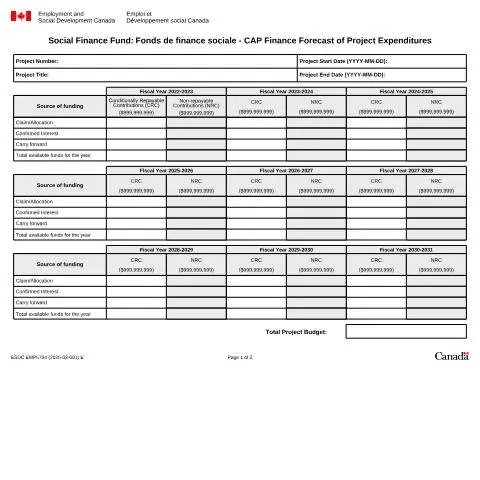
The EMP5734 form serves as a cornerstone in the funding process, providing a structured format for applicants to outline their projected financial needs over the lifespan of their projects. This form is more than just a financial statement; it acts as a comprehensive roadmap for project expenditures.
Key Elements of the Form
The EMP5734 consists of multiple sections, each designed to capture vital information:
| Section | Description |
|---|---|
| Project Number | The unique identifier for the project. |
| Source of Funding | Details various funding sources, including Conditionally Repayable Contributions (CRC) and Non-repayable Contributions (NRC). |
| Claim/Allocation | Indicates the funds requested for each fiscal year. |
| Total Available Funds | Summarizes the total funds anticipated for each fiscal year. |
Each of these sections plays a vital role in giving a clear picture of the project's financial landscape, which helps evaluators understand the financial viability and impact of the proposed initiative.
Completing the Form: A Step-by-Step Approach
Filling out the EMP5734 form can seem daunting, but breaking it down into manageable steps can simplify the process. Here’s how you can effectively complete the form:
Gather Necessary Documentation
Before you begin filling out the form, gather the following documentation:
- Project description and objectives.
- Detailed budget estimates.
- Past financial statements (if applicable).
- Any correspondence with funding bodies.
Filling Out Each Section
As you approach each section of the form, ensure that:
- Project Number: This should be unique and assigned by your organization or the funding body.
- Estimated Funding: Be realistic and precise. Overestimation may lead to scrutiny.
- Carry Forward: If applicable, make sure to indicate any unspent funds from previous years.
Inaccurate or incomplete information can lead to delays or even rejections, so diligence is key.
Submission Guidelines: Where and How to Submit EMP5734
Once completed, the mechanism for submitting the EMP5734 is straightforward, but you must follow specific guidelines:
Online Submission via Service Canada
The preferred method for submitting the EMP5734 is via the Service Canada portal:
- Log in to your Service Canada account.
- Select the option for submitting funding applications.
- Upload your completed EMP5734 form and any additional documentation.
Email or Mail Submission
If online submission is not feasible, you can also submit the form via email or traditional mail. Ensure to:
- Use a secure method for transmitting sensitive information.
- Include a cover letter detailing your submission and contact information.
After Submission: What to Expect and Follow-Up Procedures
After submitting your application, understanding the next steps will help you stay organized and proactive throughout the process.
Tracking Your Application Status
Keep an eye on your application by following these methods:
- Check your Service Canada account for updates.
- Be prepared to respond to any requests for additional information.
- Maintain clear communication with your funding officer.
What Happens After Approval?
If your form is approved, you will receive a formal confirmation along with guidelines on how to access your funds. This may include:
- Details on reporting requirements.
- Timelines for fund disbursement.
- Expectations for project updates.
Handling Challenges: What to Do in Case of Refusals or Errors
While every effort can be made to ensure a successful application, challenges may arise. Understanding how to address these situations can mitigate stress and delays.
In Case of Refusal
If your application is denied, you may take the following actions:
- Review the feedback provided with your denial notice.
- Address any concerns raised in the feedback.
- Consider reapplying, incorporating the suggestions from the initial review.
Correcting Errors or Omissions
If you realize there are errors or missing information after submission:
- Contact your funding officer immediately.
- Follow their guidance on submitting corrections.
- Keep a record of all communications for your reference.
Final Thoughts: The Importance of Strategic Planning with EMP5734
Utilizing the EMP5734 form effectively can significantly impact your project's success. By understanding its role, knowing who should engage with it, and following structured steps for completion and submission, you position yourself for a smoother funding process. Additionally, being prepared for responses from funding bodies and understanding how to handle refusals or errors can set the groundwork for future engagement with funding initiatives.
Ultimately, the EMP5734 is not just a bureaucratic requirement; it is a crucial tool that allows organizations to forecast their needs and strategize their financial resources for meaningful social impact.
Understanding the Social Finance Fund: Its Role and Impact on Canadian Communities
The Social Finance Fund (SFF) is a significant initiative by the Government of Canada aimed at enhancing social finance practices across the nation. Launched under the auspices of Employment and Social Development Canada (ESDC), the SFF provides diverse funding avenues to address pressing social issues while fostering economic development. This fund empowers organizations, including non-profits, cooperatives, and social enterprises, to innovate and implement projects that yield both social and financial returns.
Social finance refers to investments made into organizations with the intention of generating a measurable social impact alongside a financial return. Unlike traditional funding mechanisms that primarily focus on profit maximization, the SFF prioritizes community welfare and social improvement. By leveraging capital from both public and private sectors, the fund aims to support initiatives that can effectively tackle challenges such as poverty, mental health, and housing insecurity.
Communities across Canada have begun to experience the impact of the SFF through various funded projects. For instance, organizations that support marginalized groups—such as Indigenous peoples, refugees, and low-income families—benefit from tailored financing that addresses their unique challenges. The SFF not only provides financial resources but also fosters partnerships and enhances capacity building, equipping organizations to better serve their communities.
It’s important to note that the SFF aligns with the overarching goals of Canada’s poverty reduction strategy. The fund seeks to create sustainable, long-term solutions while promoting social equity. This is achieved by financing initiatives that encourage job creation, economic inclusion, and skills development, which are pivotal for uplifting disadvantaged communities.
Detailed Analysis of CAP Finance Forecast: Tools and Methodologies
The CAP Finance Forecast is an essential tool used within the framework of the Social Finance Fund to project project expenditures. It provides a comprehensive look into potential financial allocations and expenditures across various social initiatives funded under the SFF. This forecasting model incorporates various tools and methodologies that enable stakeholders to make informed budgetary decisions.
One primary methodology employed in CAP Finance Forecasting is the use of historical data analysis. By examining past project expenditures and outcomes, analysts can identify trends and patterns that inform future funding allocations. This data-driven approach ensures that funding is directed towards initiatives that have demonstrated efficacy and community impact.
Additionally, CAP Finance utilizes stakeholder consultations as a pivotal component of its forecasting process. Engaging with community organizations, fund managers, and beneficiaries ensures that the forecast is grounded in real-world needs and expectations. This participatory approach enriches the forecasting model, ensuring that it reflects the aspirations and challenges faced by communities across Canada.
Furthermore, the CAP Finance Forecast considers various economic indicators, including employment rates, inflation, and demographic shifts. By integrating these factors, the forecast enables stakeholders to anticipate potential challenges and adjust funding strategies accordingly. This proactive approach is crucial in a changing economic landscape, ensuring that social finance initiatives remain effective and sustainable.
In addition to these methodologies, the CAP Finance Forecast emphasizes transparency and accountability in project expenditures. By requiring detailed reporting and analysis from funded projects, the SFF can evaluate the effectiveness of its investments, ensuring that funds are utilized efficiently and responsibly. This commitment to accountability fosters trust among stakeholders and enhances the overall impact of social finance initiatives.
The Future of Social Finance in Canada: Trends and Challenges Ahead
As the Social Finance Fund continues to evolve, it is essential to consider the future trends and challenges that may impact its effectiveness. One emerging trend is the increasing focus on impact measurement and evaluation. Funders, including the SFF, are placing greater emphasis on quantifying social outcomes and assessing the true impact of funded projects. This trend is likely to shape the development of new metrics and evaluation frameworks that can more accurately capture the social value generated by investments.
Moreover, technology is playing an ever-growing role in the landscape of social finance. The integration of digital platforms and data analytics is enhancing the capacity of organizations to monitor their projects and demonstrate impact. Innovations such as blockchain and social impact bonds are gaining traction, providing new avenues for financing social initiatives while ensuring transparency and accountability. As technology continues to advance, it is essential for organizations to adapt and leverage these tools to enhance their operational effectiveness.
However, challenges remain on the horizon for social finance in Canada. One significant hurdle is the need for continued collaboration among stakeholders, including government entities, private investors, and non-profit organizations. Effective social finance requires a collective effort to align goals, share resources, and foster partnerships. Additionally, addressing systemic barriers, such as access to capital for smaller organizations and underrepresented communities, will be crucial in ensuring that social finance remains inclusive and equitable.
Another challenge lies in the securing of sustainable funding. While the SFF provides essential resources, ongoing support from both public and private sectors is vital for achieving long-term success. Stakeholders must advocate for stable funding mechanisms that allow organizations to plan for the future and scale their operations.
In conclusion, the Social Finance Fund and CAP Finance Forecast represent significant strides toward harnessing the power of social finance in Canada. By understanding its role, methodologies, and the future landscape, stakeholders can better navigate the complexities of social finance, ultimately leading to greater social impact and community resilience.