Understanding the Social Finance Fund: A Closer Look at the EMP5729 Activity Report
The Social Finance Fund plays a crucial role in fostering social innovation and community development across Canada. This funding initiative is designed to enable organizations to undertake projects that have a positive social impact. The Conditionally Repayable Contributions Activity Report (EMP5729) is a vital component in this process, serving as a reporting mechanism for recipients of these contributions. Its comprehensive nature ensures that organizations can effectively communicate their progress and outcomes.
Who Needs to Submit the EMP5729 Report?
The EMP5729 report is required from organizations that have received funding through the Social Finance Fund to support specific projects. This includes non-profits, social enterprises, and community organizations that have outlined measurable social impacts in their project proposals. The key objective is to ensure accountability and transparency in the utilization of government contributions.
Target Groups for the EMP5729 Report
- Non-Profit Organizations: These organizations utilize the fund to drive community-based initiatives, provide services, and facilitate social change.
- Social Enterprises: Businesses that aim to generate social value alongside financial returns are encouraged to report their activities through this document.
- Indigenous Organizations: Indigenous communities and organizations can leverage the fund to implement projects that align with their cultural and social priorities.
A Step-by-Step Guide to Completing the Report
Filling out the EMP5729 requires organized documentation and a clear understanding of the reporting requirements. Here’s a breakdown of how to approach the completion of this crucial document.
Section Overview
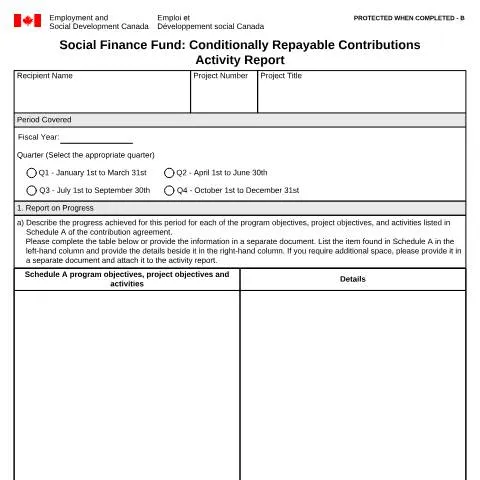
- Recipient Information: Start with the basic details such as the recipient name, project number, and title.
- Period Covered: Indicate the specific fiscal year and quarter for which you are reporting.
- Report on Progress: This is the heart of the report. You will need to provide detailed accounts of your project's objectives and the progress made in each area.
- Schedule A: Outline project objectives and activities, ensuring you detail each aspect clearly.
Progress Reporting: Best Practices
When documenting your project’s progress, it’s essential to present concrete data and qualitative insights. Here are some tips:
- Use Measurable Metrics: Quantify your achievements wherever possible—such as the number of individuals served or community events held.
- Provide Context: Explain how the activities align with the initial objectives and what impacts they have made in the community.
- Include Challenges and Solutions: Discuss any hurdles faced during the project execution and how they were addressed. This reflects your organization’s adaptability and commitment.
Timelines: When to Submit Your Report
Understanding the submission timeline is critical for compliance with the funding agreement. Reports are required on a quarterly basis, corresponding to the fiscal quarters:
| Quarter | Submission Deadline |
|---|---|
| Q1 - January 1st to March 31st | April 30th |
| Q2 - April 1st to June 30th | July 31st |
| Q3 - July 1st to September 30th | October 31st |
| Q4 - October 1st to December 31st | January 31st |
Navigating Potential Hurdles: What Happens if You Face Issues?
Reporting can sometimes be fraught with challenges, be it due to missing pieces of information or discrepancies in data. Here’s how to handle these issues effectively:
Missing Information
If you encounter gaps in your documentation or data, take immediate steps to rectify this. Reach out to your project team to gather the necessary information and consult with your funding officer if uncertainties arise.
Errors in Report Submission
Should you submit the report and later find inaccuracies, contact Employment and Social Development Canada (ESDC) promptly. They can guide you on the procedure for amending your submission. Timeliness is key here; delays in addressing errors may affect your funding status.
The Importance of Feedback and Continuous Improvement
Upon submission of the EMP5729 report, your organization will receive feedback from ESDC. This feedback is instrumental for future projects as it provides insights into:
- Strengths: Highlights what worked well and should be replicated in upcoming projects.
- Areas for Improvement: Identifies gaps that need to be addressed for greater impact.
- Best Practices: Offers recommendations based on similar projects funded under the Social Finance Fund.
Looking Ahead: Future Planning and Sustainability
Successfully completing the EMP5729 and receiving constructive feedback opens avenues for future funding opportunities. To ensure sustainability and continued impact, consider the following:
- Sustainability Planning: Develop a strategy that outlines how your project will continue to deliver benefits post-funding.
- Engagement of Stakeholders: Keep your community and stakeholders engaged; their support can be crucial for the longevity of your initiatives.
- Regular Reassessment: Make it a point to regularly assess the impact of your project and adjust accordingly.
In summary, the EMP5729 report is more than just a bureaucratic requirement; it represents an opportunity for reflection, learning, and growth. By approaching it with diligence and a commitment to transparency, your organization can further its mission of creating meaningful social change.