Understanding the Signing Officers Form in the Context of Senior Programs
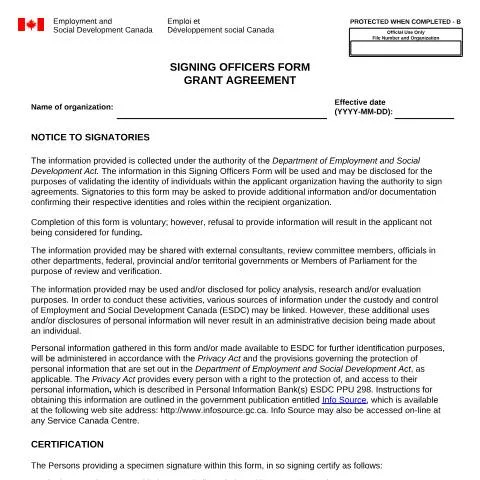
The Signing Officers Form (EMP5724) is essential for organizations applying for the New Horizons for Seniors Program (NHSP), managed by Employment and Social Development Canada (ESDC). It serves as a critical mechanism for validating the identities of individuals authorized to bind the organization in grant agreements. By submitting this form, organizations can ensure they meet the administrative requirements set forth by ESDC, thereby facilitating access to funding that supports community projects aimed at enhancing the well-being of seniors.
Who Should Complete the Signing Officers Form?
This form is primarily prepared by the administrative personnel of non-profit organizations or community groups aiming to secure funding from the NHSP. It is pivotal for individuals responsible for signing grants, agreements, or contracts on behalf of their organizations to complete it accurately. The individuals listed on this form must have the legal authority to represent the organization in binding agreements.
Key Roles and Responsibilities
- Authorized Signatories: These are individuals designated to sign documents that commit the organization to financial or legal obligations.
- Compliance Officers: They ensure that the form is completed in accordance with ESDC requirements, reducing the risk of processing delays.
- Administrative Staff: Responsible for gathering the necessary details and submitting the form on behalf of the organization.
A Step-by-Step Guide to Completing the Form
Completing the Signing Officers Form involves several crucial steps. Each section of the form demands specific attention to detail to avoid common pitfalls that may lead to processing delays or rejections.
Section Analysis: Breaking Down the Form
The form is divided into structured sections. Here's a detailed look at each:
Section 1: Identifying Authorized Signatories
In this section, the organization must list the titles, names, and specimen signatures of the signing officers. Accuracy is key, as errors could invalidate the form.
- Title: Specify the position of each signatory within the organization.
- Name: Full legal names as per official identification.
- Specimen Signature: Include an actual signature to serve as a reference for authenticity.
Common Challenges in Section 1
It is essential to ensure that the names provided match those on official documents (e.g., articles of incorporation) to prevent discrepancies.
How Many Signatures are Required?
Organizations must indicate how many signatures are necessary to bind them legally. This number can vary based on the organization's bylaws or incorporated documents.
Submitting the Form: What Happens Next?
Once completed, the form must be submitted alongside the grant application. Providing the Signing Officers Form allows ESDC to validate the identities of signatories, ensuring the integrity of the application process.
Tracking Your Submission
After submission, organizations can track the status of their application through the appropriate channels. It’s advisable to maintain open communication with ESDC representatives to clarify any issues or requirements that may arise during the review process.
Understanding Your Rights and Obligations
Submitting the Signing Officers Form obligates the organization to provide accurate information. If any changes occur in the organization’s signing officers, it is the organization's responsibility to inform ESDC promptly. Failure to do so may result in delays or complications in funding approvals.
Consequences of Inaccuracies
Providing incorrect information can lead to funding delays or denial of the application. Furthermore, it may affect future grant applications and the organization’s credibility.
Navigating Potential Issues: What if Your Application is Rejected?
In the unfortunate event that your application is rejected, it’s essential to understand the next steps. ESDC will typically provide reasons for the rejection, allowing organizations to address any deficiencies or concerns raised.
Re-Application Process
Re-applying after a rejection involves carefully reviewing and addressing the issues highlighted. Organizations may also seek feedback from ESDC to better prepare their subsequent applications.
Keeping Your Records Straight: Updating the Form
It is crucial for organizations to keep their Signing Officers Form up to date. Any changes in authorized signatories should be promptly recorded and submitted to ESDC to avoid complications with future funding applications.
Best Practices for Record-Keeping
- Maintain a log of all authorized signatories and their corresponding roles.
- Regularly review the form to ensure all information is current and accurate.
- Store copies of submitted forms for your records and future reference.
Consequences of Non-Compliance
Organizations that neglect to update their Signing Officers Form or fail to provide accurate information may face severe consequences, including loss of funding or legal action. It’s imperative to treat this form as a vital document in the application process.
Critical Timelines to Remember
Understanding the timeline associated with the Signing Officers Form is also critical. Organizations should be aware of submission deadlines and processing times to avoid missing out on funding opportunities.
Conclusion: The Importance of Accuracy in Your Signing Officers Form
As organizations work diligently to support seniors through the New Horizons for Seniors Program, ensuring that the Signing Officers Form is completed and submitted accurately is crucial. By following the guidelines outlined, organizations can enhance their chances of receiving necessary funding while maintaining compliance with ESDC’s requirements.
Understanding the New Horizons for Seniors Program (NHSP)
The New Horizons for Seniors Program (NHSP) is an initiative led by the Government of Canada that aims to support the empowerment of seniors through various community-based projects. It seeks to enhance the quality of life for older Canadians by promoting their engagement in social activities, skill development, and volunteerism. If you're considering submitting a project proposal under this program, it's essential to understand its objectives, eligibility criteria, and the financial support available.
To qualify for funding, your project must focus on one or more of the following objectives: social participation and inclusion, volunteering, and mentorship opportunities for seniors. The NHSP encourages community organizations and groups to involve seniors in the planning and implementation stages of their projects, ensuring that their voices are heard and their needs met.
Funding is available for various types of projects, such as social events, educational workshops, and physical activities that promote healthy aging. The NHSP provides grants that can range from a few thousand dollars to considerably more, depending on the scope and impact of your proposed project. Keep in mind that the application process can be competitive, so it's vital to present a well-thought-out proposal that clearly aligns with the program's goals.
Navigating the Signing Officers Form
When applying for funding under the NHSP, you will often need to fill out the Signing Officers Form (Form NHSP-002), which designates individuals authorized to sign contractual documents on behalf of your organization. Understanding the importance and specifics of this form is crucial for a smooth application process.
The Signing Officers Form must include the names, positions, and signatures of individuals who have the authority to bind the organization legally. This typically includes board members or senior staff who have significant responsibility within the organization. Ensure that the signatories are aware of their roles and responsibilities concerning the application and any resulting agreements.
One critical aspect of completing the Signing Officers Form is verifying that the individuals listed are not only recognized as signing authorities but also that their inclusion complies with your organization’s governing documents. For example, if your organization has specific bylaws that dictate who can act as a signing officer, you need to adhere to those guidelines to avoid administrative issues later in the process.
In case of any changes to the signing authority during the project duration, it is imperative to notify Service Canada promptly. This ensures that any documents requiring signatures can be appropriately executed without delay. Keeping your organization’s records updated will help simplify future interactions with federal agencies and facilitate a better chance of project success.
Funding Allocation and Budgeting for NHSP Projects
Another crucial aspect to consider when applying for NHSP funding is the project budget. The NHSP requires a detailed budget breakdown, which should clearly outline how funds will be allocated for various project components. An accurate and transparent budget is essential not only for compliance with NHSP guidelines but also for effective project management.
Your budget should include estimates for various expenses such as materials, advertising, venue rentals, and personnel costs. Be sure to provide justification for each budget item and explain how it aligns with the project objectives. For example, if you're planning a workshop to promote digital literacy among seniors, detail the costs of hiring trainers, purchasing necessary materials, and any venue-related expenses.
It's also worth exploring how your project can leverage additional funding sources or in-kind support from local businesses or community partners. This collaborative approach can strengthen your application and enhance the overall impact of your project. Demonstrating community support not only reflects well on your organization but also shows the NHSP that your project has broad appeal and is likely to succeed.
Do not forget to allocate a portion of your budget for evaluation and reporting. The NHSP emphasizes the importance of measuring the project's success and its impact on the community. Allocating funds for evaluation helps ensure that you can provide concrete evidence of outcomes, which might be beneficial for future funding opportunities.
Finally, ensure all budget estimates are realistic and adhere to the guidelines provided by the NHSP. Inaccurate or inflated budget requests can lead to the rejection of your application, so take the time to research costs and engage with any community resources that can assist with budgeting accurately.