Navigating the Signing Officers Form: Understanding Its Importance
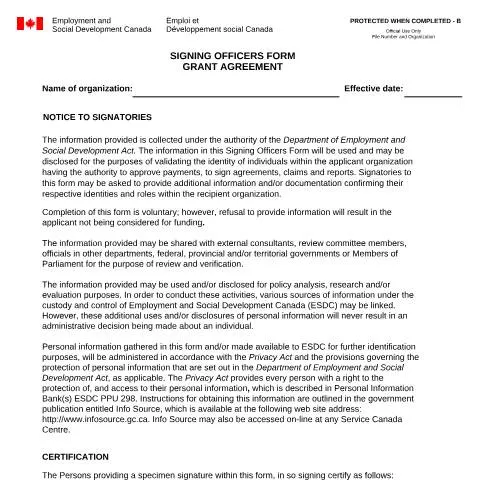
Navigating the complexities of funding agreements and compliance requirements can feel overwhelming for many organizations. The Signing Officers Form Grant Agreement (EMP5566) is a critical document that plays a pivotal role in enabling organizations to secure grants from Employment and Social Development Canada (ESDC). This form is not merely a formality; it ensures that proper authority is exercised when signing agreements, thereby safeguarding the interests of both the funding body and the recipient organization.
Who Needs to Submit This Form?
This form targets a diverse array of organizations, including non-profits, community groups, and other entities seeking funding from ESDC. Understanding the specific contexts in which the Signing Officers Form is required is crucial:
- Non-Profit Organizations: Typically, these entities must demonstrate their governance structure and who holds the signing authority to comply with grant conditions.
- Indigenous Organizations: Specific protocols may apply, including additional layers of verification which can complicate the submission process.
- International Entities: Those applying from outside Canada may face different prerequisites and should consult local guidelines and the ESDC for any unique requirements.
Special Considerations
Organizations operating in specialized domains—such as youth services or employment training—should recognize that different fund allocation programs may mandate distinct signing protocols. It’s advisable to consult with a program officer prior to submission.
The Journey of the Signing Officers Form: A Step-by-Step Guide
Initial Trigger: Understanding the Need for the Form
Before a grant application can begin, identifying the need for the Signing Officers Form is paramount. Organizations typically find themselves in this situation in the following scenarios:
- Seeking funding for new initiatives or community programs.
- Updating organizational structures or changes in leadership.
- Responding to funding opportunities that stipulate the inclusion of this form as part of the application package.
Filling Out the Form: Key Sections
The form is divided into three sections, each requiring careful completion:
| Section | Description | Details Required |
|---|---|---|
| Section 1 | Signing Officers for Agreement Purposes | Name, title, and specimen signature of authorized persons |
| Section 2 | Signing Officers for Payment Purposes | Name, title, and specimen signature for payment authority |
| Section 3 | Signing Officer for Reports to ESDC | Name, title, and specimen signature for report signing |
Important Notes on Signature Requirements
Each section of the form specifies how many signatures are required to bind the organization legally. Organizations must ensure that their by-laws or other governing documents are referenced to avoid discrepancies during the review process.
Submitting the Form: Making It Official
Where to Submit
After completing the Signing Officers Form, it’s essential to know the submission protocol:
- Typically, the form is submitted alongside the grant application to ESDC.
- Ensure to keep a copy for your records, as this will serve as proof of your compliance with submission requirements.
Potential Delays and Follow-Ups
The review process can vary in duration depending on the complexity of the application and the completeness of the submitted documents. If there are any follow-ups required, organizations should respond promptly to avoid delays in funding disbursement.
In the Event of Issues: Handling Rejections or Corrections
Not every submission may proceed smoothly. Understanding the potential pitfalls is crucial:
- Incomplete Information: If the form is missing signatures or critical information, ESDC may deem it invalid, resulting in a rejected application.
- Misalignment with By-Laws: Failure to align the signing authorities with organizational documents can lead to complications.
Rectifying Errors
Should there be a misstep in the submission, organizations should:
- Identify the issue promptly and gather necessary documentation to support corrections.
- Contact ESDC to clarify the best way to proceed, whether that involves resubmission or providing additional documentation.
The Role of Privacy and Data Protection
The information gathered through the Signing Officers Form is subject to strict privacy regulations. Organizations must be aware of:
- The data provided is collected under the authority of the Department of Employment and Social Development Act.
- Any personal information shared is protected under the Privacy Act, ensuring confidentiality during the processing of your application.
Sharing Information Responsibly
It is possible that the information you submit may be shared with external consultants or other government offices for verification. This highlights the importance of accuracy and transparency in your application materials.
Understanding the Broader Context
How This Form Fits into ESDC’s Framework
The Signing Officers Form is one cog in a larger machine of governance and accountability within ESDC. It serves to:
- Ensure that only authorized individuals can make binding decisions on behalf of the organization.
- Facilitate effective oversight of public funds and adherence to applicable regulations.
Integration with Other ESDC Requirements
It’s vital to recognize that the Signing Officers Form is not an isolated document. Organizations will often need to align their submissions with:
- Grant application forms
- Financial statements
- Activity reports detailing project implementation
Final Thoughts: Ensuring a Smooth Process
As you navigate the complexities of submitting the Signing Officers Form, preparing ahead of time is essential. Taking the following steps can help ensure a smooth process:
- Review the form thoroughly before submission.
- Consult with your organizational legal advisor for compliance checks.
- Engage with ESDC program officers for clarifications when needed.
In doing so, you'll not only increase the likelihood of your application’s success but also strengthen the integrity of your organization’s governance framework.
Understanding the Role of Signing Officers in Grant Agreements
When dealing with grant agreements in Canada, it is crucial to comprehend the significance of signing officers. These individuals play a vital role in the administration of grants, ensuring that funds are managed according to the stipulations set forth in the agreement. A signing officer is typically someone with the authority to enter into contracts on behalf of an organization. This could range from a senior manager to a designated official responsible for financial oversight.
Organizations applying for grants must designate at least one signing officer when submitting their applications. This person is often tasked with monitoring the compliance of the funded project, ensuring that all expenditures align with the approved budget. The signing officer also plays a key role in reporting back to the granting agency, providing necessary documentation that reflects how funds have been utilized and the outcomes achieved.
It’s essential to note that the role of a signing officer is not just bureaucratic. These individuals are expected to be well-versed in the organization’s operational policies and financial regulations, as well as in the specific terms outlined in the grant agreement. This ensures that the organization meets all conditions set out by the granting body, which is crucial for maintaining eligibility for future funding opportunities.
Moreover, organizations must provide necessary documentation substantiating the authority of their signing officers. This may include board resolutions or bylaw provisions that outline the powers granted to the signing officer. Keeping this documentation up-to-date and readily available is important, as it may be required during audits or reviews by funding agencies.
Common Pitfalls to Avoid When Completing the Signing Officers Form
Filling out the Signing Officers Form correctly is essential for ensuring your grant application is processed smoothly. However, several common pitfalls can lead to delays or even rejection of your proposal. Understanding these pitfalls can help you navigate the process more effectively.
One of the most frequent issues is the incomplete detailing of signing officers’ information. Each signing officer’s full name, title, and contact information should be provided. Omitting any of these details could raise red flags during the review process. It is also critical to ensure that the signatures provided are authentic and match the names listed on the form, as discrepancies can lead to complications.
Another common mistake is misunderstanding the qualifications required for a signing officer. Organizations sometimes designate individuals without proper authority or knowledge of the organization's finances. Ensure that the person(s) you are appointing as signing officers have the requisite authority and understanding of both the organization’s financial framework and the grant’s stipulations.
Additionally, you should not overlook the importance of internal approvals. Ensure that all necessary approvals from the organization’s board or relevant committees are in place before submitting the form. This avoids situations where a submitted form is invalidated due to a lack of proper authorization.
Lastly, pay attention to submission timelines. Each funding agency has specific deadlines that must be adhered to. Submitting your Signing Officers Form late can result in your application being nullified. Be proactive in keeping track of deadlines and ensure you submit all required documentation promptly.
Post-Submission: Next Steps After Filing the Signing Officers Form
Once you have submitted the Signing Officers Form as part of your grant application, the process does not end there. Understanding the next steps can help ensure a smooth transition from application to funding.
The first step post-submission is to confirm receipt of your application. Once your form is filed, follow up with the relevant agency, such as Employment and Social Development Canada (ESDC) or any other applicable body, to ensure they have received all necessary documents. This will also give you a chance to address any immediate questions or concerns that may arise from the reviewing officers.
Next, prepare for potential inquiries. Granting agencies often conduct reviews or audits regarding the submitted documentation. Be ready to provide additional information or clarification if requested. This could involve producing financial statements, budgets, or project plans that align with the information provided in your application.
While awaiting a decision, it is wise to keep communication lines open with your designated signing officers. They should be prepared to make decisions and provide input as necessary during this waiting period. Transparency within the organization about the progress of the grant application is crucial as well, as it helps the organization remain aligned in its objectives and goals regarding the project for which funding was requested.
Lastly, once your application is approved, ensure that all accounting and reporting mechanisms are in place to track the use of funds effectively. Establishing a solid reporting framework early on can make it easier to fulfill the obligations associated with the grant and provide the necessary documentation during future audits or reviews by the granting body.