The Importance of the EMP5539 Claim Form in Canada’s Funding Landscape
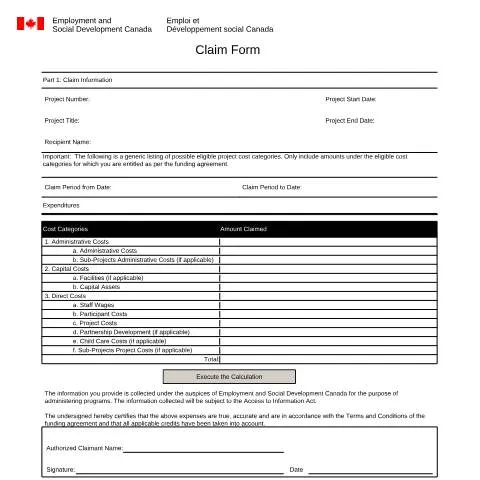
The EMP5539 Claim Form plays a critical role in the funding framework managed by Employment and Social Development Canada (ESDC). For organizations and individuals looking to receive financial support for projects that contribute to community development, filling out this form accurately and timely is essential. This document is not just a bureaucratic hurdle; it’s a gateway to securing the resources needed for impactful initiatives.
Who Should Consider Submitting the EMP5539?
This form is tailored for a diverse range of stakeholders. Organizations that have entered funding agreements with ESDC, including non-profits, community groups, and educational institutions, are primarily responsible for its completion and submission. Understanding the eligibility criteria is vital:
- Non-Profit Organizations: If your organization is involved in community services and development, you likely qualify for funding.
- Educational Institutions: Schools and colleges working on projects aimed at enhancing skills training may also utilize this form.
- Local Governments: Municipalities striving for community betterment projects can submit claims as well.
Timelines: From Initiation to Submission
Time management is crucial when dealing with the EMP5539 Claim Form. Understanding the timelines associated with the submission can greatly affect the success of your claim. Here’s a breakdown:
- Project Start Date: The clock begins ticking here. Gather all relevant documentation as soon as the project commences.
- Claim Period: Define the period for which you are claiming expenses. Be mindful that all claims must fall under this timeframe.
- Submission Deadline: Ensure that your form is submitted promptly after the claim period ends. Late submissions could jeopardize funding.
Essential Documentation: What You Need to Prepare
Completing the EMP5539 Claim Form requires meticulous preparation of several documents. Each category of cost outlined in the form necessitates specific proof:
Administrative Costs
- Invoices: Keep copies of all invoices related to administrative spending.
- Time Sheets: Document the hours worked by staff involved in administrative duties.
Capital Costs
- Purchase Receipts: For any capital assets acquired, receipts are mandatory.
- Project Plans: A detailed account of how the capital will be utilized in your project enhances clarity.
Direct Costs
- Payroll Records: Clearly outline wages paid to staff and participants.
- Contracts: Include contracts for any hired services utilized during the project.
Understanding Your Rights and Obligations
Filing the EMP5539 Claim Form extends beyond just following procedures; it’s about recognizing your rights and obligations:
- Right to Funding: If your project meets the criteria set by ESDC, you have the right to claim the associated costs.
- Obligation to Report: Accurate reporting of expenses is non-negotiable. Misrepresentation can lead to serious consequences, including the potential for funding to be revoked.
Missing documentation or inaccuracies in the form can result in delays or denials of your claim, making it imperative to cross-check everything before submission.
Regulatory Background: The Framework Governing the EMP5539
The EMP5539 Claim Form is rooted in a robust regulatory framework. Understanding the historical context can provide clarity on its importance:
Under the auspices of the Employment Insurance Act and other relevant statutes, ESDC administers programs designed to help Canadians facing economic hardship. This form serves as a tool to ensure that funds are allocated transparently and responsibly.
How This Form Differs from Similar Documents
Many forms serve similar administrative purposes but understanding the distinctions can help prevent confusion:
| Form Name | Purpose | Applicable For |
|---|---|---|
| EMP5539 | Claim for Funding | Organizations with funding agreements |
| EMP5540 | Funding Request | New project proposals |
| EMP5541 | Report on Funding Usage | Post-project completion reporting |
Each of these forms serves distinct purposes, and confusion can lead to administrative errors that delay funding.
Submission Channels: Navigating Your Options
Submitting the EMP5539 Claim Form can be done through various channels, and understanding these can streamline the process:
- Online Submission: Utilizing ESDC's digital platforms allows for quick and efficient submissions. Ensure you have the necessary digital signatures.
- Paper Submission: For those preferring traditional methods, printed forms can be mailed. Make sure to track the submission.
- In-Person Submission: Local Service Canada offices provide an option for face-to-face submissions, allowing for immediate clarification of any questions.
Special Situations: Unique Considerations for Diverse Applicants
Certain scenarios may complicate the submission of the EMP5539 Claim Form:
International Applicants
Foreign organizations applying for funding must adapt to additional requirements. Providing proof of eligibility under Canadian law is crucial.
Minors and Unusual Cases
If a minor is involved in a project, obtaining parental consent is critical. Additionally, projects that have complex funding structures may require consultations with ESDC representatives to clarify specific requirements.
Next Steps: After Submission
Once you've submitted your EMP5539 Claim Form, what comes next? Understanding this can help prepare you for any subsequent actions:
- Review Period: Expect a review period during which ESDC will assess the submitted claim.
- Communication: Keep an eye on communications from ESDC for any requests for additional information.
- Funding Decision: Once reviewed, a decision will be communicated. Approved claims will typically receive funding within a specified timeframe.
Fostering a proactive approach by following up on your submission and maintaining open lines of communication can be beneficial.
Understanding Different Types of Claim Forms in Canada
When navigating the Canadian administrative landscape, it's essential to recognize the various types of claim forms available. Each type serves a specific purpose and is governed by different regulations and agencies. Understanding the distinctions can significantly impact how you approach filing your claim.
The primary categories of claim forms include:
- Employment Insurance (EI) Claims: Managed by Employment and Social Development Canada (ESDC), these forms are for individuals seeking temporary financial assistance during periods of unemployment. Typical forms include the EI Application for Regular Benefits and the EI Application for Special Benefits.
- Tax Claims: The Canada Revenue Agency (CRA) oversees taxes and associated benefits. You will find forms like the T1 Income Tax and Benefit Return for individual taxpayers and T4 forms for reporting employment income.
- Social Assistance Claims: Regional social services agencies handle social assistance claims for low-income individuals and families. Each province or territory has its own set of forms, often differing in requirements and processes.
It's vital to ensure you are using the correct form for your specific needs. For example, if you are applying for Employment Insurance, using the wrong form could delay your benefits significantly. Always refer to the respective agency's guidelines to verify you are filling out the appropriate documents for your claim.
Step-by-Step Guide to Completing a Claim Form
Completing a claim form can be daunting if you're unfamiliar with the process. To simplify this, we've broken down the steps for you, ensuring you're well-prepared when you sit down to fill out your form.
- Gather Your Documentation: Before you begin filling out the claim form, collect all necessary documents. This may include your Social Insurance Number (SIN), identification, pay stubs, and any relevant prior correspondence with the agency.
- Read the Instructions Thoroughly: Each claim form comes with specific instructions. Take the time to read these thoroughly to avoid any mistakes that could delay your claim. Instructions may include detailed descriptions of each section of the form and what information is required.
- Fill Out the Form Carefully: When completing the form, write legibly and provide accurate information. If you're unsure about a particular section, leave it blank rather than guessing, and refer to the guidelines or contact the agency for clarification.
- Review and Double-Check Your Form: After completing the form, take the time to review your entries. Check for spelling errors, correct amounts, and ensure you've included all required documentation. An error could lead to processing delays.
- Submit Your Claim Form: Once you're satisfied with your submission, follow the guidelines for sending in your claim. Depending on the agency, you may submit your form online, by mail, or in person. Note any deadlines, such as the April 30 tax filing deadline, to ensure your claim is submitted on time.
- Keep a Copy for Your Records: After submission, retain a copy of your claim form and any supporting documents. This can be vital if you need to follow up or provide additional information later on.
Taking these steps can help streamline the process and enhance your chances of a successful claim.
Common Mistakes to Avoid When Filing Claims
Filing a claim form can be a straightforward process, but many individuals encounter issues that could have been easily avoided. Here are some of the most common pitfalls and how to sidestep them:
- Inaccurate Information: One of the most frequent mistakes is providing incorrect or incomplete information. Ensure that all details match your documentation, particularly your SIN and personal identification. Inaccuracies can result in delays or denials of your claim.
- Missing Deadlines: Each type of claim has specific deadlines. For tax claims, remember that the deadline is April 30 for individuals. Failing to submit on time could result in penalties or loss of benefits.
- Neglecting to Include Supporting Documents: Always check the requirements to ensure you have included all necessary documentation. Missing documents can lead to delays in processing your claim. For example, when applying for EI, you must provide proof of your last employment.
- Misunderstanding Eligibility Criteria: Before filing, ensure you meet the eligibility requirements for the benefits you are applying for. Each program has different criteria, and misunderstanding these can lead to wasted time and effort.
- Failure to Follow Up: After submitting your claim, it's crucial to monitor its progress. If you haven't received confirmation or if you have questions, don't hesitate to contact the relevant agency to inquire about the status of your claim.
Avoiding these common mistakes can save you time and frustration, ensuring a smoother claims process.