Unlocking Funding Opportunities: The Importance of the EMP5540 Claim Form
When pursuing funding through Employment and Social Development Canada (ESDC), the EMP5540 Claim Form becomes a crucial element in securing financial support for your projects. This document is not merely a procedural formality; it plays a vital role in ensuring that eligible costs are claimed accurately and efficiently. Understanding the specific context and requirements of this form can significantly influence your project's funding success.
The Stakeholders: Who Should Pay Attention?
The EMP5540 form is designed primarily for organizations or individuals who have entered into a funding agreement with ESDC. This typically includes non-profits, community organizations, and other entities involved in projects that aim to enhance employment and social development in Canada.
Here are some specific profiles of potential claimants:
- Non-profit Organizations: Often engaged in community service projects that require financial backing.
- Social Enterprises: Enterprises that aim to generate social impact alongside financial returns.
- Public Sector Entities: Government bodies looking to implement initiatives that align with ESDC's mission.
Understanding the Claimant's Obligations
As a claimant, it's crucial to understand that submitting the EMP5540 form comes with obligations. You must ensure that all claimed expenses are eligible under the terms of your funding agreement, and you are responsible for retaining supporting documentation for all claimed amounts.
Decoding the Claim Form: Line by Line
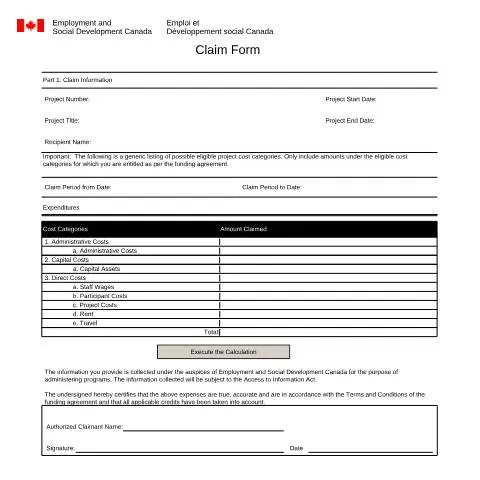
The EMP5540 form consists of several sections that require careful completion. Each section is designed to capture specific information vital for processing your claim. Let's break it down:
Part 1: Claim Information
This section asks for basic project details:
- Project Number: Unique identifier for your project as assigned by ESDC.
- Project Title: A clear, concise title that reflects the nature of your project.
- Recipient Name: The name of the individual or organization submitting the claim.
Part 2: Claim Period
In this section, you will specify the start and end dates of the project. It's important to ensure that the claim period aligns with the dates stipulated in your funding agreement, as any discrepancies could lead to delays in processing.
Part 3: Expenditures Breakdown
This is where the details get more complex. The expenditures section requires you to categorize your claimed costs into specific types:
| Cost Categories | Amount Claimed |
|---|---|
| 1. Administrative Costs | |
| 2. Capital Costs | |
| 3. Direct Costs | |
| a. Staff Wages | |
| b. Participant Costs | |
| c. Project Costs | |
| d. Rent | |
| e. Travel | |
| Total |
It's essential to provide accurate amounts in these categories. Mistakes can lead to your claim being delayed or even rejected.
Avoiding Common Pitfalls: Tips for Accurate Submission
Completing the EMP5540 Claim Form may seem straightforward, but there are several common pitfalls that claimants should avoid:
Double-Check Your Figures
Ensure that all amounts are entered correctly, and remember to include subcategories under the main headings. An omission can lead to a partial claim denial.
Documentation is Key
As a claimant, you must retain all invoices, receipts, and other documentation that supports your claimed expenses. In the event of an audit, having these documents readily available is crucial.
What to Do in Case of a Claim Denial
Receiving a denial for your EMP5540 submission can be disheartening, but it's important to know that there are steps you can take:
Review the Denial Reason
Carefully review the notice provided by ESDC to understand why your claim was denied. Common reasons include:
- Ineligible expenses
- Insufficient documentation
- Errors in calculations
Correct and Resubmit
If you believe the denial was due to an error or oversight, correct the claimed figures and re-submit your form along with any missing documents.
Request a Review
If you disagree with the denial, you can request a formal review from ESDC. This process often requires additional documentation and a detailed explanation of your claim.
The Timeline: From Submission to Payment
Understanding the timeline involved in processing your EMP5540 form is crucial for project planning. Here's a general outline:
Submission
Once you submit your form, ESDC will acknowledge receipt, usually within a week.
Processing Time
Processing your claim typically takes between 4 to 6 weeks. However, this can vary based on workload and the complexity of your claim.
Payment Notification
If your claim is approved, you will receive a payment notification along with the payment itself, which can be deposited directly into your account.
Special Circumstances: Navigating Complex Cases
There are situations where completing the EMP5540 form may present unique challenges:
For International Projects
Organizations involved in international projects must ensure compliance with additional regulations and documentation requirements. Consult ESDC for guidance tailored to your specific circumstances.
Minors and Guardianship Issues
If the project involves minors, it’s essential to have the necessary consent forms from guardians. This ensures compliance with legal requirements and protects the interests of all parties involved.
Wrap-Up: Best Practices for Future Claims
As you prepare to submit the EMP5540 Claim Form, keep the following best practices in mind:
- Start Early: Give yourself plenty of time to gather documentation and accurately complete the form.
- Engage with ESDC: Don’t hesitate to reach out to ESDC for clarification on any aspect of the form or the claim process in general.
- Learn from Experience: After each submission, take note of what went well and what could be improved for next time.
Success in securing funding through the EMP5540 Claim Form lies in careful preparation, accurate documentation, and an understanding of the overall process. By paying close attention to the details, you can enhance your chances of receiving the financial support essential for your project's success.
Understanding the Different Types of Claim Forms
In Canada, claim forms vary significantly across federal and provincial levels, reflecting the diversity of programs available to citizens and residents. Understanding which form you need is crucial, as submitting the wrong one can delay your benefits. Here’s an overview of some common types of claim forms:
- Employment Insurance (EI) Claim Form: If you’re applying for EI benefits, you’ll need to fill out the EI Application for Benefits (Form ROE). This form is essential for accessing financial support after losing your job or when taking a leave due to illness.
- Canada Pension Plan (CPP) Claim Form: For those approaching retirement age or who are disabled, the Application for CPP Retirement Pension (Form ISP-1000) is necessary. This form allows you to claim retirement benefits, and it’s vital to submit it at least six months before you wish the benefits to begin.
- Tax Benefits Claim Form: The T1 General Tax Form is used to report income and claim various tax credits. It’s imperative to keep track of deadlines; typically, they fall on April 30 of each year.
- Provincial Claim Forms: Each province has its specific forms related to health care, social assistance, and other regional programs. For example, Ontario residents might use the Ontario Works Application Form for social assistance claims.
Make sure to provide accurate information in these forms and consult the relevant agency's guidelines to ensure smooth processing. Each form has unique requirements, so taking the time to familiarize yourself with them can save you from unnecessary delays.
Tips for Completing Claim Forms Accurately
Submitting your claim form accurately is essential for a swift approval process. Here are some practical tips to help you fill out these forms diligently:
- Read Instructions Carefully: Each form comes with specific instructions that detail what information is required. Skimming through these can lead to incomplete submissions. Ensure you understand what is being asked before you start.
- Double-Check Your Information: Verify all personal information, including your Social Insurance Number (SIN), address, and bank details. Mistakes in these areas can result in delays or rejection of your claim.
- Gather Supporting Documents: Depending on the claim type, you may need to provide additional documentation. For an EI claim, for instance, your Record of Employment (ROE) is necessary. Ensure you have all relevant documents ready to avoid processing delays.
- Consult Guides or Online Resources: Many agencies provide detailed guides on how to fill out their specific forms. Utilize these resources to avoid common pitfalls and to ensure you comply with all requirements.
- Seek Assistance if Needed: If you’re unsure about how to complete a form, do not hesitate to seek help. You can reach out to Service Canada or other relevant agencies for guidance.
Taking the time to pay attention to detail when filling out your claim forms not only expedites the process but also increases the chances of receiving the benefits you are entitled to without complications.
Navigating Claims for Special Circumstances
Sometimes, circumstances arise that complicate the claims process. Here are a few scenarios that may require special consideration:
- Claiming for a Deceased Relative: If you're filing a claim on behalf of someone who has passed away, be prepared to provide additional documentation, such as a death certificate and legal proof of your relationship to the deceased. This ensures that benefits can be transferred or claimed correctly.
- Non-Resident Applications: If you are a non-resident and wish to claim certain Canadian benefits, you will need to provide additional documentation regarding your residency status and may face different eligibility requirements. The information and forms may differ based on your specific situation.
- Disability Claims: If you are applying for disability benefits, the process can be more intricate. You will likely need to provide medical documentation from your healthcare provider alongside your claim form to verify your condition.
- Backdated Claims: If you believe you missed a claim submission deadline, certain programs allow you to apply for backdated benefits. You will need to demonstrate why your application was late, along with the necessary documentation to support your case.
In all these instances, it is vital to follow specific guidelines set forth by the relevant agencies. If you encounter any obstacles, don’t hesitate to reach out to the appropriate body for clarification on the process. Knowing how to navigate these special situations can significantly affect your success in receiving benefits.