Navigating the Activity Results Report: A Comprehensive Guide
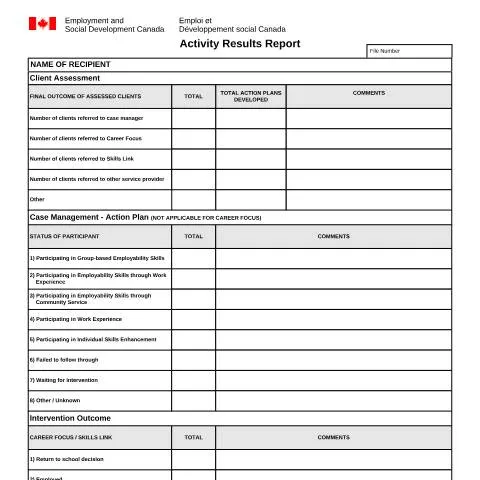
The Activity Results Report (EMP5319) from Employment and Social Development Canada (ESDC) serves as a crucial tool for tracking the progress and outcomes of individuals participating in various employment programs. This document specifically captures the results of assessments and interventions, making it essential for service providers and stakeholders involved in employment services.
Understanding the Report's Structure and Purpose
At its core, the Activity Results Report is designed to provide a detailed overview of client outcomes. The report is divided into several sections, each aimed at gathering specific data regarding the effectiveness of employment interventions. Here’s what you can expect:
- Client Assessment: This section compiles the initial evaluations of clients, detailing how many were referred to various action plans, including case management and skills development.
- Case Management - Action Plan: Here, the focus is on tracking participation in different skill-enhancing activities, allowing for a granular understanding of client engagement.
- Intervention Outcome: This final section assesses the ultimate success of the interventions, documenting whether clients returned to school, found employment, or remain unemployed.
Who is Responsible for Filing the Report?
This report must be submitted by service providers involved in delivering employment programs funded through ESDC. Whether you're a non-profit organization, a community service provider, or an individual consultant, understanding your responsibility in filing this report is paramount. Your role as a provider is to:
- Collect data on client outcomes and program referrals.
- Complete the report accurately to reflect the services provided.
- Submit the report within the specified timelines set by ESDC.
Who Should This Matter Apply To?
This report is particularly relevant for community service organizations, employment centres, and any stakeholders who help individuals navigate their employment paths. Key profiles that typically interact with this report include:
- Employment Counselors: They provide insights into clients' progress and outcomes.
- Program Coordinators: Responsible for overseeing employment programs and ensuring compliance.
- Data Entry Staff: Tasked with entering accurate information into the report.
Step-by-Step: Completing the Activity Results Report
Completing the Activity Results Report requires attention to detail and a clear understanding of client interactions. Here’s how to tackle each section methodically:
Client Assessment Section
When filling out the client assessments, focus on accurate data entry:
- List the total number of clients referred to each action plan.
- Provide comments where necessary to explain any anomalies or additional context related to referrals.
- Be meticulous about counting clients; incorrect totals can lead to issues with reporting.
Case Management - Action Plan
This section requires you to categorize clients based on their participation in various programs:
- Group-based employability skills: Track participation rates.
- Work experience programs: Note any challenges faced by clients.
- Comments can provide qualitative insights into client engagement and barriers.
Deadlines and Submission Procedures
Timeliness is crucial when it comes to filing the Activity Results Report. Here’s a breakdown of the timeline:
- Filing Start Date: Service providers should begin collecting data as soon as a client enters a program.
- Submission Deadline: Typically, reports should be submitted by the end of the funding period or as specified by ESDC.
- Feedback Timeline: Expect feedback or requests for clarification from ESDC within a few weeks of submission.
Addressing Errors and Missing Information
Errors in the report can lead to significant complications. Here’s what to do if you encounter issues:
- Errors in Data: If you discover a mistake after submission, notify ESDC immediately to correct the information.
- Missing Information: If a section is incomplete, ESDC may request additional details before processing your report.
- Maintaining open communication with ESDC can smooth the resolution of any issues.
Special Considerations for Unique Client Profiles
Not all clients will fit neatly into standard categories. Some may come from situations that require tailored approaches:
- Immigrants and Refugees: These clients might need additional support, and tracking their specific outcomes can be crucial for program development.
- Youth and Minors: Special provisions exist for minors, and their progress in employment programs may differ significantly.
- Individuals with Disabilities: Considerations for clients with unique needs must be factored into action plans and reported outcomes.
Reviewing the Report: Pitfalls and Best Practices
After filling out the Activity Results Report, a thorough review is essential. Here’s how to ensure accuracy:
- Cross-Verification: Have another staff member double-check the data you’ve entered for accuracy.
- Maintain Consistency: Ensure that all client referrals and outcomes are consistently categorized.
- Document Challenges: Comments should reflect not only successes but also challenges faced by clients during their participation.
Conclusion: The Importance of Accurate Reporting
Accurate completion of the Activity Results Report is fundamental for the ongoing success of employment programs funded by ESDC. By adhering to the guidelines and details provided in this document, service providers can ensure that their clients are adequately represented and that their programs receive the support they need. Timely and accurate reporting not only fulfills administrative requirements but also contributes to the continuous improvement of employment services across Canada.
Understanding the Components of an Activity Results Report
An Activity Results Report (ARR) is a vital tool used by organizations in Canada, especially those involved in funding programs from the federal government. These reports serve to provide a comprehensive overview of the outcomes achieved over a specific period as part of a funded project. Here's a breakdown of the main components you typically find in an ARR:
Project Identification: This section includes the project title, funding agency, and the project identification number. It's crucial to ensure that all information is accurate, as this helps streamline the evaluation process.
Objectives and Goals: Clearly delineated objectives and goals are paramount. They set the stage for what the project aimed to achieve. This should include both short-term and long-term outcomes.
Methodology: Describe the methods used to gather data and evaluate the project's success. This can include surveys, interviews, case studies, and quantitative measures. Transparency in your methodology is essential for credibility.
Results and Outcomes: The core of the report. Here, you articulate the results achieved and how they align with the set objectives and goals. Use quantitative data, like statistics and graphs, to substantiate your claims.
Challenges and Lessons Learned: Honest reflection on what obstacles were encountered during the project and how they were addressed. This is valuable for both future projects and for the funding agency assessing the report.
Future Directions: A section dedicated to what comes next. This might include recommendations for ongoing projects, potential follow-up projects, or suggestions for future funding opportunities. It helps demonstrate a forward-thinking approach.
Appendices: Any additional information, such as raw data, supplementary materials, or detailed analyses, can be included here for reference.
A thorough understanding of these components will not only aid in crafting a robust report but also ensure that you meet the expectations set forth by funding agencies like Employment and Social Development Canada (ESDC).
Best Practices for Compiling an Effective ARR
Creating an effective Activity Results Report involves more than just filling out a template; it requires careful planning, execution, and reflection. Here are some best practices that can guide you in the compilation of your ARR:
Start Early: Don't wait until the end of the project to begin your report. Start collecting data consistently from the beginning. This will make it easier when the time comes to compile your findings.
Engagement with Stakeholders: Regularly engage with all stakeholders throughout the project. This ensures that all parties are informed and can contribute valuable insights, leading to a more comprehensive report.
Use Clear and Concise Language: Avoid jargon or overly complex language. Your report should be accessible to all readers, including those not familiar with your work or field. Use bullet points, headers, and tables to enhance readability.
Incorporate Visual Aids: Utilize charts, graphs, and infographics to illustrate data effectively. Visual aids can often convey information more clearly than text alone and can engage your audience more effectively.
Solicit Feedback: Before finalizing your ARR, seek feedback from colleagues or stakeholders. Fresh eyes can catch errors, suggest improvements, and help ensure the report meets the needs of its audience.
Adhere to Deadlines: Be aware of submission deadlines from funding agencies, such as the CRA or ESDC, and plan your timeline accordingly. Adhering to deadlines shows professionalism and respect for the funding process.
Document Everything: Maintain comprehensive records throughout the project lifecycle. This includes meeting notes, correspondence with stakeholders, and data collection methods. This documentation will be invaluable when compiling your ARR.
By following these best practices, you can significantly enhance the quality of your Activity Results Report and create a document that reflects the hard work and achievements of your project.
Navigating Funding Requirements and Compliance in Your ARR
When preparing an Activity Results Report, it’s essential to be fully aware of the funding requirements and compliance standards set by the respective funding agency. Both the Canada Revenue Agency (CRA) and ESDC have specific expectations that can influence the reporting process.
Understanding Specific Funding Conditions: Each funding program may have unique requirements regarding reporting. For example, certain programs may mandate specific metrics to be reported or impose conditions around data privacy and consent. Familiarize yourself with these expectations to avoid complications during the review process.
Reporting on Financials: Many funding agencies require a detailed accounting of how funds were spent. This should include clear documentation of expenditures, receipts, and any variances from the original budget. Ensure that all financials are transparent and justifiable.
Compliance with Reporting Timelines: Different agencies may set varying timelines for when reports are due. For instance, ESDC may require quarterly updates, while other agencies might ask for annual reports. It’s critical to adhere to these timelines as late submissions can affect future funding eligibility.
Alignment with Government Priorities: Be aware of the broader government initiatives and priorities that your project aligns with. This not only reinforces the significance of your project but may also enhance your chances of continued funding. Reference these alignments explicitly in your ARR.
Regulatory Requirements: Failing to comply with regulatory requirements can lead to significant repercussions, including loss of funding or legal action. Ensure that your report complies with policies set forth by the funding agency, such as confidentiality agreements or ethical standards related to human subjects.
Impact Metrics: Agencies like the CRA are increasingly interested in the social impact of funded projects. It’s essential to report on qualitative outcomes, such as community engagement or improvements in quality of life, alongside quantitative data. Measuring impact can help communicate the broader significance and effectiveness of your project.
Post-Report Follow-Up: After your ARR is submitted, prepare for any follow-up inquiries from the funding agency. They may request additional information or clarification on certain points. Being ready to address these questions can foster a positive relationship with the funding body and support future collaboration.
By navigating these funding requirements and compliance expectations adeptly, you can enhance the credibility and impact of your Activity Results Report, ensuring it meets the standards of Canadian funding agencies.