Unlocking Opportunities: The Canada Summer Jobs Payment Claim and Activity Report
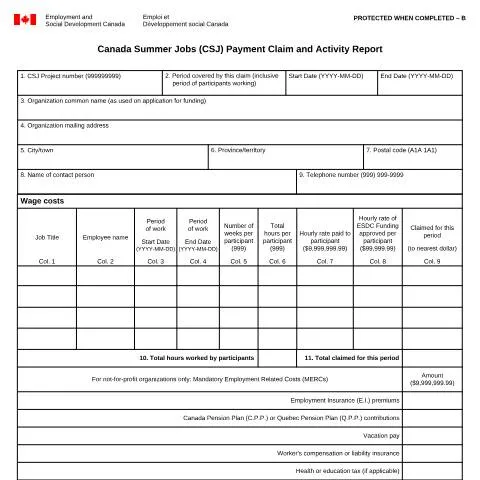
The Canada Summer Jobs (CSJ) initiative is a vital program that connects youth with meaningful employment during the summer months. For employers participating in this program, the Payment Claim and Activity Report (EDSC EMP5398) serves as an essential tool to ensure reimbursement for wages paid to young workers. Understanding the intricacies of this form can make the difference between a smooth reimbursement process and unnecessary complications.
The Journey Begins: When and Why to Complete EMP5398
Imagine you are a non-profit organization that has successfully hired several youth under the CSJ program. Now, as summer comes to an end, it’s time to claim the financial support promised by the program. At this stage, filling out the EMP5398 form is not just a task; it represents the culmination of your efforts to provide meaningful work experiences for young Canadians.
But when should you complete the form? The ideal timeframe is immediately following the conclusion of the employment period for each participant. This ensures that all hours worked and duties performed are fresh in your mind, facilitating accurate reporting. Timing is crucial because delays might complicate your claim or result in missed deadlines for reimbursement.
What You Need: Pre-filling Checklist
- Accurate Project Information: Collect your CSJ project number and details about the period participants worked.
- Employee Details: Compile names, job titles, and specific periods of work for each participant.
- Financial Records: Ensure that wage payments made to each participant are documented clearly for easy reference.
Breaking Down the Form: Sections You Can’t Overlook
The EMP5398 form is divided into several sections, each designed to capture vital information regarding your project and participants. Understanding how to navigate these sections can help you avoid pitfalls.
Contact and Organizational Details
The first part of the form requires you to enter organizational details such as:
- CSJ Project number
- Organization common name and mailing address
- Contact person’s name and telephone number
Be precise—errors here can lead to delays in processing your claim.
Wage Costs: The Heart of Your Claim
The wage costs section is critical. You will need to fill out detailed information about:
- Job titles
- Employee names
- Start and end dates of employment
- Hours worked and hourly rates
Tip: It’s advisable to maintain a detailed timesheet for each participant. This not only aids in accurate reporting but also serves as backup documentation in case of discrepancies.
| Job Title | Employee Name | Start Date | End Date | Hours Worked | Hourly Rate | Total Claimed |
|---|---|---|---|---|---|---|
| Intern | John Doe | 2023-06-01 | 2023-08-31 | 320 | $15.00 | $4,800 |
Addressing Special Cases: Unique Scenarios
Not every employer's situation will fit neatly into the provided sections. There are unique cases to consider:
Employing Youth with Disabilities
If your organization has provided opportunities for youth with disabilities, this information must be reported in the form. Specifically, question 13 asks if any participants were individuals with disabilities. Accurately reporting this data can support future funding considerations and promote diversity in employment.
Dealing with Errors or Missing Information
Errors can occur, whether due to oversight or miscommunication. If you realize that you’ve submitted information with inaccuracies, you should:
- Contact the Employment and Social Development Canada (ESDC) immediately. They may provide you with guidance on rectifying the situation.
- Document any corrections or amendments you need to make in your records for future reference.
Supporting Documentation: What You Should Gather
Alongside the EMP5398 form, you're required to submit various supporting documents. This is vital not just for the claim process but also for audit purposes and future reference.
Financial Records
Ensure you keep copies of:
- Pay stubs or payroll records demonstrating payments made to each participant
- Bank statements reflecting these payments
Activity Reports
In addition to wage claims, you will need to describe the duties performed by participants (Question 18 in the form). This shows ESDC how youth contributed to your organization and reinforces the program's purpose.
Submission Process: From Your Desk to ESDC
Once you’ve completed the EMP5398 form and gathered the necessary documentation, the next step is submission. Follow these guidelines for a successful process:
Delivery Methods
- Electronic Submission: If applicable, submit your form via the service portal designated by ESDC.
- Mail: If you're sending a physical copy, ensure you use the correct address provided by ESDC to avoid misdirection.
Tracking Your Claim
Once submitted, keep track of your claim status. ESDC usually provides a confirmation of receipt. From here, the processing time can vary, so patience is key. If you haven't heard back within a reasonable timeframe, don't hesitate to reach out for an update.
What Happens Next: Understanding the Outcome
Post-submission, what can you expect? Understanding the possible outcomes of your claim can help you prepare for next steps.
Approval and Reimbursement
If your claim is approved, you’ll receive reimbursement based on the details submitted. This is contingent upon maintaining accurate records and complying with program guidelines.
Potential Refusals
In the unfortunate event that your claim is denied, the ESDC will communicate the reasons clearly. Common issues include:
- Inaccurate wage reporting
- Missing supporting documentation
- Participants not meeting eligibility requirements
In such cases, you may appeal the decision. Gather additional documentation or clarification that can support your case and contact the ESDC for guidance on next steps.
Final Thoughts: Empowering Youth Through Compliance
The Canada Summer Jobs Payment Claim and Activity Report (EMP5398) is more than just paperwork; it’s a critical element in fostering youth employment and community engagement. By ensuring detailed, accurate submissions, you can not only benefit financially but also play a part in shaping the future workforce.
Stay informed about changes to the program and maintain open lines of communication with ESDC for ongoing support. This proactive approach will empower your organization and create lasting opportunities for the next generation of workers.
Understanding Eligibility Criteria for Canada Summer Jobs
The Canada Summer Jobs (CSJ) program aims to create summer employment opportunities for youth ages 15 to 30 inclusive. However, eligibility for both employers and job applicants is key to ensure that the program meets its objectives.
For employers, eligibility criteria include being a registered not-for-profit organization, a public-sector entity, or a small business with 50 or fewer full-time employees. Additionally, organizations must demonstrate that the job placements will provide meaningful work experiences that contribute to the skill development and employability of youth.
On the youth side, applicants must be Canadian citizens, permanent residents, or individuals with protected status in Canada. They should also be planning to return to their studies in the fall after their summer employment. There are specific requirements regarding their availability; youth must be able to work the predetermined hours and meet any additional local requirements set out by the employer.
It’s also important to note that youth who are self-identifying as belonging to underrepresented groups, such as Indigenous youth, persons with disabilities, or members of visible minorities, may have additional support available to them. This reinforces the government’s commitment under the Employment Equity Act to enhance diversity and inclusion in the workforce.
Payment Claim Process: Step-by-Step Guide
Claiming payment for the Canada Summer Jobs program is a structured process that requires careful attention to detail. Here’s a step-by-step guide to help you navigate the payment claim submission effectively:
Preparation of Required Documents: Before you submit your payment claim, ensure that you have all necessary documents at hand. This includes the completed Payment Claim Form, job offer letters, work contracts, and any evidence of payment made to youth.
Filling Out the Payment Claim Form: The Payment Claim Form is an essential document that must be filled out accurately. You will need to provide details such as your organization’s Social Insurance Number (SIN), the number of youth employed, their start and end dates, and the total hours worked.
Calculating Eligible Expenses: It’s crucial to understand what expenses are eligible for reimbursement. Typically, the program covers wages paid to youth employees and certain mandatory employer expenses. Keep in mind that expenses incurred should align with the funding agreement you signed.
Submission Deadline: Be mindful of the submission deadlines. For most cohorts, the payment claim must be submitted within 30 days of the end of the employment period for the youth. Late submissions may result in denied claims, so it’s advisable to set reminders to ensure you meet this timeline.
Submitting the Claim: Claims can usually be submitted online through the relevant provincial platform or by mailing a hard copy to the designated address. Ensure that all documents are complete and legible to avoid any processing delays.
Monitoring Your Claim: After submission, keep track of your claim status. You can usually check the status online or contact your local Service Canada office for updates. This proactive approach can help you resolve issues should they arise during processing.
Record Keeping: Maintain copies of all documents related to your claim submission. This includes the filled-out Payment Claim Form, supporting documents, and correspondence with Service Canada. Good record-keeping practices can safeguard your organization in case of audits or inquiries.
Challenges and Solutions in Reporting Activities
Reporting on the activities undertaken during the Canada Summer Jobs program can sometimes present challenges. Understanding these challenges and knowing how to overcome them will be beneficial for both employers and youth participants.
Common Challenges:
Inconsistent Reporting Practices: Employers may struggle with ensuring that all supervisors maintain consistent reporting practices for youth activities. Discrepancies in how hours worked and tasks completed are reported can lead to complications when submitting claims.
Lack of Documentation: Failing to document youth activities can create gaps in activity reports. This may hinder your ability to provide comprehensive details required for the Activity Report, which is vital for accountability and funding justification.
Technical Difficulties: Navigating online reporting platforms can sometimes be cumbersome. Technical glitches can result in lost data or incomplete submissions, which can further complicate the claims process.
Solutions:
Establish Clear Guidelines: Develop clear reporting guidelines for supervisors and team leads. Regular training sessions can ensure everyone understands what information needs to be documented and reported.
Utilize Templates: Implement the use of standardized templates for activity reports. This can simplify the reporting process and ensure that all necessary details are captured consistently across the organization.
Regular Check-ins: Schedule regular check-ins with youth employees to discuss their progress. This can serve as an opportunity to address any challenges they may face and encourage them to document their contributions effectively.
Technical Support: Ensure that staff have access to technical support should they encounter issues with the reporting platform. A designated team member can help troubleshoot problems and maintain data integrity throughout the process.
By understanding the eligibility criteria, closely following the payment claim process, and proactively addressing reporting challenges, organizations can maximize the benefits of the Canada Summer Jobs program. This not only enhances the experience for youth participants but also ensures that the program’s objectives are met effectively.