Unlocking Opportunities: The Role of the EMP5397 in Canada Summer Jobs
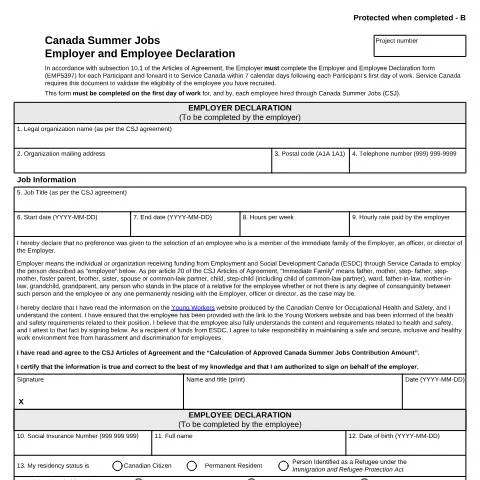
The Canada Summer Jobs - Employer and Employee Declaration (EMP5397) form is crucial for both employers and young workers seeking to engage in meaningful summer employment. This document not only serves as a record of employment but also acts as a gateway to funding and support through Employment and Social Development Canada (ESDC). By understanding its significance, you can better navigate the process and ensure compliance with all necessary regulations.
Navigating the EMP5397: Who Needs It and Why
This form is primarily a requirement for employers who receive funding through the Canada Summer Jobs program. If you're an employer planning to hire youth aged 15 to 30 for summer positions, filling out the EMP5397 is essential. This involves:
- Validating the eligibility of the employee you have hired.
- Ensuring compliance with the terms outlined in the Articles of Agreement.
- Documenting the nature of the employment relationship between the employer and employee.
On the flip side, employees, particularly youth looking to gain work experience, must also complete their portions of the form accurately, ensuring that they meet all eligibility criteria.
A Closer Look: The Specifics of the EMP5397
The EMP5397 is divided into two sections: the Employer Declaration and the Employee Declaration. Each section has specific requirements that need to be addressed diligently.
Employer Declaration Breakdown
This section requires the employer to confirm key information:
- Legal Organization Name: Ensure accuracy to avoid any processing delays.
- Job Information: Specify job title, duration, weekly hours, and the hourly wage.
- Signature: This must be from an authorized person in the organization, affirming that all provided information is true.
It's crucial to double-check the number of hours and contributions to avoid discrepancies that could affect funding eligibility.
Employee Declaration Essentials
For the employee, the declaration includes personal information such as:
- Social Insurance Number (SIN): Mandatory for identification.
- Residency Status: Confirm whether they are a Canadian citizen or permanent resident.
- Education Level: It's essential to state the highest level completed accurately.
Inaccuracies can lead to significant delays or even denial of benefits, so meticulous attention is necessary.
Understanding the Timeline: From Submission to Employment
To stay on track, it’s vital to understand the timeline associated with the EMP5397:
- Submission Deadline: The form must be submitted within 7 calendar days following the employee's first day of work.
- Processing Time: After submission, allow some time for ESDC to process the information. Keep communication lines open for any follow-up queries they might have.
- Employment Start Date: Regularly check with ESDC to confirm that everything is in order to avoid disruptions in employment.
What Happens If You Don't Submit the EMP5397?
Failure to submit the EMP5397 can have serious repercussions:
- Funding Denial: Employers risk losing financial support for the employment position, which could lead to unexpected financial burdens.
- Employment Issues: Employees may face challenges in validating their work status or claiming any associated benefits.
Understanding these implications emphasizes the importance of timely and accurate submission of the EMP5397.
Filling Out the EMP5397: Common Pitfalls and How to Avoid Them
Completing the EMP5397 requires attention to detail. Here are some common pitfalls:
- Incorrect Social Insurance Number: Verify that the SIN matches the employee’s records to prevent future complications.
- Inaccurate Job Title or Hours: Ensure that the job title corresponds to the role being filled and that the hours reflect the actual work schedule.
- Signature Issues: Make sure that the signature is from an authorized representative to avoid delays in processing.
Important Form Fields to Pay Attention To
| Field | Importance | Common Errors |
|---|---|---|
| Legal Organization Name | Identifies the employer. | Spelling errors or incomplete names. |
| Social Insurance Number | Essential for employment verification. | Mismatch with the employee’s records. |
| Start and End Dates | Defines the employment period. | Incorrect date formats or unrealistic durations. |
Who Can Benefit: The Profile of Eligible Employers and Employees
Eligibility criteria for the Canada Summer Jobs program are specific:
- Employers: Non-profit organizations, public-sector employers, and small businesses can apply, provided they meet certain conditions.
- Employees: Youth aged 15 to 30 who are legally allowed to work in Canada and meet educational criteria are eligible.
However, exceptions may apply, particularly for those with refugee status or recent immigrants. Understanding these profiles enables both employers and employees to better assess eligibility.
Equity and Inclusion: A Key Focus of the EMP5397
Another aspect of the EMP5397 is its emphasis on employment equity. Information collected in Section 22 to 28 aims to foster a diverse workforce. Here’s what you should know:
- Self-Identification: Employees are encouraged to self-identify in terms of gender, racial background, and disabilities.
- Data Use: Collected data helps the government understand demographic trends and develop targeted programs.
- Voluntary Participation: Participation in this section is voluntary, but it is important to understand the potential positive impact on future funding and support.
After Submission: What Comes Next?
Once you have submitted the EMP5397, several steps follow:
- Confirmation: You should receive confirmation from ESDC regarding the receipt and processing of the form.
- Reporting Obligations: Both employers and employees may have reporting obligations to keep ESDC informed of any significant employment changes.
- Continuous Communication: Establish a line of communication to address any issues or concerns that may arise during the employment period.
The Impact of the Canada Summer Jobs Program
The implications of the EMP5397 extend beyond just paperwork. The Canada Summer Jobs program plays a crucial role in:
- Enabling young Canadians to gain valuable work experience.
- Supporting employers in the hiring process, especially in sectors that may struggle to attract young talent.
- Fostering economic growth by providing funding that stimulates job creation during the summer months.
In summary, the Canada's Summer Jobs - Employer and Employee Declaration (EMP5397) is not merely a form; it is a vital tool for fostering employment opportunities and enhancing the youth employment landscape in Canada. By understanding its complexities, parties involved can ensure compliance, reap the benefits of the program, and contribute to community growth.