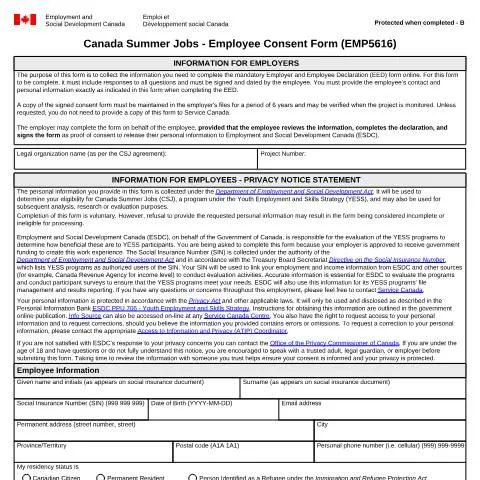
Unlocking Summer Opportunities: The Role of the Employee Consent Form (EMP5616)
Imagine a summer filled with new experiences, professional growth, and meaningful contributions to your community. For many young Canadians, the Canada Summer Jobs (CSJ) program is a gateway to such opportunities. Central to this initiative is the Employee Consent Form (EMP5616), a document that plays a crucial role in enabling participants to embark on their summer employment journeys. This article delves into the intricacies of this form, exploring its significance, the details required for completion, and the implications for both employees and employers.
Why is the EMP5616 Essential?
The EMP5616 is not just a bureaucratic necessity; it is a vital component of the CSJ program that links employers with eligible youth, ensuring that both parties understand their rights and responsibilities. By requiring the completion of this form, Employment and Social Development Canada (ESDC) ensures transparency and compliance with federal regulations.
How the Form Fits into the Bigger Picture
Participating in the CSJ program involves several steps, with the EMP5616 being one of the last pieces of the puzzle. Employers must first apply for funding through the CSJ program, demonstrating how their job placements will benefit the community and align with the objectives of the program. Once approved, they hire youth and must obtain the signed consent from each employee.
The Sequence of Steps
- Employer applies to the CSJ program for funding.
- Employer hires eligible youth based on program criteria.
- Employee completes and signs the EMP5616.
- Employer submits the signed form to ESDC as part of compliance verification.
Understanding the Details: What to Include in the EMP5616
Filling out the EMP5616 requires careful attention to detail. It’s not merely about signing a document; it’s about providing essential information that will dictate your eligibility and rights under the CSJ program.
Key Sections to Complete
- Employee Information: This section requires personal identification details such as your Social Insurance Number (SIN), date of birth, and address.
- Employment Equity Information: This part captures demographic details, which are crucial for assessing the program’s impact on diverse communities.
- Employee Declaration: Here, you confirm your eligibility to work and agree to the terms set forth by your employer.
Implications of Incomplete Forms: Risks and Consequences
Submitting an incomplete EMP5616 can have serious consequences. If any part of the form is left blank or filled incorrectly, it may lead to delays in processing your application or even ineligibility for the CSJ program.
Potential Consequences of Omissions
- Your employer may not receive funding for your position.
- You may miss out on crucial benefits associated with the CSJ program.
- There may be legal ramifications for both you and your employer if inaccuracies are detected.
Distinguishing the EMP5616 from Other Forms
It is essential to understand that the EMP5616 is distinct from other related forms within the CSJ program and beyond. Misconceptions can lead to administrative errors that might hinder your employment journey.
Comparison with Similar Forms
| Form | Purpose | Who Completes It |
|---|---|---|
| EMP5616 | Employee Consent Form for CSJ | Employee and Employer |
| EED (Employer and Employee Declaration) | Declaration of employment eligibility | Employer |
| CSJ Application Form | Application for funding by employers | Employer only |
Special Considerations: Unique Situations
While the EMP5616 applies universally, certain situations warrant additional consideration. Whether you are a newcomer to Canada, underage, or facing a complex employment situation, understanding how the EMP5616 applies to you can make a significant difference.
For Newcomers and Minor Employees
Newcomers to Canada often encounter additional layers of complexity when it comes to employment documentation. The EMP5616 requires you to declare your residency status, which is crucial for eligibility. Similarly, minors who are participating in the CSJ program must ensure that their parents or guardians are involved in the signing process, as legal stipulations may apply.
Important Considerations for Minors
- Parental consent is required for individuals under 18 years of age.
- Minors may need additional verification of their age and residency status.
Submission Channels: Navigating the Process
Once you’ve completed the EMP5616, the next step is submission. This may seem straightforward, but the method you choose can have implications for processing time and record-keeping.
Exploring the Submission Options
- Online Submission: If your employer is registered with ESDC’s online platform, they can submit your EMP5616 electronically. This expedites the process and minimizes the risk of paperwork getting lost.
- Paper Submission: Alternatively, you may submit a paper version of the form. While this method is sometimes slower, it can be beneficial if you have concerns about digital security or if you prefer a tangible record.
- In-Person Submission: Some employers may require you to bring the form to their office, where they can verify your identity and other documentation in person.
After Submission: What Happens Next?
Once the EMP5616 is submitted, the process does not end there. Understanding what happens following this submission can help manage expectations and prepare for your role in the CSJ program.
Post-Submission Steps
- ESDC will review the submitted forms for completeness and compliance.
- Your employer will be notified of any issues that need resolving, which could impact your employment start date.
- Once approved, you will be officially enrolled in the CSJ program, paving the way for a productive summer.
Empowering Yourself: Understanding Your Rights
As an employee in the Canada Summer Jobs program, it is crucial to be aware of your rights and responsibilities once the EMP5616 is submitted. This understanding not only protects you but also enhances your employment experience.
Employee Rights Under the CSJ Program
- You have the right to work in a safe environment, free from hazards.
- You are entitled to receive appropriate training and resources to perform your job effectively.
- You have the right to report any concerns to your employer without fear of retribution.
In summary, the Employee Consent Form (EMP5616) is more than just a piece of paper; it is a critical document that facilitates the Canada Summer Jobs program, enabling young Canadians to gain valuable work experience while ensuring compliance and protections. By understanding its nuances, you can navigate the process effectively and make the most of your summer employment opportunities.
Understanding the Canada Summer Jobs Program Eligibility Criteria
When considering the Canada Summer Jobs (CSJ) program, it's crucial to understand the eligibility criteria for both employers and students. This program is designed to provide youth with valuable work experience while also supporting employers in need of seasonal help.
For students, you must be between 15 and 30 years old at the start of the employment period. Additionally, you must be a Canadian citizen, permanent resident, or a person who has been granted refugee status in Canada. It's also important to be registered in the National Student Loans Service Centre (NSLSC) to ensure you're in good standing and are eligible for the subsidies.
Employers, on the other hand, can be from various sectors including public, private, and not-for-profit organizations. They must demonstrate a commitment to providing the students with meaningful work experiences directly related to their field of study, which supports their personal and professional development. When submitting the application, employers must outline the job description, the number of positions available, and detail how they intend to create a safe and inclusive work environment.
Another nuanced aspect of eligibility is the requirement to align the job with the local community's needs. This means proving that the job opportunities provided resonate with the youth in that specific region. The Government of Canada emphasizes that the CSJ program is not just about filling positions; it's about contributing to the community's long-term growth and the workforce's skillset.
Completing the Employee Consent Form: Step-by-Step Guide
Filling out the Employee Consent Form for the Canada Summer Jobs program can be straightforward if you know what to expect. Here’s a detailed guide to help you navigate through the form effectively.
Basic Information: The first section will ask for your basic personal details. This includes your full name, home address, date of birth, and Social Insurance Number (SIN). Ensure that all information is accurate, as any discrepancies could delay your application or lead to issues later on.
Job Details: You’ll need to provide information related to the job position you are applying for. This includes the employer's name, the job title, and a brief description of the work you will be undertaking. Be specific and include duties or responsibilities that highlight how this job will contribute to your career development.
Supervisor Information: It's essential to identify who will be supervising your work. This section requires you to provide the supervisor's name and contact information. Remember, this is the person you will report to daily, so ensure you have their consent to include their information.
Consent Agreement: The consent section confirms that you understand and agree to the terms of employment. This includes acknowledging the job's duration, pay, working conditions, and the employer's commitment to providing a safe working environment. Read this section carefully, as it formalizes your agreement to the job and its associated terms.
Signature: Finally, you will be required to sign and date the form. Your signature indicates that all the provided information is true and accurate to the best of your knowledge. Ensure that the date is accurate and that you keep a copy for your records.
By following these steps attentively, you can confidently complete the Employee Consent Form, ensuring you meet all necessary requirements to participate in the Canada Summer Jobs program.
The Role of Employers in the Canada Summer Jobs Program
Employers play a pivotal role in the success of the Canada Summer Jobs program, not just in terms of providing job placements, but also shaping the overall experience for youth participants. By understanding the responsibilities and commitments required of them, employers can positively influence the program's outcomes for both their organization and the students they hire.
Job Creation and Community Engagement
Employers must prioritize creating jobs that align with community needs and student interests. This means consulting with local stakeholders to understand trends and opportunities in the job market. Employers should aim to design job roles that not only fill immediate gaps in their workforce but also contribute to the long-term career aspirations of the youth involved.
Training and Development
An essential component of the CSJ program is the employer's commitment to providing training and development opportunities for students. This can include mentoring, skill-building workshops, and practical experiences that enhance the employability of the youth. Employers should develop a structured plan that outlines how they will support the student's learning journey, ensuring that the experience is beneficial for both parties.
Compliance with Employment Standards
Employers are required to comply with federal and provincial employment standards. This includes adhering to regulations around minimum wage, working hours, and occupational health and safety. Employers must ensure that the positions offered are legally compliant and that the working environment is safe and conducive to productive work.
In conclusion, employers are not just filling jobs; they are actively shaping the future workforce. By understanding their responsibilities and committing to providing meaningful work experiences, they can significantly enhance the impact of the Canada Summer Jobs program on young people's lives and their communities.