Understanding the Victim Impact Statement Form (SJ-753B) - Canada
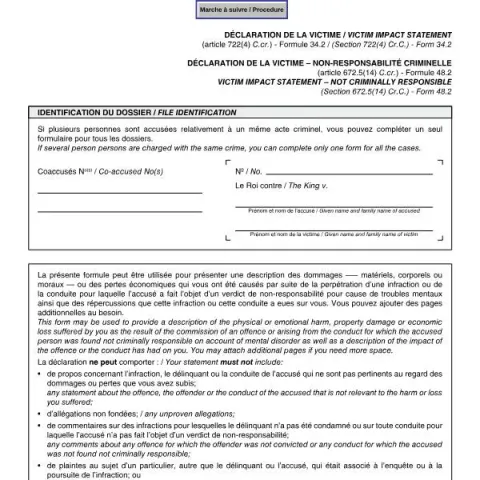
The Victim Impact Statement (VIS) form, officially titled Declaration of the Victim / Victim Impact Statement (Form SJ-753B), is a crucial legal document used within the Quebec judicial system. It allows victims of criminal offences to communicate the emotional, physical, economic, and security-related impacts that the crime has had on their lives. This form is part of the proceedings under article 722(4) of the Criminal Code of Canada, providing victims an opportunity to participate actively in the justice process.
Who Should Fill Out the Victim Impact Statement?
This form is intended for victims of crimes who wish to present their account of the damages suffered due to the offence. It is also used in cases where the accused has been found not criminally responsible (NCR) due to mental disorder, as outlined in section 672.5(14) of the Criminal Code. If you are a victim seeking to express how the offence has affected you, this form is your official channel to do so, whether you are reporting physical injuries, emotional trauma, financial losses, or fears related to personal safety.
How to Complete the Form
The form is designed to be filled out comprehensively but clearly. It begins with identifying the case file, including details such as the co-accused number(s), the name of the accused, and the victim. You should include specific descriptions of damages, injuries, or losses caused by the offence. You are encouraged to add extra pages if necessary, especially when providing detailed accounts of emotional or physical impacts.
When filling out the form, avoid including irrelevant information such as unproven allegations, comments about offences for which the accused was not convicted, or opinions on sentencing. Focus solely on how the offence has affected you personally. Use clear, honest language to describe your experiences and the repercussions on your life.
Sections of the Form and What to Include
Identification of the Case
Provide details about the case, including the co-accused number(s), the name of the accused, and your own name as the victim. This ensures the form is correctly linked to the relevant criminal proceedings.
Impacts to Describe
- Emotional Impact: Describe feelings such as fear, anxiety, depression, or loss of trust. Explain how the offence has affected your relationships, daily activities, and mental health.
- Physical Impact: Detail any injuries, ongoing pain, medical treatments, or limitations resulting from the offence. Mention hospitalizations, surgeries, or therapies if applicable.
- Economic Impact: List any financial losses, such as medical expenses, property damage, or lost income caused by the offence.
- Fears for Security: Express concerns about your safety or ongoing threats that may have arisen due to the incident.
- Additional Materials: You may include drawings, poems, or letters that help illustrate your experience.
Important Considerations and Common Errors
When completing the Victim Impact Statement, keep in mind that the document should be focused and relevant. Do not include personal opinions about the offender or the legal process unless directly related to your suffering. Avoid unsubstantiated claims or statements about offences for which the accused has not been convicted.
Ensure your statement is truthful and detailed, as it will be considered in court proceedings. Sign and date the form at the end to validate your declaration.
Fill in your form directly online
No printing: type your details into the boxes of the official form, tick, then download the PDF ready to send.
- 1Type into the form boxes
- 2Tick in one click
- 3Save and download the PDF
Submitting the Form
The completed form should be submitted to the court handling the case or the relevant legal authority. It is advisable to keep copies for your records. If you have questions about the process or need assistance, you may contact the court or a victim support organization for guidance.
Remember, the Victim Impact Statement is a vital way for you to be heard and to convey the personal toll of the crime. Filling out this form thoughtfully can help ensure your voice is included in the judicial process.