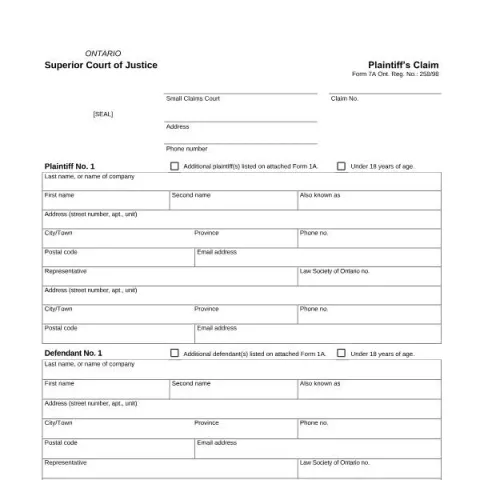
Understanding the Ontario Superior Court of Justice Plaintiff’s Claim Form (Form 7A)
If you are involved in a legal dispute in Ontario and need to initiate a claim in the Small Claims Court, the Plaintiff’s Claim form, officially known as Form 7A, is your primary document. This form is essential for formally starting a lawsuit, outlining your case, and requesting a legal remedy, such as monetary compensation or the return of goods. Whether you are an individual or a business, understanding how to properly complete, file, and serve this form is crucial for ensuring your claim proceeds smoothly and within the legal framework of Ontario’s civil justice system.
Who Should Fill Out the Plaintiff’s Claim Form?
The Plaintiff’s Claim form must be completed by the person or entity initiating the lawsuit—commonly called the plaintiff. This includes individuals, companies, or organizations seeking legal remedy in the Small Claims Court. If there are multiple plaintiffs or defendants, additional parties are listed using Form 1A. It is important that the plaintiff or their legal representative accurately provides all relevant details, including contact information, to ensure proper communication and service of documents.
How to Complete the Form 7A
Providing Accurate Personal and Legal Information
- Parties’ Details: Fill in the full names, addresses, phone numbers, and email addresses of both the plaintiff(s) and defendant(s). For companies, include the legal name and registered address.
- Legal Representation: If represented by a lawyer or paralegal, include their Law Society of Ontario number and contact details.
- Claim Details: Clearly describe what happened, including dates and locations. Be specific about the nature of your claim—whether it’s money owed, goods to be returned, or other remedies sought.
Explaining Your Claim
In the section titled Reasons for Claim and Details, you must explain the circumstances of your case. Include:
- What happened?
- Where did it happen?
- When did it occur?
If you rely on any documents, such as contracts, invoices, or photographs, attach copies to your claim. If original evidence is unavailable, provide an explanation as to why it cannot be attached.
Claim Amount and Interest
Specify the total amount of money you are claiming in the designated box. If you are claiming interest, indicate the date from which prejudgment interest should accrue and the applicable rate, whether from an agreement or the Courts of Justice Act.
Filing and Serving Your Claim
Filing Your Claim
The claim must be filed either online via the Ontario Court’s digital platform or physically at the Small Claims Court office. When filing, you must pay the applicable fee, payable to the Minister of Finance. The court clerk will stamp your copies and return them to you for service.
Fill in your form directly online
No printing: type your details into the boxes of the official form, tick, then download the PDF ready to send.
- 1Type into the form boxes
- 2Tick in one click
- 3Save and download the PDF
Serving the Defendant
After filing, you are responsible for delivering a copy of the claim to each defendant. Proper service must follow specific rules outlined in the court’s procedural guides. This ensures the defendant is officially notified of the claim and has the opportunity to respond within 20 days.
Important Considerations and Common Mistakes
- Accuracy: Double-check all information, especially the names and addresses of parties. Errors can delay proceedings or invalidate the claim.
- Completeness: Attach all relevant documents to support your case. Missing evidence can weaken your claim or lead to dismissal.
- Timeliness: Be aware of deadlines for filing and serving the claim. Failure to meet these deadlines can result in your case being dismissed or judgment being awarded against you.
Additional Resources
The Ontario Court provides detailed instructions and forms online, including guides on how to serve documents and file claims correctly. It is advisable to consult these resources or seek legal advice if you are unsure about any step in the process.