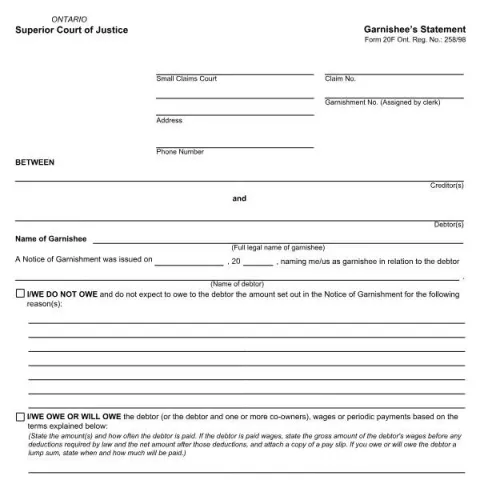
Understanding the Garnishee’s Statement (Form 20F) in Ontario’s Superior Court of Justice
If you are served with a Notice of Garnishment in Ontario, it is crucial to understand the purpose and proper completion of the Garnishee’s Statement (Form 20F). This legal document is used by a garnishee—typically an employer, bank, or other entity holding assets or payments owed to a debtor—to respond to a garnishment order issued by the court. Properly filling out this form ensures compliance with court procedures and helps clarify your financial relationship with the debtor.
What is the Garnishee’s Statement and When is it Used?
The Garnishee’s Statement is a formal declaration submitted to the court by a garnishee who has been served with a garnishment notice. Its primary function is to inform the court whether the garnishee owes money or assets to the debtor, and if so, specify the amount and the nature of the owed payments. This process is part of the legal mechanism used to enforce judgments by seizing funds or assets directly from entities holding the debtor’s property or income.
This form is specifically relevant in small claims court proceedings, where creditors seek to recover debts through garnishment. The garnishee’s response can either confirm that no debt is owed, specify the amount owed, or dispute the garnishment if applicable.
Key Sections of the Form and How to Complete Them
Identification of Parties
- Name of Garnishee: Enter the full legal name of the entity or individual responding to the garnishment.
- Claim and Garnishment Numbers: Fill in the relevant claim number and garnishment number provided by the court or clerk.
Responding to the Garnishment Notice
You must declare whether you owe money to the debtor and specify the amount and payment frequency if applicable:
- Do Not Owe: If you do not owe money or do not expect to owe, clearly state this and provide reasons if necessary.
- Do Owe: If you owe wages or periodic payments, specify the gross amount, net amount, and the payment schedule. Attach relevant pay slips if wages are involved.
Particulars of Payments and Co-Ownership
If the debt is shared among co-owners or the payment is partial, specify the respective amounts or percentages owed to each party. Include full legal names and addresses of any co-owners involved.
Disputing the Garnishment
If you believe the garnishment is incorrect or unjustified, you can dispute it by completing a Notice of Garnishment Hearing (Form 20Q). This must be served on all relevant parties and filed with the court, initiating a formal hearing process.
Filing and Serving Requirements
The garnishee is responsible for serving a copy of the completed Garnishee’s Statement on the creditor and the debtor. This ensures transparency and allows all parties to be aware of the response. Additionally, the form must be filed with the court clerk to be officially recorded.
Fill in your form directly online
No printing: type your details into the boxes of the official form, tick, then download the PDF ready to send.
- 1Type into the form boxes
- 2Tick in one click
- 3Save and download the PDF
Important Deadlines and Next Steps
While the form itself does not specify deadlines, it is generally advisable to respond promptly upon receipt of the garnishment notice to avoid legal penalties or enforcement actions. If you dispute the garnishment, completing and serving the Notice of Garnishment Hearing within the specified timeframe is essential to preserve your rights.
Summary
The Garnishee’s Statement (Form 20F) is a vital legal document in Ontario’s garnishment process, providing the court with necessary information about your financial obligations to the debtor. Accurate and timely completion of this form can influence the enforcement of court judgments and protect your legal interests. Always ensure you understand the details of the garnishment notice and seek legal advice if needed to navigate the process effectively.