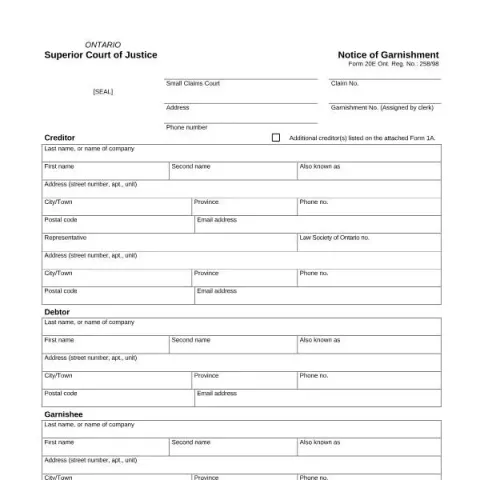
Understanding the Ontario Superior Court of Justice Notice of Garnishment (Form 20E)
If you are involved in a legal proceeding in Ontario where a court has issued a judgment against a debtor, you may encounter a Notice of Garnishment—a formal document used to enforce the court's order by seizing assets or wages owed to the debtor. This article provides an overview of the purpose, structure, and key procedures associated with this official form.
What Is the Purpose of the Notice of Garnishment?
The Notice of Garnishment (Form 20E) is a legal instrument used by the Ontario Superior Court of Justice to instruct third parties—known as garnishees—to pay debts owed to the debtor directly to the court or creditor. It is typically issued after a successful judgment and aims to facilitate the collection of unpaid amounts by legally compelling garnishees to withhold funds or assets.
Who Are the Main Participants in a Garnishment Process?
- Creditor: The individual or entity that obtained the court judgment and is seeking to collect the owed amount.
- Debtor: The person or company against whom the court judgment has been made.
- Garnishee: The third party who owes money or assets to the debtor, such as an employer (wages), bank (accounts), or other entities (rent, pension payments).
Key Sections and Their Functions
Parties Involved
The form requires detailed identification of all parties, including the creditor, debtor, and garnishee. Each must be listed with full names or corporate designations and complete addresses. This ensures proper legal notification and enforcement.
Notice and Payment Instructions
The garnishee is legally required to pay any debts owed to the debtor directly to the court within specified time frames—typically within 10 days of service. The form specifies the maximum amount to be garnished and instructs the garnishee on how to make payments, including sending payments to the court with a completed payment notice.
Legal Binding and Duration
This notice remains legally binding until it expires, is renewed, or is satisfied. If the garnishee fails to comply, the creditor may seek a court judgment against them for the amount owed, plus applicable costs.
Step-by-Step Procedure for Filling Out the Form
- Complete the Court Information: Fill in the claim number, garnishment number (assigned by the court), and court address.
- Identify the Parties: Provide full details for the creditor, debtor, and garnishee, including names, addresses, phone numbers, and email addresses.
- Specify the Debt Details: Indicate the amount to be garnished and the total amount owed.
- Serve the Notice: The creditor must serve this notice on the garnishee and the debtor, along with an affidavit for enforcement (Form 20P) and a garnishee’s statement (Form 20F).
- Garnishee’s Payment Notice: For each payment, the garnishee completes a Payment Notice, indicating the payment date and amount, and sends it to the court with a cheque or money order payable to the Minister of Finance.
Important Deadlines and Legal Considerations
The garnishee is required to pay debts within 10 days of service. Additionally, the garnishee must file a Garnishee’s Statement (Form 20F) within 10 days if disputing the garnishment or if the amount paid is less than owed. The total garnished amount cannot exceed the portion of wages or assets legally subject to seizure under Ontario law.
Fill in your form directly online
No printing: type your details into the boxes of the official form, tick, then download the PDF ready to send.
- 1Type into the form boxes
- 2Tick in one click
- 3Save and download the PDF
After Filing the Notice of Garnishment
Once the garnishee complies by making the required payments, the court processes these payments and applies them toward the debtor’s judgment. If the garnishee fails to comply, the creditor can request the court to issue a judgment against the garnishee for the owed amount, including costs.
Summary
The Notice of Garnishment (Form 20E) is a crucial legal document used to enforce court judgments by directing third parties to pay owed funds directly to the court. Proper completion, timely serving, and adherence to deadlines are essential to ensure effective enforcement. If you are involved in such proceedings, it is advisable to consult with a legal professional or review the official court forms and guidelines available online to ensure compliance with Ontario law.