Understanding the Ontario Court Form 22A: Response to Request to Admit
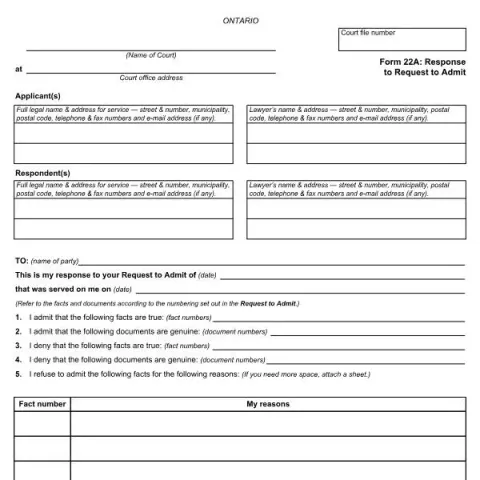
If you are involved in a legal proceeding in Ontario, you may encounter the Form 22A: Response to Request to Admit. This official document is used to formally respond to a request made by another party to admit certain facts or documents related to your case. Properly completing and submitting this form is essential to ensure your position is clearly communicated within the legal process.
Purpose of the Form 22A
The primary goal of the Form 22A is to respond to a Request to Admit issued by the opposing party. This request is part of the discovery process, where parties exchange information to clarify facts before trial. By admitting or denying specific facts or documents, you help streamline the proceedings and avoid unnecessary disputes at trial.
Admitting facts can simplify the case by establishing agreed-upon points, while denying or refusing to admit certain facts or documents preserves your right to contest them later. The form provides a structured way to communicate these responses clearly and officially to the court and the other party.
Preparing Your Response
Review the Request Carefully
Before filling out the Form 22A, review the Request to Admit thoroughly. It will list specific facts and documents numbered for clarity. Your responses should correspond directly to these numbers, indicating whether you admit, deny, or refuse to admit each point.
Gather Supporting Information
If you admit a fact or document, be prepared to provide evidence or reasoning if required. Conversely, if you deny a fact or document, gather the reasons supporting your denial to include in your response. This ensures your position is well-founded and clearly articulated.
Filling Out the Form
The Form 22A is divided into several sections:
- Parties information: Include full legal names, addresses, and contact details for all applicants and respondents, as well as their lawyers if applicable.
- Response to Request: Specify the date of the original request and the date it was served to you.
- Responses to facts and documents: Use the numbered list to admit, deny, or refuse to admit each fact or document. If you refuse to admit, provide reasons on the attached sheet if necessary.
- Signature and date: Sign and date the form to validate your responses.
Submitting Your Response
Modalities of Filing
The Form 22A can typically be filed in person at the court office or sent via mail, depending on the court’s procedures. It is crucial to adhere to deadlines specified in the court's scheduling order or the original request, as late submissions may affect your case.
Important Deadlines
While specific timelines can vary, it is common for responses to be due within a certain period after service—often 30 days. Confirm the exact deadline with the court or your legal counsel to avoid default judgments or other procedural issues.
Fill in your form directly online
No printing: type your details into the boxes of the official form, tick, then download the PDF ready to send.
- 1Type into the form boxes
- 2Tick in one click
- 3Save and download the PDF
Follow-up and Next Steps
Once your Form 22A is filed, the opposing party and the court will review your responses. If there are disagreements, these may lead to further negotiations, motions, or preparations for trial. Clear and accurate responses can help prevent surprises during the proceedings and contribute to a more efficient resolution.
Contacts and Resources
If you need assistance with the form or the process, contact the court office where your case is filed. Many Ontario courts also provide guides and assistance through their websites or legal aid services. Consulting with a lawyer can ensure your responses are appropriately drafted and submitted in compliance with court rules.
In summary, the Form 22A: Response to Request to Admit is a vital document in Ontario civil proceedings, helping to clarify facts and documents early in the process. Accurate completion and timely submission can significantly influence the progression and outcome of your case.