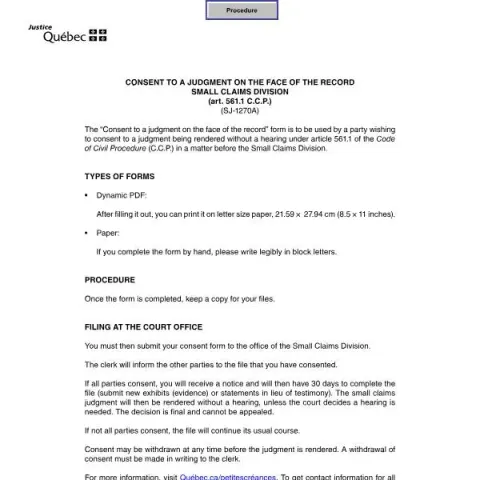
Understanding the "Consent to a Judgment on the Face of the Record" Form in Small Claims Court
If you are involved in a case before the Small Claims Division of the Court of Québec, you may encounter the option to consent to a judgment being issued without a hearing. This process is formalized through the official form known as the Consent to a Judgment on the Face of the Record, identified by the code SJ-1270A. This article explains the purpose of this form, who can use it, and how to properly complete and submit it.
What Is the Purpose of the Form?
The Consent to a Judgment on the Face of the Record allows a party involved in a small claims case to agree that the court can render a decision based solely on the documents and evidence already submitted, without holding a formal hearing. This process can significantly expedite the resolution of the case and reduce court costs.
It is important to understand that:
- The judgment will be made without a hearing, based on the existing record.
- All parties must consent for this process to proceed.
- The court has the discretion to hold a hearing if it considers it necessary, even if all parties agree.
- The court’s decision following this process is final and cannot be appealed.
Who Can Use This Form?
This form is intended for parties involved in a small claims case who wish to expedite the resolution by waiving their right to a hearing. Typically, this applies when both parties agree on the facts and the amount claimed, and wish to avoid the time and expense of a court hearing.
It is crucial that the party filling out the form understands that their consent is voluntary and can be withdrawn at any time before the judgment is issued. This flexibility ensures that parties retain control over their participation in the process.
Step-by-Step Guide to Filling Out the Form
1. Download and Prepare the Form
The form is available in a dynamic PDF format, which can be completed electronically and printed on standard letter-sized paper (8.5 x 11 inches). If completing by hand, ensure your writing is legible in block letters.
2. Complete the Required Information
You must fill in details such as:
- The jurisdiction (district and locality)
- The case file number
- Names of the plaintiff and defendant
- The date and location where you are signing the form
3. Read and Acknowledge the Statements
The form includes a section where you acknowledge understanding that:
- The judgment will be made without a hearing if you consent.
- You have 30 days after notice to submit additional evidence or statements in lieu of a hearing.
- The court may decide to hold a hearing despite your consent.
- The decision is final and cannot be appealed.
- You can withdraw your consent at any time before the judgment is rendered, in writing.
4. Sign and Date the Form
After reviewing the statements, sign and date the form in the designated spaces. Be sure to keep a copy for your records.
Filing and Next Steps
Once completed, you must submit the form to the Small Claims Division court office. The clerk will notify all involved parties that you have consented. If all parties agree, the court will issue the judgment without a hearing, typically within the 30-day window.
Fill in your form directly online
No printing: type your details into the boxes of the official form, tick, then download the PDF ready to send.
- 1Type into the form boxes
- 2Tick in one click
- 3Save and download the PDF
It is important to note that:
- The court may still hold a hearing if deemed necessary.
- All parties have the right to withdraw their consent before the judgment is finalized by submitting a written request to the court clerk.
Additional Resources
For more information about small claims procedures or to find contact details for your local courthouse, visit the official government website or consult the Québec.ca/petitescréances page. This resource provides guidance on the entire process and helps ensure you follow the correct steps.
In summary, the Consent to a Judgment on the Face of the Record form is a useful tool for parties seeking a quicker resolution in small claims cases, provided they understand the implications and follow the proper procedures for completion and submission.