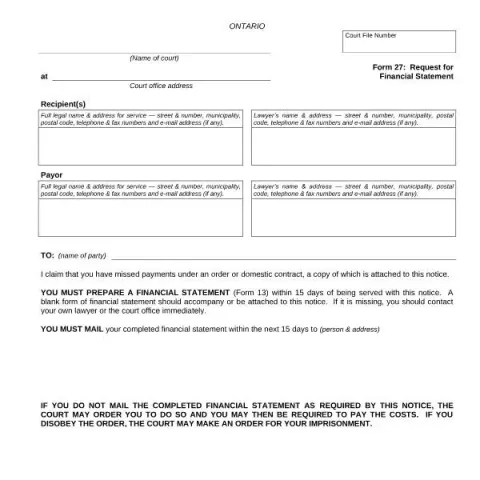
Understanding the Purpose of Form 27: Request for Financial Statement in Ontario
Form 27, titled Request for Financial Statement, is an official document used within the Ontario legal system to request a detailed financial disclosure from a party involved in a legal proceeding, typically related to family law or contractual disputes. This form is essential when one party needs to verify the financial status of another, especially in cases where payments under court orders or domestic agreements are in question.
The primary objective of this form is to facilitate transparency and ensure that parties provide accurate financial information to support court decisions. It is part of the legal process to enforce or establish financial obligations, such as child or spousal support, or to resolve disputes over unpaid amounts. Proper completion and submission of Form 27 help the court assess the financial circumstances of the involved parties and make informed rulings.
Preparing Your Financial Statement and Gathering Necessary Documents
Before filling out Form 27, it’s crucial to gather all relevant financial documents and information. This includes bank statements, pay stubs, tax returns, property deeds, and any other evidence of income or assets. The form requires detailed information about your financial situation, including income, expenses, assets, and liabilities.
It’s recommended to review the attached blank financial statement form (Form 13) carefully to understand the information needed. Providing comprehensive and truthful data is vital, as inaccuracies can lead to legal penalties or unfavorable court decisions. If you’re unsure about how to complete the form, consulting a legal professional or your lawyer is advisable.
Modalities of Submission and Deadlines
Once completed, the financial statement must be mailed within 15 days of being served with the Form 27 notice. The form should be sent to the designated recipient, whose address is specified on the notice. It’s important to adhere strictly to this deadline to avoid potential court sanctions or adverse rulings.
If the form is missing or not submitted on time, the court may order you to produce the financial statement, and you could be liable for additional costs. Disobedience to court orders, including failure to submit the required documentation, can result in serious consequences, such as contempt of court or even imprisonment.
Follow-Up and Court Procedures
After submission, the court reviews your financial statement to verify the information provided. This process may involve further hearings or requests for clarification. The court relies on the accuracy of your disclosures to make fair decisions regarding support payments or enforcement actions.
If discrepancies or issues arise, parties may be asked to provide additional documentation or explanations. It’s essential to keep copies of all submitted documents and any correspondence with the court or other parties for your records.
Fill in your form directly online
No printing: type your details into the boxes of the official form, tick, then download the PDF ready to send.
- 1Type into the form boxes
- 2Tick in one click
- 3Save and download the PDF
Contacts and Support Resources
If you need assistance with completing Form 27 or have questions about the process, consider contacting the court office where your case is filed. Many court offices provide guidance on procedural matters, and legal aid services may also offer support for individuals navigating family law procedures.
Additionally, consulting a lawyer experienced in family law or civil litigation can help ensure your financial statement is complete and accurately reflects your financial situation, reducing the risk of delays or legal complications.
Summary
Form 27 is a vital tool in Ontario’s legal framework for enforcing financial obligations. Proper preparation, timely submission, and accurate disclosure are key to ensuring your case proceeds smoothly. Always follow court instructions carefully and seek professional advice if needed to comply fully with the legal requirements.