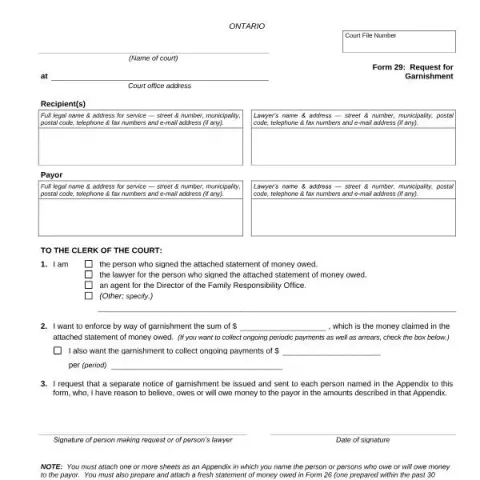
Understanding Form 29: Request for Garnishment in Ontario
If you are involved in a legal proceeding in Ontario that involves unpaid debts or obligations, you might encounter the need to request a garnishment using Form 29. This official court document is designed to help enforce a court order or obligation by garnishing funds owed by third parties, known as garnishees, to the debtor or payor. Whether you are a lawyer, creditor, or an individual seeking to recover owed amounts, understanding how to properly complete and submit this form is crucial for effective enforcement.
What is the Purpose of Form 29?
Form 29 serves as a formal request to the court to initiate garnishment proceedings. It allows the applicant to specify the amount of money to be garnished, identify the debtor (payor), and name the third parties (garnishees) who owe money to the debtor. This process aims to seize funds directly from the garnishees—such as banks, employers, or other entities—to satisfy the debt owed to the creditor or to enforce a court order or domestic contract.
Who Should Fill Out Form 29?
This form is typically completed by:
- The party who signed the statement of money owed, such as a creditor or their legal representative.
- An agent acting on behalf of the Director of the Family Responsibility Office, if applicable.
It is important that the person filling out the form has a clear understanding of the debt, the payor, and the potential garnishees involved in the proceedings.
How to Complete Form 29
Step 1: Fill in Court Details
Start by entering the court file number, the name of the court, and the court office address. These details identify the specific legal case for which garnishment is requested.
Step 2: Identify the Recipient(s)
Provide the full legal name and address of the individual or entity to whom the court notice will be sent. Include contact details such as telephone, fax, and email if available. If a lawyer is involved, include their contact information as well.
Step 3: Provide Payor Information
Complete the full legal name and address of the debtor (payor). Include lawyer details if applicable. This information is vital to ensure the garnishment targets the correct individual or entity.
Step 4: Specify the Amount to Garnish
Indicate the total sum of money to be garnished, referencing the statement of money owed attached to the form. If ongoing payments are to be collected, specify the periodic amount and frequency (e.g., weekly, monthly).
Fill in your form directly online
No printing: type your details into the boxes of the official form, tick, then download the PDF ready to send.
- 1Type into the form boxes
- 2Tick in one click
- 3Save and download the PDF
Step 5: Attach Supporting Documentation
You must include a recent statement of money owed (prepared within the past 30 days) using Form 26, along with any additional sheets listing potential garnishees and the amounts they owe or will owe.
Where and How to File the Form
The completed Form 29, along with the necessary attachments, must be filed with the court clerk at the designated court office. Ensure all information is accurate and complete to avoid delays. After filing, copies of the form are served to the payor and garnishees as required by court procedures.
Important Notes and Common Errors
- Incomplete or inaccurate information: Double-check all names, addresses, and amounts to prevent delays or invalid garnishments.
- Failure to attach recent statement of money owed: This document is essential to substantiate your request.
- Not serving notices correctly: Proper service of garnishment notices to all involved parties is mandatory for enforcement.
Finally, if circumstances change—such as the debt being paid off or the obligation expiring—you must notify the court immediately by filling out and serving a Form 29I (Notice to Stop Garnishment). This helps ensure the garnishment process is current and legally compliant.