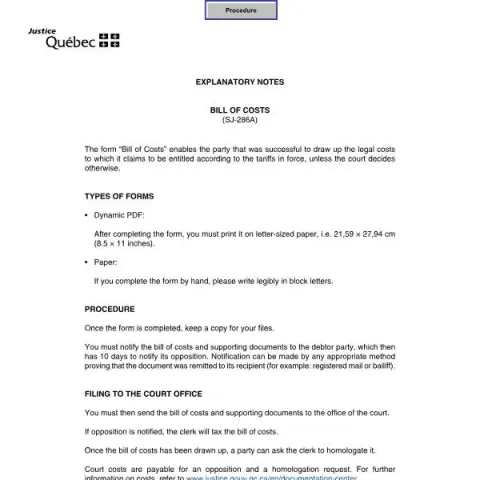
Understanding the Quebec Bill of Costs (Form SJ-286A)
If you are involved in a legal proceeding in Quebec and have received a judgment, you may need to prepare a Bill of Costs using the official form SJ-286A. This document is essential for claiming the legal costs you are entitled to recover, based on the applicable tariffs, unless the court rules otherwise. This article explains what this form is, who should fill it out, how to complete it, and the steps involved in submitting it to the court.
What is the Purpose of the Bill of Costs?
The Bill of Costs serves as a detailed account of the expenses incurred during a legal process. It itemizes various costs such as court fees, witness indemnities, expert fees, and other related expenses. The successful party in a legal case uses this form to request reimbursement for these costs, which are then subject to court approval. Properly completing and submitting this form ensures that your claim for costs is officially documented and processed.
Who Should Fill Out the Form?
This form is typically completed by the party who was successful in the case and wishes to recover legal costs. It can be filled out by the party themselves or by their legal representative. The form must accurately reflect all costs incurred and be supported by relevant documentation. If you are unsure whether you should prepare a Bill of Costs, consult with your legal advisor or the court clerk for guidance.
How to Complete the Form
Using the Dynamic PDF or Handwriting
- Digital Completion: The form can be filled out electronically using the dynamic PDF version. Once completed, print it on letter-sized paper (8.5 x 11 inches).
- Handwriting: If filling out by hand, write legibly in block letters to ensure clarity.
Key Information to Include
- Case Details: Fill in the district, locality, and file number.
- Parties: Clearly identify the plaintiff and defendant.
- Costs Claimed: Itemize costs such as court fees, witness allowances, expert fees, interpreter costs, and other expenses. Use the provided categories to organize your claim.
- Total Amount: Sum all costs to determine the total claim.
- Signature and Date: Sign and date the form to certify its accuracy.
Supporting Documents and Notification
After completing the form, you must keep a copy for your records. The next step involves notifying the opposing party of the bill and supporting documents. This notification must be done through a method that provides proof of delivery, such as registered mail or a bailiff service. The opposing party then has ten days to oppose the bill if they disagree with the claimed costs.
Filing the Bill of Costs with the Court
Once the opposing period has expired or if no opposition is raised, you need to submit the original Bill of Costs and all supporting documents to the court office. The court clerk will then review and tax the bill, which involves verifying the costs and ensuring they comply with tariffs and legal standards.
Homologation and Court Approval
If the opposing party files an objection, the court clerk will conduct a taxation process. If no objections are raised, or once the bill is approved, you can request the court clerk to homologate (approve) the bill. This homologation confirms the amount payable and makes it enforceable.
Fill in your form directly online
No printing: type your details into the boxes of the official form, tick, then download the PDF ready to send.
- 1Type into the form boxes
- 2Tick in one click
- 3Save and download the PDF
Important Reminders
- Timelines: You have ten days from notification to oppose the bill of costs.
- Payment: Court costs are payable upon opposition and homologation requests.
- Additional Information: For further details on costs and procedures, visit the official website of the Quebec Ministry of Justice.
Summary
The SJ-286A form is a crucial document for parties seeking reimbursement of legal costs after a court judgment in Quebec. Proper completion, timely notification, and adherence to court procedures ensure your claim is processed efficiently. Always keep copies of your submissions and supporting documents, and consult with legal professionals if you have questions about the process.