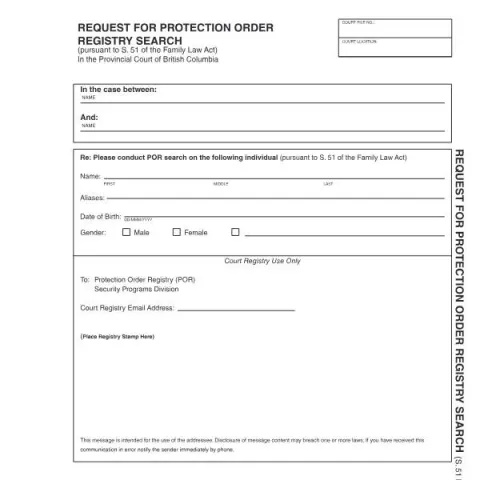
Understanding the Request for Protection Order Registry Search (PFA 914) in British Columbia
If you are involved in a family law matter in British Columbia and need to verify whether a protection order exists against an individual, the Request for Protection Order Registry Search form (PFA 914) is an essential tool. This official document, issued by the Provincial Court, allows authorized parties to access information stored in the Protection Order Registry (POR), helping to ensure safety and legal compliance.
What is the Purpose of the PFA 914 Form?
The primary objective of the PFA 914 form is to enable individuals or authorized entities to request a search of the Protection Order Registry for specific persons. This registry contains details of protection orders issued under the Family Law Act, which are designed to protect individuals from violence, harassment, or other threats. By submitting this form, you can confirm whether a protection order exists against a particular individual, which may be relevant for legal proceedings, safety planning, or personal awareness.
Who Can Use the Form and How to Prepare Your Request
Eligible Applicants
- Individuals involved in a family law case
- Legal representatives or authorized agencies
- Law enforcement officials or court personnel
Information Required
To complete the form accurately, you will need the following details:
- Court File Number: The case number associated with the family law matter
- Court Location: The specific court where the case was filed
- Date of Request: The date you are submitting the form
- Personal Details of the Individual: Full name, aliases, and date of birth
Additional Notes
Ensure that the information provided is precise and complete to facilitate an accurate search. Incomplete or incorrect details may delay processing or result in no information being retrieved.
Submitting the Form: Online or Paper Options
Electronic Submission
The Province of British Columbia offers an online platform for submitting the PFA 914 form. This digital process streamlines the request, allowing faster processing times. You will need to upload the completed form and any supporting documentation as required.
Paper Submission
If you prefer or require a paper submission, you can submit the completed form by mail or in person at the relevant court registry. Be sure to include all necessary information and any applicable fees, if applicable.
Processing and Follow-Up
Once your request is received, the Court Registry will verify the details and conduct the search of the Protection Order Registry. The timeframe for processing can vary depending on the method of submission and workload, but it generally aims to be as prompt as possible given the importance of safety-related information.
Results of the search will be communicated to the requester through the method specified during submission. If a protection order exists against the individual, the registry will provide details in accordance with privacy and legal regulations.
Fill in your form directly online
No printing: type your details into the boxes of the official form, tick, then download the PDF ready to send.
- 1Type into the form boxes
- 2Tick in one click
- 3Save and download the PDF
Important Considerations and Contacts
It is crucial to understand that disclosure of information from the Protection Order Registry is governed by legal restrictions. Unauthorized use or disclosure may breach laws related to privacy and court confidentiality.
If you have questions about completing the form or the process, contact the Protection Order Registry (POR) at the Security Programs Division of the Court Registry. Contact details and specific procedures are available through the provincial court's official website or by consulting with a legal professional.
Summary
The PFA 914 form is a vital legal document for accessing protection order information in British Columbia. Proper preparation and understanding of the process help ensure that safety and legal obligations are maintained. Whether for personal safety, legal proceedings, or law enforcement, this form facilitates crucial access to protected information, supporting the safety and well-being of individuals involved in family law cases.